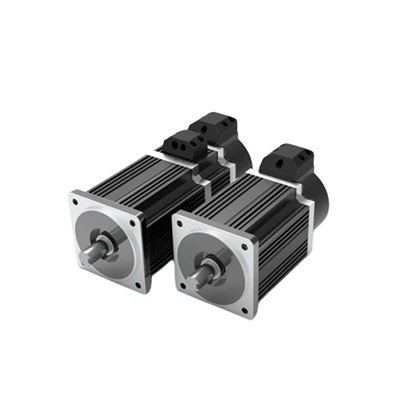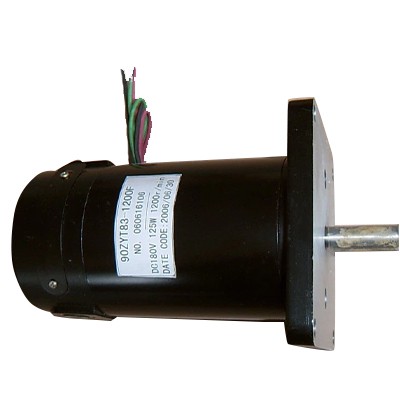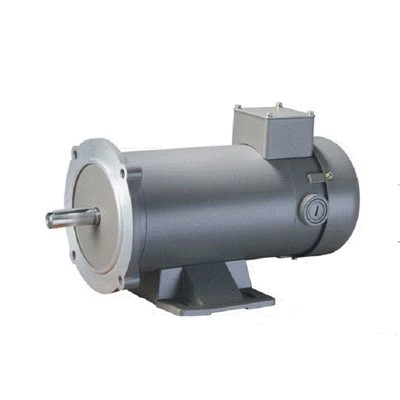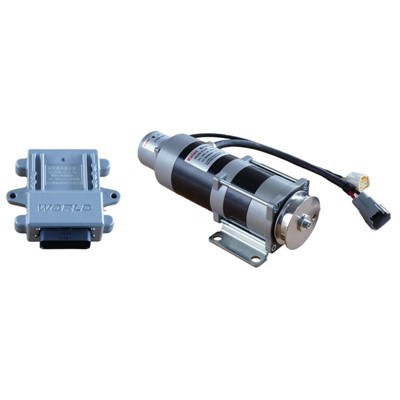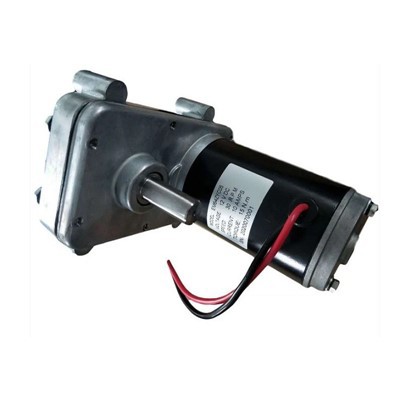
A DC Permanent Magnet Brushed Motor is still a practical choice for many industrial and mobile applications where simple control, reliable starting performance, compact size, and reasonable cost are more important than brushless operation.
Although brushless motors receive significant attention in modern motion-control applications, brushed DC motors remain widely useful in equipment where the motor needs to provide straightforward speed control and dependable operation without adding unnecessary system complexity.
For engineers and B2B buyers, however, choosing the right motor is not simply about selecting a voltage and power rating.
The motor needs to match the application's load, speed, torque, duty cycle, installation space, control method, and operating environment.
This guide explains the key factors to consider when selecting a permanent magnet brushed DC motor and how to evaluate a supplier before placing a bulk order.
What Is a DC Permanent Magnet Brushed Motor?
A DC permanent magnet brushed motor uses permanent magnets to create the magnetic field required for motor operation.
The main components typically include:
Permanent magnets
Armature
Rotor
Commutator
Carbon brushes
Shaft
Bearings
Motor housing
When DC power is supplied, current flows through the armature windings. The interaction between the magnetic field and the energized windings produces rotation.
The brushes and commutator mechanically switch the current between the armature coils, allowing the motor to continue rotating.
This relatively straightforward construction is one reason brushed DC motors remain attractive for applications where cost, simplicity, and easy control are important.
Why Are Permanent Magnet Brushed DC Motors Still Used?
The biggest advantage is simplicity.
A typical DC permanent magnet brushed motor can operate directly from a suitable DC power source and can be controlled relatively easily.
This makes the motor attractive for equipment such as:
AGVs
Electric carts
Material handling equipment
Small industrial machines
Pumps
Fans
Conveyors
Actuators
Automation equipment
Battery-powered equipment
Mobility systems
For applications with moderate operating cycles, a brushed motor can provide a practical combination of performance and cost.
7 Key Factors When Choosing a DC Permanent Magnet Brushed Motor
1. Determine the Required Voltage
Voltage is one of the first specifications buyers normally provide.
Common DC motor voltage options include:
12V
24V
36V
48V
72V
90V
Customized voltage
The correct voltage depends on the application's power system.
For battery-powered equipment, the motor voltage often needs to correspond to the battery architecture.
For industrial equipment, the available DC power supply may determine the required motor voltage.
However, voltage alone does not tell you whether the motor is suitable.
Two 24V motors can have completely different torque, speed, and power characteristics.
2. Choose the Motor According to Torque, Not Just Wattage
This is one of the most common mistakes when purchasing a DC motor.
A buyer may say:
"I need a 500W DC motor."
But 500W does not tell you the complete operating requirement.
You should also know:
Required operating speed
Continuous torque
Starting torque
Peak torque
Load characteristics
Duty cycle
The motor must be capable of delivering the required torque at the actual working speed.
For equipment that starts under load, starting torque can be particularly important.
For example, an AGV or electric cart may require significantly more torque when accelerating from zero than when maintaining a constant speed on level ground.
3. Consider the Working Speed
The motor's rated speed should match the application.
Depending on the motor design, a permanent magnet brushed DC motor can be designed for different operating speeds.
Typical considerations include:
No-load speed
Rated speed
Working speed
Maximum speed
If the motor runs continuously at a speed far from its intended operating point, efficiency and service life may be affected.
If you need low output speed but high torque, a geared DC motor may be more appropriate than trying to achieve everything from the motor itself.
4. Check the Duty Cycle
A motor used for 30 seconds at a time has a very different thermal requirement from one running continuously for eight hours.
Before choosing a motor, determine whether the application is:
Intermittent
Short-time
Continuous
Repeated start-stop
Also consider:
Starts per hour
Load during acceleration
Average running time
Ambient temperature
Cooling conditions
A motor that works well in intermittent operation may not be appropriate for continuous heavy-duty use.
This is why the application duty cycle should be included when requesting a motor quotation.
5. Check the Installation Space
Motor performance is important, but the motor still needs to physically fit the machine.
Check:
Motor diameter
Motor length
Shaft diameter
Shaft length
Mounting holes
Mounting dimensions
Terminal position
Gearbox space
For replacement projects, providing the existing motor drawing or dimensional information can make supplier communication much easier.
For new equipment, it is better to define the motor mounting requirements early rather than trying to redesign the machine around a standard motor later.
6. Consider the Operating Environment
The environment can have a major effect on motor selection.
Consider whether the motor will operate in:
Dusty environments
High-temperature areas
Humid environments
Outdoor equipment
Industrial machinery
Mobile equipment
Areas with vibration
Battery-powered systems
The motor's protection, housing design, bearings, insulation, and cooling method should be considered according to the actual environment.
For example, a motor used inside a clean indoor machine may have very different requirements from one installed on outdoor mobile equipment.
7. Decide Whether You Need a Gearbox
The motor's natural operating speed may not match the required output speed.
A gearbox can reduce speed while increasing available output torque.
This is useful in applications such as:
AGVs
Electric carts
Conveyors
Actuators
Lifting mechanisms
Material handling equipment
When specifying a geared motor, don't only specify the motor power.
Provide the required:
Output Speed + Output Torque + Duty Cycle + Mounting Requirements
This gives the manufacturer a much clearer basis for selecting the motor and gearbox combination.
DC Permanent Magnet Brushed Motor vs. Brushless DC Motor
For B2B buyers, one of the most common decisions is whether to use a brushed or brushless motor.
| Feature | Brushed DC Motor | Brushless DC Motor |
|---|---|---|
| Brush System | Yes | No |
| Electronic Controller | Relatively Simple | Required |
| Initial System Cost | Often Lower | Often Higher |
| Control | Simple | More Advanced |
| Maintenance | Brush wear | Lower mechanical wear |
| Starting Performance | Strong | Strong, controller dependent |
| Speed Control | Easy | Excellent |
| Long Continuous Operation | Application dependent | Generally advantageous |
| Construction | Simple | More complex |
| Best Fit | Cost-sensitive / straightforward systems | Long-life / advanced control applications |
This does not mean brushless motors are always better.
If the application prioritizes simple control, lower system complexity, and cost, a brushed DC motor may be the more practical solution.
If the application requires long continuous operation, reduced mechanical wear, or advanced electronic control, a brushless motor may be worth considering.
When Is a Brushed DC Motor a Good Choice?
A permanent magnet brushed motor is worth considering when your application has several of these characteristics:
DC power supply
Moderate operating hours
Straightforward speed control
Cost-sensitive design
Compact installation
Frequent starting and stopping
Need for good starting torque
Simple controller requirements
It can be especially attractive when replacing an existing brushed motor because the control system may already be designed around brushed DC operation.
Common Applications of DC Permanent Magnet Brushed Motors
AGV and Mobile Equipment
Battery-powered mobile equipment often requires compact motors capable of delivering useful torque from a relatively low-voltage DC system.
Depending on the vehicle design, the motor may be combined with a gearbox.
Material Handling
Motors can be used in:
Small conveyors
Transfer systems
Electric carts
Handling equipment
The required motor depends heavily on load and speed.
Pumps
DC motors can drive small pumps where a suitable DC power supply is available.
Fans and Blowers
For applications requiring controlled airflow, motor speed can be adjusted through an appropriate controller.
Actuators
A geared permanent magnet DC motor can provide controlled movement for mechanical actuators.
Automation Equipment
Brushed DC motors remain useful in equipment where straightforward motion control is required without a complex motor-control system.
How to Calculate the Basic Motor Requirement
For an application where torque and rotational speed are known, mechanical output power can be estimated from:
where:
P = mechanical power
T = torque
ω = angular speed
For practical motor selection, however, don't size the motor exactly to the theoretical load.
You should also consider:
Starting conditions
Transmission losses
Acceleration
Duty cycle
Temperature
Safety margin
A motor with just enough theoretical power may struggle when the real machine encounters a heavier load.
What Information Should You Send to a DC Motor Manufacturer?
If you are contacting a DC Motor Manufacturer for a quotation, avoid sending only:
"Please quote 24V DC motor."
Instead, provide as much of the following information as possible:
Electrical Requirements
Voltage
Rated power
Current
Speed
Mechanical Requirements
Required torque
Shaft dimensions
Mounting dimensions
Rotation direction
Gearbox requirements
Operating Conditions
Duty cycle
Running hours
Ambient temperature
Indoor/outdoor use
Load characteristics
Application
Explain what the motor will actually drive.
For example:
"The motor will be used for an AGV drive system with a 48V battery and a geared output."
This gives the manufacturer far more useful information.
How to Evaluate a DC Motor Supplier
When looking for a DC Motor Supplier, don't compare suppliers only according to unit price.
Consider:
Engineering Support
Can the supplier help select the motor based on your actual load and speed requirements?
Customization
Can the motor be customized for:
Voltage
Power
Speed
Shaft
Mounting
Wiring
Gearbox
Production Capability
Can the supplier support prototype quantities as well as repeat production?
Quality Control
Ask how motors are tested before shipment.
Typical checks can include:
Voltage
No-load speed
Current
Torque
Noise
Vibration
Insulation
Appearance
Consistency
For OEM buyers, repeat-order consistency is extremely important.
A motor that works well during sample testing but changes significantly between production batches can create problems for the final equipment.
What Affects DC Permanent Magnet Motor Price?
When searching for DC Permanent Magnet Motor Price, buyers often focus on power and voltage.
In reality, the quotation can depend on many factors:
Motor power
Voltage
Speed
Torque
Magnet specification
Housing size
Shaft design
Bearings
Brush configuration
Cooling
Gearbox
Custom mounting
Production quantity
A customized 24V motor can therefore have a very different price from a standard 24V motor.
For B2B purchasing, compare suppliers using the same technical specification.
Why Choose Auric for DC Permanent Magnet Brushed Motors?
Auric focuses on electric motor solutions for industrial and mobile equipment applications.
For customers sourcing a DC Permanent Magnet Brushed Motor, the objective is not simply to provide a standard motor with a matching voltage.
The motor needs to match the actual machine.
Auric can work with customers on requirements such as:
Voltage
Power
Rated speed
Torque
Shaft dimensions
Mounting configuration
Gearbox matching
Application-specific requirements
This is particularly useful for OEM customers that need a motor integrated into their own equipment rather than a generic off-the-shelf product.
Before selecting the motor, provide the application, load, required speed, operating time, available voltage, and installation dimensions.
The more complete the information, the easier it is to identify a suitable motor configuration.
DC Permanent Magnet Brushed Motor Buying Checklist
Before placing an order, confirm:
DC voltage
Rated power
Rated speed
Continuous torque
Starting torque
Duty cycle
Operating environment
Motor dimensions
Shaft size
Mounting dimensions
Rotation direction
Gearbox requirement
Controller compatibility
Sample testing
MOQ
Lead time
Final quotation
Frequently Asked Questions
What is a DC permanent magnet brushed motor?
It is a DC motor that uses permanent magnets to create the magnetic field and brushes with a commutator to mechanically switch current through the armature.
Are permanent magnet brushed DC motors still used in industry?
Yes. They remain useful in applications that prioritize straightforward control, good starting performance, compact construction, and reasonable cost.
What is the difference between a brushed and brushless DC motor?
A brushed motor uses mechanical brushes and a commutator, while a brushless motor uses electronic commutation. Brushless motors generally offer lower mechanical wear, while brushed motors can provide a simpler and more economical system.
Can a permanent magnet DC motor be customized?
Yes. Depending on the manufacturer, voltage, power, speed, shaft dimensions, mounting configuration, wiring, and gearbox can be customized.
How do I choose the correct DC motor power?
Start with the required torque and operating speed, then consider acceleration, transmission losses, duty cycle, temperature, and an appropriate design margin.
Can a brushed DC motor be used for AGVs?
Yes. Brushed DC motors can be used in some AGV and mobile equipment applications, particularly when the voltage, torque, speed, duty cycle, and gearbox are properly matched to the vehicle.