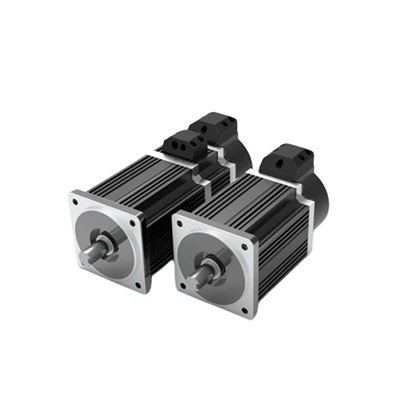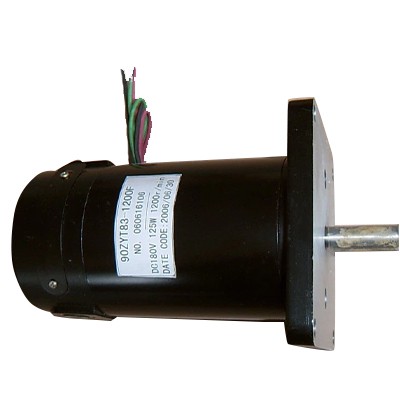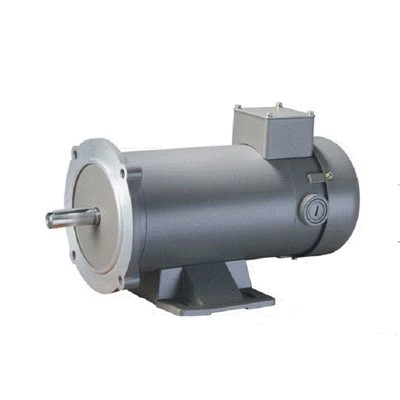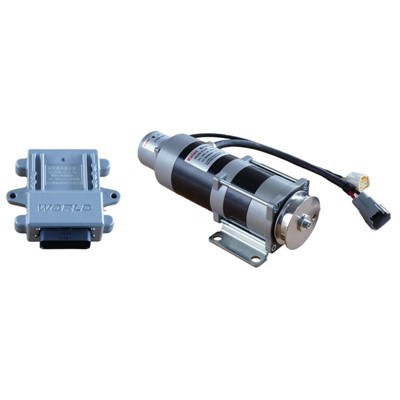
Choosing a 24V Servo Motor involves more than matching the motor voltage to your power supply. For OEM manufacturers and industrial equipment buyers, the right motor must also deliver sufficient torque, meet speed requirements, respond quickly to control commands, and fit the machine's mechanical design.
A poorly selected motor can cause slow acceleration, overheating, positioning errors, or unexpected shutdowns. These problems can increase maintenance costs and delay equipment delivery.
So, how do you choose the right 24V Servo Motor for your application? This guide answers nine important questions to help you evaluate motor specifications, compare manufacturers, understand prices, and make a more confident purchasing decision.

1. What Is a 24V Servo Motor, and How Is It Different From a Standard DC Motor?
A 24V Servo Motor is designed to operate within a 24V electrical system and provide controlled motion through an appropriate drive and feedback arrangement.
A typical servo system includes:
Servo Motor: Generates rotational movement and torque.
Servo Drive: Controls motor current, speed, or position.
Encoder: Provides feedback about actual motor movement.
Controller: Sends motion commands based on the machine's requirements.
Unlike a basic DC motor that may operate with simple voltage control, a closed-loop servo system compares the commanded movement with actual feedback and corrects motion errors.
This makes servo motors suitable for applications that require controlled acceleration, repeatable positioning, speed regulation, or coordinated movement.
However, not every motor marketed as a 24V servo motor offers the same control capabilities. Buyers should confirm the feedback type, drive compatibility, and supported control modes before placing an order.
2. Is a 24V Servo Motor Powerful Enough for Your Application?
This is one of the first questions industrial buyers should ask.
A 24V motor can be suitable for compact automation systems, battery-powered machinery, mobile robots, and small industrial mechanisms. Whether it can handle your application depends on its actual power, torque, speed, and operating conditions.
Consider these factors:
Load weight and resistance
Required acceleration
Operating speed
Frequency of starting and stopping
Continuous operating time
Available peak current
For example, a motor driving a lightweight conveyor may have very different requirements from a motor driving a loaded robotic mechanism, even if both use a 24V supply.
You should also consider current demand. At the same electrical input power, a 24V system requires more current than a higher-voltage system. The power supply, battery, wiring, connectors, and servo drive must all support the required current.
Practical tip: Do not select a 24V Servo Motor by voltage alone. Confirm rated power, continuous torque, peak torque, and current requirements together.
3. How Do You Calculate the Torque Required for a 24V Servo Motor?
Torque determines the motor's ability to rotate a load or overcome resistance.
For a practical application, the required motor torque may include load torque, acceleration torque, friction, gravity, and transmission losses.
For rotary motion, acceleration torque can be estimated using:
T=Jα
Where:
T = acceleration torque in N·m
J = total rotational inertia in kg·m²
α= angular acceleration in rad/s²
This equation explains why two machines with similar loads may require different motors. A machine that accelerates rapidly needs more torque than one that reaches the same speed gradually, assuming the same inertia.
When selecting a 24V Servo Motor, distinguish between two specifications:
Continuous torque: The torque required during normal operation.
Peak torque: The additional torque needed for short periods, such as acceleration or sudden load changes.
A motor with sufficient continuous torque may still be unsuitable if its peak torque or the drive's peak current is insufficient.
For lifting equipment, also consider gravity, transmission efficiency, and whether a holding brake is required.
4. Which Is Better for Your Equipment: A 24V or 48V Servo Motor?
Neither voltage is universally better. The correct choice depends on the equipment's electrical architecture and power requirements.
|
Comparison |
24V Servo Motor |
48V Servo Motor |
|---|---|---|
|
Power system |
24V DC supply or battery system |
48V DC supply or battery system |
|
Current at equal power |
Higher |
Approximately half under ideal conditions |
|
Compact automation |
Suitable |
Suitable |
|
Battery-powered equipment |
Suitable |
Suitable |
|
Higher-power applications |
May require substantial current |
Often advantageous for reducing current |
|
System compatibility |
Best for existing 24V architecture |
Best for existing 48V architecture |
For example, at an ideal electrical input power of 480W:
24V system: 20A
48V system: 10A
Actual current will be higher when losses are considered.
A 24V Servo Motor may be the better choice when the machine already uses 24V components, the power demand is appropriate, and avoiding additional voltage conversion is important.
A 48V system may be more practical when the equipment needs greater power and reducing current is a priority.
Before switching voltage, consider the entire system, including the controller, battery, wiring, and safety requirements.
5. What Applications Are Suitable for a 24V Servo Motor?
A 24V Servo Motor can be used in a range of low-voltage motion-control applications, provided its torque, speed, and duty-cycle specifications meet the requirements.
AGV and AMR Systems
Potential applications include drive mechanisms, steering, lifting modules, and auxiliary motion systems.
The main selection factors are vehicle weight, payload, wheel diameter, acceleration, operating speed, and gear ratio.
Packaging Machinery
Servo motors can control feeding, indexing, positioning, and other repetitive movements.
Buyers should consider cycle time, acceleration, stopping accuracy, and operating frequency.
Mobile Robots
Mobile robots may require compact motors that work with battery-powered control systems.
Motor selection should account for payload, terrain, movement patterns, and the available installation space.
Small Automated Equipment
Applications can include positioning mechanisms, compact conveyors, actuators, and automatic adjustment systems.
The important question is whether the motor can maintain the required performance throughout the complete operating cycle.
6. Why Does Your 24V Servo Motor Overheat or Lose Torque?
If a motor becomes too hot, slows down under load, or triggers repeated drive alarms, the cause may not be a defective motor.
Common causes include:
Incorrect motor sizing. The motor may not provide enough continuous torque for the actual load.
Excessive acceleration. Rapid acceleration can demand more peak torque and current than the system can deliver.
Insufficient power supply capacity. Voltage may drop when the motor draws high current, especially during startup.
Poor drive matching. The servo drive may have insufficient current capacity or incompatible control settings.
Inadequate cooling. High ambient temperatures, restricted airflow, or prolonged heavy loading can increase motor temperature.
Mechanical resistance. Misalignment, excessive friction, or a jammed mechanism can increase the required torque.
Incorrect tuning. Poor servo control settings can contribute to oscillation, vibration, and excessive current.
Before replacing the motor, check the load, power supply, drive settings, wiring, and mechanical transmission. These checks can prevent unnecessary purchasing costs and repeated equipment failures.


7. How Much Does a 24V Servo Motor Cost?
The 24V Servo Motor price depends on more than the rated voltage or power.
Important pricing factors include:
Rated power and torque
Peak torque and maximum speed
Encoder type and resolution
Servo drive compatibility
Integrated brake
Shaft and mounting dimensions
Gearbox configuration
Cable and connector requirements
Customization
Order quantity
A standard motor purchased in bulk may have a different unit price from a customized prototype.
When comparing quotations, make sure the motors have comparable specifications. A lower-priced motor may use a different encoder, provide lower peak torque, or require a separate component that increases the total system cost.
For OEM buyers, compare the complete solution cost, including the motor, drive, accessories, customization, shipping, and maintenance requirements.
How to Request an Accurate Quotation
Provide the supplier with the following information:
|
Required Information |
Example |
|---|---|
|
Motor type |
24V Servo Motor |
|
Rated power |
Specify required wattage |
|
Continuous torque |
Specify required N·m |
|
Peak torque |
Specify required N·m |
|
Rated speed |
Specify required RPM |
|
Encoder |
Incremental or absolute |
|
Brake |
Required or not required |
|
Application |
Packaging machine, AGV, etc. |
|
Mounting |
Flange or other configuration |
|
Quantity |
Sample and estimated batch volume |
These details help a manufacturer recommend a suitable configuration instead of quoting an unsuitable standard model.
8. How Do You Find a Reliable 24V Servo Motor Manufacturer or Factory?
Finding a suitable 24V Servo Motor manufacturer requires more than checking product photographs and advertised prices.
For industrial procurement, evaluate the supplier's technical capabilities, manufacturing processes, testing, and ability to support repeat orders.
Manufacturing Capability
Ask whether the supplier can support relevant processes such as motor assembly, winding, rotor assembly, encoder integration, and final testing.
Not every supplier performs every process in-house, so clarify which operations are handled internally and which are outsourced.
Technical Documentation
A capable supplier should be able to provide relevant information, depending on the motor model:
Technical datasheet
Torque-speed curve
Mechanical drawings
Encoder specifications
Electrical requirements
Test documentation
Customization
For OEM equipment, confirm whether the supplier can accommodate your shaft, flange, connector, encoder, brake, and other configuration requirements.
Quality and Delivery
Ask how finished motors are inspected, whether samples are available, what the expected lead time is, and how quality issues are handled.
When comparing a 24V Servo Motor factory with a trading company, focus on actual manufacturing control and engineering support rather than the company label alone.
9. Should You Buy a Standard 24V Servo Motor or Request a Customized Model?
A standard motor is usually the most practical choice when it meets your electrical, mechanical, and performance requirements.
Customization becomes worth considering when the standard product does not fit your machine.
Typical requirements include:
Non-standard shaft dimensions
Restricted installation space
Special mounting flange
Specific encoder
Integrated brake
Special cable length or connector
Different torque-speed requirements
Compatibility with an existing drive
For OEM projects, discuss these requirements before finalizing the machine design. Early coordination can reduce installation problems and avoid expensive mechanical modifications later.
When requesting customization, provide drawings and measurable performance requirements rather than relying on descriptions such as "high torque" or "high precision."
How Does Auric Help You Select the Right 24V Servo Motor?
For OEM equipment manufacturers, selecting a motor is part of designing a complete motion system.
Auric provides motor solutions for industrial and automation applications. For a 24V Servo Motor project, buyers should evaluate the available configuration against their actual load, speed, torque, installation, and control requirements.
Depending on the model and project requirements, key items to discuss include:
Rated power and torque
Peak torque and operating speed
Encoder configuration
Shaft and mounting dimensions
Brake requirements
Drive compatibility
Customization options
Sample testing and batch purchasing
If a standard model does not fit your equipment, provide the application details and mechanical drawings so the available options can be evaluated.
For buyers looking for a 24V Servo Motor supplier, the goal is to identify a configuration that performs reliably in the intended machine, not simply the motor with the lowest initial quotation.
24V Servo Motor Buying Checklist
Before placing your order, verify these points:
Rated voltage and power
Continuous torque and peak torque
Rated speed and maximum speed
Acceleration and deceleration requirements
Load inertia and duty cycle
Encoder type and compatibility
Servo drive voltage and current capacity
Shaft dimensions and mounting
Brake and gearbox requirements
Operating environment and cooling
Customization and sample availability
MOQ, lead time, warranty, and technical support
Quotation based on complete specifications
Frequently Asked Questions
Can a 24V Servo Motor run continuously?
Yes, if the specific motor is rated for the required duty cycle and operates within its torque, current, and temperature limits. Confirm the manufacturer's continuous-duty specifications before purchasing.
Can I control a 24V Servo Motor with a regular DC motor controller?
Not necessarily. A conventional DC controller may not support the encoder feedback and closed-loop functions required by a servo motor. Confirm compatibility between the motor, controller, and servo drive.
Does a 24V Servo Motor always provide high torque?
No. Torque depends on the motor's design, current, speed, and operating conditions. Compare continuous and peak torque specifications instead of relying on voltage alone.
Is a gearbox necessary for a 24V Servo Motor?
No. A gearbox is only needed when the application requires a different relationship between motor speed and output torque. Its efficiency, backlash, and mechanical dimensions should also be considered.
What information should I send when contacting a 24V Servo Motor supplier?
Provide the application, required voltage, power, torque, speed, duty cycle, encoder, mounting dimensions, quantity, and any customization requirements. Drawings and existing drive details are helpful for OEM projects.
How can I get a competitive 24V Servo Motor factory price?
Request quotations based on the same technical specifications and quantities. Compare the complete configuration, testing, customization, delivery, and support rather than comparing unit prices alone.