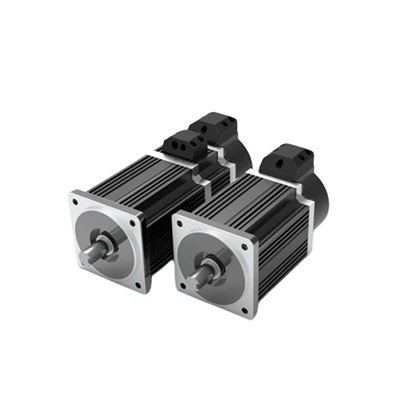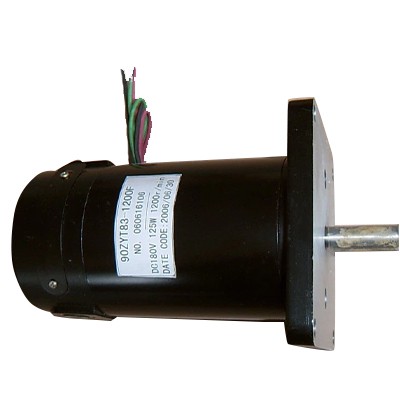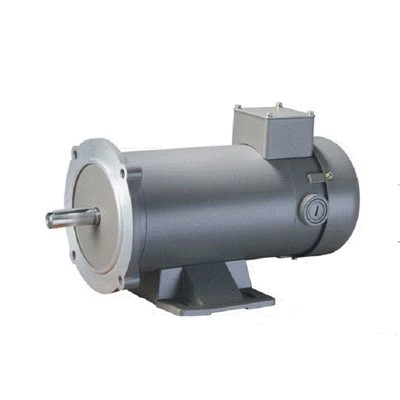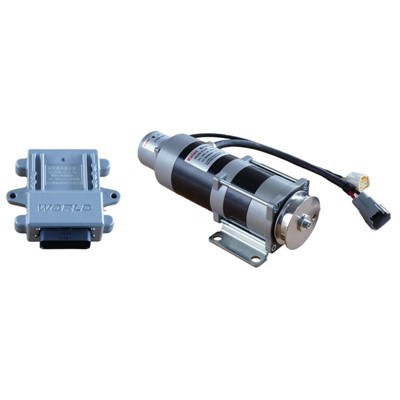
Choosing a DC motor for industrial equipment is not simply about finding a motor with the right voltage and power. For OEM equipment manufacturers, the motor also needs to match the load, speed, duty cycle, installation space, control method, and expected service life.
A DC Permanent Magnet Brushed Motor remains a practical choice for many applications because of its simple construction, direct DC power input, strong starting characteristics, and relatively straightforward control.
But with different voltage, speed, torque, shaft, brush, and mounting configurations available, choosing the wrong model can lead to overheating, insufficient starting torque, excessive brush wear, or poor machine performance.
This guide explains the 7 key factors buyers should evaluate before purchasing a DC Permanent Magnet Brushed Motor, with practical information for OEMs, distributors, and industrial equipment manufacturers


What Is a DC Permanent Magnet Brushed Motor?
A DC Permanent Magnet Brushed Motor uses permanent magnets to create the stationary magnetic field and brushes with a commutator to switch the current in the armature.
Its basic structure includes:
Permanent magnets
Rotor/armature
Copper windings
Commutator
Carbon brushes
Shaft
Bearings
Motor housing
When DC voltage is applied, current flows through the armature windings. The interaction between the magnetic field and current generates electromagnetic torque, causing the rotor to rotate.
The mechanical brush-and-commutator structure makes the motor relatively simple compared with many modern brushless motor systems.
That simplicity remains useful for machines where cost, starting torque, easy control, and proven mechanical construction are important.
Why Are Permanent Magnet Brushed DC Motors Still Used?
Brushless motors and AC servo systems have become common in modern automation, but brushed permanent magnet DC motors have not disappeared.
They continue to be used where their characteristics make sense.
Typical advantages include:
Simple DC Power Supply
The motor can operate directly from a DC power source with the appropriate voltage and control system.
Good Starting Torque
DC motors can provide useful starting torque, which is important for loads that require substantial force during startup.
Straightforward Speed Control
Speed can generally be adjusted by changing the applied voltage or using a suitable motor controller.
Compact Construction
Permanent magnet designs can provide a practical power-to-size ratio for many applications.
Cost Consideration
For some equipment, a brushed DC motor can offer a lower overall system cost than a more sophisticated servo or brushless system.
7 Factors to Consider Before Buying a DC Permanent Magnet Brushed Motor
1. Voltage Must Match Your Power System
The first specification most buyers check is voltage.
Common DC motor configurations can include:
12V
24V
48V
90V
Other customized DC voltage options
The motor voltage should match the machine's electrical architecture.
For battery-powered equipment, the motor voltage should also be considered together with the battery and controller.
For example, if your machine uses a 24V battery system, a 24V DC motor may be a natural starting point.
However, voltage alone does not determine motor performance.
Two 24V motors can have completely different:
Torque
Speed
Current
Power
Duty cycles
Therefore, voltage should always be evaluated together with the required load and operating conditions.
2. Check Torque Before Choosing Motor Power
Many buyers begin with motor power.
For example:
"I need a 1 kW DC motor."
But power alone doesn't tell the manufacturer what the motor needs to accomplish.
You should also determine:
Starting torque
Continuous torque
Peak torque
Operating speed
Acceleration requirements
For a machine with a heavy load, starting torque can be more important than nominal power.
A motor may have sufficient power at operating speed but still struggle to start the machine if its available starting torque is insufficient.
3. Match RPM to the Actual Machine
Motor speed is another critical selection parameter.
Typical applications may require:
Low-speed operation
Medium-speed continuous rotation
High-speed operation
Variable-speed operation
Do not assume that a higher RPM motor is better.
If the machine needs low-speed, high-torque output, a high-speed motor may need to be combined with a gearbox.
For example:
High-Speed Motor → Gear Reduction → Lower Output Speed + Higher Output Torque
This can be useful for:
AGV drive systems
Conveyor equipment
Lifting mechanisms
Material handling
Automated machinery
When requesting a quotation, tell the manufacturer the required output speed, not only the motor speed you think you need.
4. Understand the Duty Cycle
A motor that works for 10 seconds at a time does not experience the same thermal conditions as a motor running continuously for several hours.
This is why the duty cycle matters.
Consider:
Continuous operation
Intermittent operation
Start-stop operation
Reversing operation
Short-time operation
For example, a motor used for a short lifting movement may have a very different thermal requirement from a conveyor motor that runs continuously.
If the motor is undersized for the duty cycle, common problems may include:
Excessive temperature
Brush wear
Reduced service life
Performance degradation
Motor failure
When buying from a DC Permanent Magnet Brushed Motor manufacturer, provide the actual operating cycle whenever possible.
5. Brush Life Is an Important Purchasing Consideration
The biggest structural difference between a brushed DC motor and a brushless motor is the mechanical commutation system.
Brushes are wear components.
Their service life can be affected by:
Motor current
Speed
Operating temperature
Load
Starting frequency
Reversing frequency
Brush material
Commutator condition
If your machine runs continuously, brush life becomes an important maintenance issue.
This does not mean brushed motors are unsuitable for industrial equipment.
It means buyers should understand the maintenance requirements before selecting them.
For applications with accessible motor installation and scheduled maintenance, a brushed motor can still be a practical solution.
6. Check the Mechanical Installation Before Ordering
A motor can have the correct voltage, power, and RPM and still fail to fit your machine.
Before placing a purchase order, confirm:
Shaft diameter
Shaft length
Mounting flange
Bolt-hole pattern
Motor body diameter
Motor length
Keyway
Connector
Cable outlet
Rotation direction
For OEM projects, it is much better to confirm these dimensions before production begins.
If the machine has strict space limitations, send the manufacturer a drawing or installation dimensions.
A DC Permanent Magnet Brushed Motor factory may be able to adjust the shaft, mounting configuration, cable, or other components depending on its production capabilities.
7. Consider the Motor Controller
A brushed DC motor normally requires an appropriate controller when variable speed, reversing, or controlled acceleration is needed.
The controller should be compatible with:
Motor voltage
Motor current
Starting current
Continuous current
Peak current
Speed control requirements
For simple applications, control can be relatively straightforward.
For more demanding equipment, the motor and controller should be evaluated as a complete system.
This is especially important for:
AGV drive systems
Automated machinery
Lifting equipment
Mobile equipment
Variable-speed machines
DC Permanent Magnet Brushed Motor vs Brushless DC Motor
One of the most common purchasing questions is whether to choose a brushed or brushless motor.
| Factor | Permanent Magnet Brushed DC Motor | Brushless DC Motor |
|---|---|---|
| Commutation | Mechanical brushes | Electronic |
| Construction | Relatively simple | More electronic components |
| Maintenance | Brush replacement required | Lower mechanical wear |
| Control | Relatively straightforward | Requires electronic controller |
| Starting Torque | Good | Good |
| Continuous Operation | Application dependent | Often advantageous |
| Cost | Often economical | Generally higher system complexity |
| Maintenance Access | Important | Less brush maintenance |
There is no universal answer.
A brushed motor can make sense when simplicity, cost, DC compatibility, and starting performance are important.
A brushless motor may be more suitable when long continuous operation, low maintenance, and higher operating life are priorities.
The correct choice depends on the actual machine.
Where Are DC Permanent Magnet Brushed Motors Used?
These motors can be found in many industrial and commercial systems.
Material Handling
Used for:
Conveyors
Rollers
Feed mechanisms
Small lifting systems
AGV and Mobile Equipment
They can be used in certain drive and auxiliary systems where a brushed architecture meets the application's requirements.
Industrial Automation
Applications can include:
Actuators
Feeding systems
Positioning mechanisms
Small automated machines
Pumps and Fans
Depending on the design, DC brushed motors can drive compact pumps and fans.
Machinery
They can be integrated into equipment requiring reliable DC rotation and straightforward speed control.
How to Select a DC Permanent Magnet Brushed Motor for OEM Equipment
For OEM buyers, motor selection should start with the machine rather than the product catalog.
Before contacting a manufacturer, prepare the following information.
Electrical Requirements
Voltage
Continuous current
Peak current
Power
Motion Requirements
Rated speed
Maximum speed
Starting torque
Continuous torque
Acceleration
Reversing frequency
Operating Conditions
Duty cycle
Ambient temperature
Installation environment
Operating hours per day
Mechanical Requirements
Shaft size
Mounting dimensions
Motor diameter
Motor length
Gearbox requirement
Quantity
Prototype quantity
Sample requirement
Monthly demand
Annual purchasing volume
This information helps the manufacturer recommend a more suitable motor instead of simply sending you a standard catalog.

DC Permanent Magnet Brushed Motor for Battery-Powered Equipment
Permanent magnet DC motors are particularly convenient for DC-powered equipment.
Applications may use:
12V
24V
48V
90V
The actual voltage depends on the equipment architecture.
For battery-powered machinery, buyers should also consider the relationship between:
Battery Voltage → Motor Current → Controller → Motor Power → Operating Time
A higher-power motor can draw substantial current, particularly during startup and acceleration.
Therefore, motor selection should not be separated from battery and controller selection.
How Much Does a DC Permanent Magnet Brushed Motor Cost?
If you are searching for DC Permanent Magnet Brushed Motor price, avoid comparing motors based only on voltage and power.
The final quotation can be influenced by:
Motor power
Voltage
Speed
Torque
Magnet configuration
Brush specification
Shaft dimensions
Mounting configuration
Gearbox
Controller
Cable
Connector
Customization
Order quantity
A standard motor ordered in large quantities will naturally have a different unit price from a customized sample.
For OEM purchasing, the best approach is to compare the complete motor configuration and long-term supply capability.
How to Get an Accurate DC Permanent Magnet Brushed Motor Quote
A manufacturer will usually need more than:
"Please quote your 24V DC motor."
A better RFQ would include:
Motor Type: DC Permanent Magnet Brushed Motor
Voltage: 24V DC
Power: 750W
Rated Speed: 2,000 RPM
Required Torque: XX N·m
Duty Cycle: Continuous
Application: Material handling equipment
Shaft: Custom
Mounting: Flange
Quantity: 100 pcs
If you have a mechanical drawing, include it.
This can significantly reduce back-and-forth communication during the purchasing process.
What Should You Look for in a DC Permanent Magnet Brushed Motor Manufacturer?
When comparing manufacturers, do not focus only on price.
A reliable DC Permanent Magnet Brushed Motor manufacturer should be able to discuss the actual application and provide relevant specifications.
Check whether the supplier has:
Motor design capability
Production facilities
Winding capability
Rotor assembly
Magnet installation
Shaft machining
Brush and commutator assembly
Electrical testing
Performance testing
Quality inspection
OEM customization
For long-term procurement, also ask about:
MOQ
Production capacity
Lead time
Sample availability
Warranty
Spare parts
Technical support
Why Buy Directly From a DC Permanent Magnet Brushed Motor Factory?
For one-time replacement purchases, a distributor may be sufficient.
For OEM customers, however, working directly with a DC Permanent Magnet Brushed Motor factory can provide several advantages.
Direct Technical Communication
You can discuss requirements directly with the manufacturer rather than passing specifications through multiple companies.
Customization
The factory may be able to modify:
Shaft
Mounting
Cable
Connector
Speed
Voltage
Motor dimensions
Production Planning
Long-term customers can discuss forecast quantities and production schedules directly.
Cost Control
For larger purchasing volumes, factory-direct sourcing can reduce unnecessary supply-chain layers.
The actual benefit depends on the manufacturer's capabilities and your purchasing volume.
When Should You Choose a Customized DC Motor?
A standard motor is normally preferable when it meets your requirements.
Customization becomes useful when:
Standard shaft dimensions do not fit
Installation space is restricted
The machine requires a special flange
The required voltage is non-standard
A special cable is needed
A specific RPM is required
A gearbox must be integrated
The motor needs to fit an existing machine
For OEM manufacturers, providing the motor supplier with the machine drawing at the beginning of the project can make customization much easier.
Why Choose Auric for DC Permanent Magnet Brushed Motors?
Auric provides DC motor solutions for industrial equipment and OEM applications.
For a DC Permanent Magnet Brushed Motor project, the motor can be evaluated according to the customer's actual:
Voltage
Power
Torque
Speed
Duty cycle
Installation dimensions
Shaft requirements
Gearbox requirements
Application environment
Auric can also discuss customized motor configurations for equipment manufacturers when a standard motor does not directly match the machine.
For OEM buyers, the goal is not simply to supply a motor that rotates. The motor needs to work with the complete machine and meet the required operating conditions.
DC Permanent Magnet Brushed Motor Buying Checklist
Before placing an order, confirm the following.
Electrical
Rated voltage
Rated power
Rated current
Starting current
Controller compatibility
Performance
Rated speed
Maximum speed
Starting torque
Continuous torque
Duty cycle
Mechanical
Shaft diameter
Shaft length
Keyway
Mounting flange
Motor dimensions
Gearbox
Maintenance
Brush specification
Expected brush life
Commutator condition
Replacement requirements
Purchasing
Manufacturer
Factory capability
Sample
MOQ
Lead time
Customization
Warranty
DC Permanent Magnet Brushed Motor price
Frequently Asked Questions
What is a DC Permanent Magnet Brushed Motor?
It is a DC motor that uses permanent magnets to create the magnetic field and mechanical brushes with a commutator for electrical switching. It is widely used in equipment requiring simple DC power and controlled rotational movement.
What are the advantages of a permanent magnet brushed DC motor?
Key advantages include relatively simple construction, good starting characteristics, straightforward DC speed control, and practical cost for many applications.
What is the main disadvantage of a brushed DC motor?
The brushes and commutator are mechanical wear components. Their service life depends on load, speed, current, operating temperature, and operating frequency, so maintenance requirements should be considered.
How do I choose the right DC Permanent Magnet Brushed Motor?
Start with voltage, power, torque, speed, duty cycle, load characteristics, installation dimensions, and controller requirements. For OEM applications, provide the manufacturer with the actual machine requirements.
Can Auric customize a DC Permanent Magnet Brushed Motor?
For OEM applications, customization can be evaluated for requirements such as shaft dimensions, mounting, voltage, speed, cable, connector, and gearbox configuration.
How can I get a DC Permanent Magnet Brushed Motor quotation?
Provide the manufacturer with the required voltage, power, speed, torque, duty cycle, application, mechanical dimensions, customization requirements, and quantity. Complete information allows the supplier to provide a more accurate quotation.