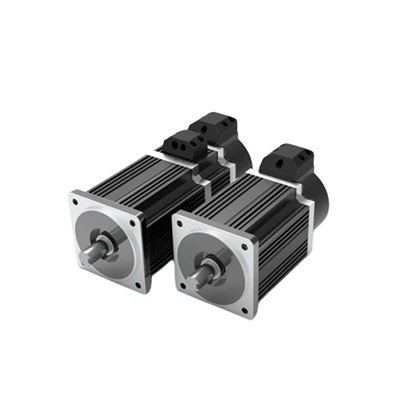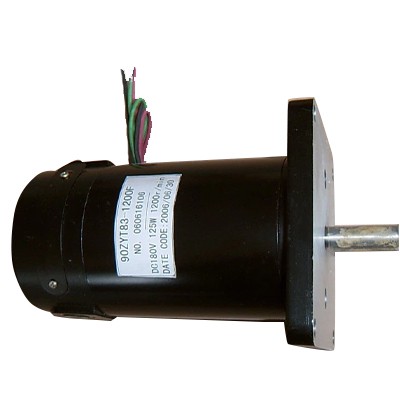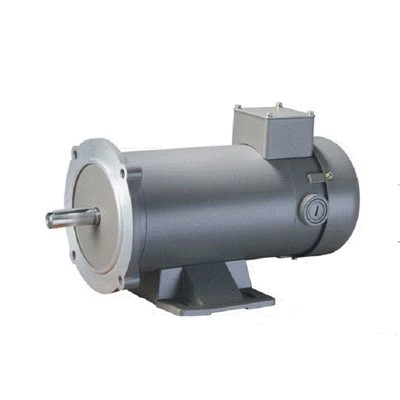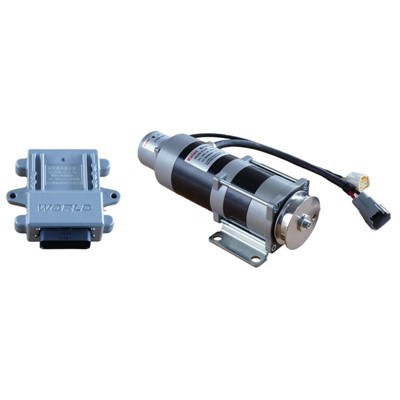
Choosing the right servo motor for a packaging machine is not simply about selecting a motor with enough power.
Packaging equipment often has to accelerate, stop, index, cut, seal, fill, label, or synchronize multiple mechanisms within a very short cycle. A motor that performs well in a general automation application may not necessarily be the best choice for a high-speed packaging line.
The right servo motor needs to match the machine's speed, torque, acceleration, positioning accuracy, load inertia, duty cycle, and control system.
This guide explains what packaging machine manufacturers should consider when selecting a servo motor and how to avoid common sizing mistakes.

Why Are Servo Motors Widely Used in Packaging Machines?
Packaging machines are typically built around repetitive, high-speed motion.
A typical packaging cycle may involve:
- Feeding the product
- Positioning the material
- Moving the packaging film
- Filling or dosing
- Cutting
- Sealing
- Labeling
- Discharging the finished package
The timing of these movements directly affects production speed and package quality.
A servo motor provides closed-loop control of movement, allowing the machine to control position, speed and torque much more accurately than a conventional motor.
This makes servo motors suitable for applications where the machine needs:
- Fast acceleration and deceleration
- Accurate positioning
- Repeatable movement
- Variable speed
- Electronic synchronization
- Frequent start/stop cycles
- Precise control of packaging materials
What Does a Servo Motor Do in a Packaging Machine?
A packaging machine may use several servo motors rather than one motor for the entire system.
Each motor can control a specific movement.
For example:
| Packaging Machine Function | Typical Servo Motor Role |
|---|---|
| Film Feeding | Control film speed and length |
| Product Feeding | Synchronize product movement |
| Filling | Control filling position and speed |
| Sealing | Control sealing movement |
| Cutting | Position the cutting mechanism |
| Labeling | Synchronize label placement |
| Conveyor | Control product transport |
| Rotary Indexing | Control precise angular movement |
| Capping | Control position and torque |
The Most Important Servo Motor Specifications for Packaging Machines
When choosing a servo motor for packaging equipment, pay particular attention to the following specifications:
- Rated torque
- Peak torque
- Rated speed
- Maximum speed
- Acceleration capability
- Encoder resolution
- Motor inertia
- Duty cycle
- Voltage
- Brake options
- Mounting dimensions
- Shaft configuration
Among these, torque, speed and acceleration usually deserve the most attention during the initial selection.
1. Torque: Can the Servo Motor Handle the Packaging Load?
Torque determines how much rotational force the servo motor can produce.
For a packaging machine, the required torque may come from:
- Film tension
- Rollers
- Belts
- Gears
- Cutting mechanisms
- Sealing mechanisms
- Filling mechanisms
- Product weight
- Mechanical friction
Do not calculate the motor size based only on the weight of the product.
In many packaging applications, the motor is actually spending more torque on acceleration, friction, or mechanical transmission than on the product itself.
Continuous Torque vs Peak Torque
Packaging machinery often operates with repeated acceleration and deceleration.
This means both continuous and peak torque are important.
Continuous Torque
This is the torque required during normal operation.
For example, a film-feeding motor may continuously maintain a certain film speed and tension.
Peak Torque
Peak torque is required during short periods such as:
- Rapid acceleration
- Rapid deceleration
- Cutting
- Indexing
- Direction reversal
- Starting a loaded mechanism
A motor may have enough continuous torque but insufficient peak torque.
That can result in overload alarms or poor machine performance during high-speed cycles.
2. Speed: How Fast Does Your Packaging Machine Need to Run?
Packaging machines are often designed around production output.
For example:
- Packages per minute
- Bags per minute
- Bottles per minute
- Cartons per minute
The required motor speed depends on the mechanical transmission between the motor and the packaging mechanism.
You should determine:
- Minimum speed
- Normal operating speed
- Maximum speed
- Acceleration time
- Deceleration time
A motor with a high maximum RPM is not automatically the best choice.
The more important question is:
Can the motor provide sufficient torque at the required operating speed?
3. Acceleration and Deceleration Are Critical
A packaging machine may need to move from zero to full operating speed in a fraction of a second.
For example, a film-feeding system may need to:
Start → accelerate → reach target position → stop → repeat
This creates a much higher dynamic load than continuous rotation.
If the machine has a short cycle time, the servo motor needs enough peak torque to accelerate the load without excessive overshoot or vibration.
When requesting a servo motor, provide the supplier with the required:
- Start speed
- Target speed
- Acceleration time
- Deceleration time
- Cycle frequency
This information is much more useful than simply saying "high-speed packaging machine."
4. Positioning Accuracy Matters
Packaging machines often need to position materials accurately.
Consider a vertical form-fill-seal machine.
The film must stop at the correct position before cutting and sealing.
If the film moves too far, the package length may be incorrect.
If it stops too early, the cutting position may also be incorrect.
A servo system can use encoder feedback to continuously monitor motor movement and correct deviations.
This makes servo motors particularly suitable for:
- Film cutting
- Label positioning
- Carton indexing
- Bottle positioning
- Filling
- Capping
- Sealing
Encoder Resolution Is Not the Same as Machine Accuracy
This point is often misunderstood.
A higher-resolution encoder provides more detailed position feedback.
However, actual machine accuracy also depends on:
- Gearbox backlash
- Belt elasticity
- Coupling rigidity
- Screw accuracy
- Mechanical vibration
- Shaft stiffness
- Machine structure
Therefore, choosing a servo motor with a high-resolution encoder is only part of achieving accurate packaging.
The complete mechanical system needs to be designed correctly.
5. Load Inertia Should Not Be Ignored
Load inertia is particularly important in packaging machines with rollers, reels, rotary cutters, or indexing mechanisms.
For example, a large film roll may have considerable rotational inertia.
At the beginning of the roll, the diameter and mass distribution are different from those near the end.
The servo motor therefore needs to handle changing mechanical conditions throughout the production cycle.
High inertia can cause:
- Slow acceleration
- Overshoot
- Vibration
- Longer settling time
- Positioning errors
For high-speed packaging equipment, inertia matching between the motor and load should be considered during the design stage.
Servo Motor for Film Feeding
Film feeding is one of the most common servo applications in packaging machinery.
The motor may need to control:
- Film length
- Film speed
- Film tension
- Start/stop position
- Synchronization with cutting and sealing
The servo motor needs to respond quickly while maintaining stable movement.
If the film feeding speed is unstable, it can cause:
- Uneven package length
- Film wrinkles
- Poor sealing position
- Cutting errors
- Material waste
For these applications, the motor, drive, encoder, roller, and tension-control system should be considered together.
Servo Motor for Filling Systems
Servo motors can also be used to control filling mechanisms.
Depending on the machine design, the motor may drive:
- Filling pumps
- Piston fillers
- Screw fillers
- Rotary filling mechanisms
The main requirements may include:
- Precise movement
- Repeatability
- Adjustable speed
- Smooth acceleration
- Easy recipe changes
For different products, the machine may need different filling speeds or positions.
Servo control makes these parameters easier to adjust electronically.
Servo Motor for Sealing and Cutting
Sealing and cutting mechanisms often require fast, repeatable movement.
The servo motor may need to:
- Accelerate rapidly
- Reach a target position
- Perform the sealing or cutting action
- Return quickly
- Repeat the cycle
The motor therefore needs good dynamic response and sufficient peak torque.
For high-speed machines, the mechanical design also needs to minimize vibration because vibration can affect sealing quality and cutting accuracy.
Servo Motor for Labeling Machines
Labeling applications are highly dependent on synchronization.
The motor may need to synchronize:
- Product position
- Label feeding
- Label dispensing
- Conveyor speed
If the label feed and product movement are not synchronized, labels can be applied too early, too late, or at inconsistent positions.
A servo motor provides feedback-based speed and position control that can help maintain synchronization.


Choosing Between Different Servo Motor Voltages
Servo motors are available in different voltage classes.
Common options include:
- 24V
- 48V
- 90V
- 220V
- 380V
The correct voltage depends on the machine's electrical architecture and power requirements.
24V Servo Motor
Often considered for compact equipment and low-voltage systems.
48V Servo Motor
Useful for applications requiring more power while maintaining a relatively low-voltage DC architecture.
220V Servo Motor
Common for industrial packaging machines with higher power requirements.
The motor voltage should always be matched with the servo drive and available power supply.
How to Calculate the Servo Motor Size for a Packaging Machine
A simple sizing process can be divided into several steps.
Step 1: Determine the Load
Identify:
Product weight
Roller weight
Film roll weight
Mechanical resistance
Friction
Step 2: Determine the Speed
Identify:
Normal RPM
Maximum RPM
Linear speed
Production cycles per minute
Step 3: Determine Acceleration
Calculate:
Acceleration time
Deceleration time
Required peak torque
Step 4: Calculate Inertia
Consider:
Roller inertia
Reel inertia
Gear inertia
Load inertia
Step 5: Consider Transmission
Check:
Gear ratio
Pulley ratio
Gearbox efficiency
Belt transmission
Step 6: Check the Duty Cycle
Determine how often the machine accelerates, stops and reverses.
This information can then be used to select a motor with suitable continuous and peak torque.
Direct Drive or Gearbox Servo Motor?
Both options can be useful for packaging machinery.
Servo Motor + Gearbox
A gearbox can provide:
- Higher output torque
- Lower output speed
- Better load matching
This can be useful for indexing systems and heavy mechanisms.
However, the gearbox introduces:
- Backlash
- Mechanical losses
- Additional cost
- Additional maintenance
Direct Drive Servo Motor
A direct-drive configuration eliminates the gearbox.
Potential advantages include:
- Lower mechanical complexity
- No gearbox backlash
- Reduced maintenance
- Direct motion transmission
However, direct-drive systems can require larger motors and may not be suitable for every application.
The best option depends on the required speed, torque, accuracy, and mechanical structure.
Common Servo Motor Selection Mistakes in Packaging Machinery
Choosing the Motor Only by Wattage
A 1 kW motor does not automatically tell you whether it can handle the machine.
Torque at the required speed is more important.
Ignoring Peak Torque
High-speed packaging equipment frequently accelerates and decelerates.
Peak torque must be evaluated.
Ignoring Film Roll Inertia
Film rolls can have significant and changing inertia.
This can affect acceleration requirements.
Choosing an Encoder Without Considering the Machine
Encoder resolution cannot compensate for poor mechanical accuracy.
Oversizing the Motor
An unnecessarily large motor increases cost and may increase inertia.
Selecting the Motor Before the Drive
The motor and servo drive should be matched from the beginning.
What Information Should You Give a Servo Motor Supplier?
When asking for a quotation, provide as much application information as possible.
For example:
Application: Horizontal Packaging Machine
Load: 5 kg
Operating Speed: 2,000 RPM
Maximum Speed: 3,000 RPM
Acceleration Time: 0.3 seconds
Cycle: 30 cycles/minute
Required Positioning Accuracy: ±0.1 mm
Power Supply: 220V AC
Installation: Horizontal
Working Environment: Indoor production workshop
You should also provide:
- Shaft size
- Mounting dimensions
- Gear ratio
- Encoder requirements
- Brake requirements
- Communication protocol
This allows the supplier to recommend a motor based on the actual machine rather than a generic catalog specification.
Why Choose Auric Servo Motors for Packaging Machines?
Auric provides servo motor solutions for industrial automation and OEM equipment, including packaging machinery.
Packaging equipment manufacturers often have requirements that go beyond standard motor specifications.
Auric can evaluate requirements such as:
- Torque
- Peak torque
- Speed
- Acceleration
- Encoder configuration
- Voltage
- Shaft dimensions
- Mounting configuration
- Brake requirements
- Servo drive compatibility
For OEM packaging machines, customized motor configurations can also be considered according to the machine's mechanical and electrical requirements.
The goal is not simply to supply a motor with a higher specification.
The goal is to provide a servo motor that works reliably within the complete packaging system.
Packaging Machine Servo Motor Selection Checklist
Before purchasing a servo motor, confirm:
Performance
Continuous torque
Peak torque
Rated speed
Maximum speed
Acceleration time
Deceleration time
Mechanical
Load inertia
Gear ratio
Shaft size
Mounting dimensions
Gearbox requirements
Control
Encoder resolution
Position accuracy
Communication protocol
Servo drive compatibility
Electrical
Rated voltage
Continuous current
Peak current
Environment
Ambient temperature
Dust
Humidity
Vibration
Installation orientation
Frequently Asked Questions


Final Thoughts
A servo motor for a packaging machine needs to do much more than simply rotate.
It needs to accelerate quickly, stop accurately, repeat the same movement thousands of times, synchronize with other machine axes, and maintain reliable performance throughout the production cycle.
That is why the best servo motor should be selected according to the complete machine requirements:
Torque + Speed + Acceleration + Inertia + Accuracy + Duty Cycle + Control
If these parameters are correctly evaluated before purchase, packaging machine manufacturers can avoid common problems such as motor overheating, positioning errors, unstable film feeding, excessive vibration, and unnecessary motor costs.
For OEM packaging equipment manufacturers, working with an application-focused supplier such as Auric can make the selection process easier. Instead of choosing a motor only from a catalog, the motor can be matched to the actual motion requirements of the packaging machine.
Need a servo motor for your packaging machine? Send Auric your load, speed, acceleration, voltage, and installation requirements to get a suitable motor recommendation.