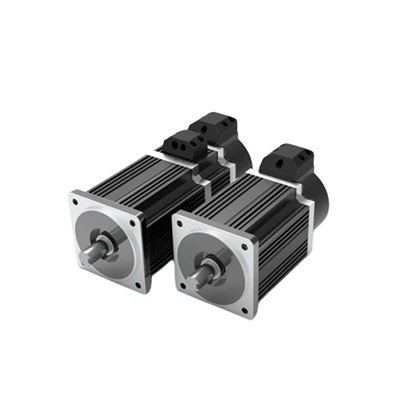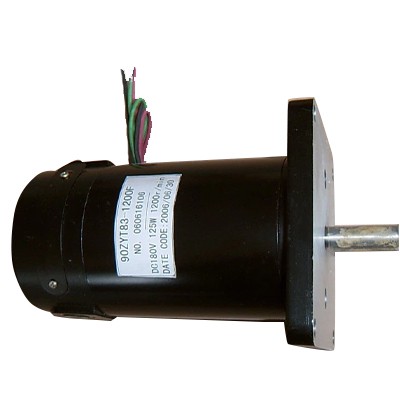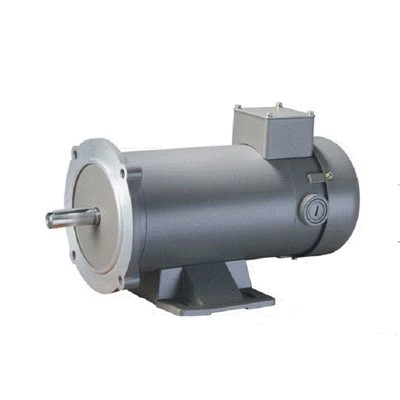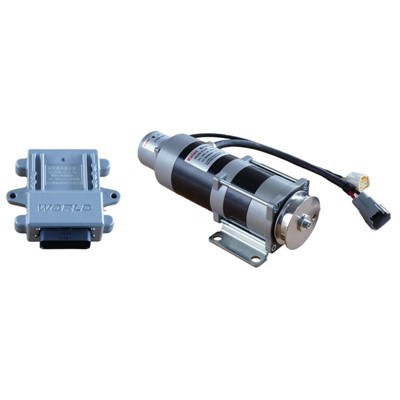
A packaging machine can look simple from the outside, but the motion inside is anything but simple.
Film has to move to the right length. Products need to arrive at the correct position. Filling mechanisms have to follow a repeatable cycle. Cutting and sealing must happen at the right moment. At higher production speeds, even a small motion error can lead to poor seals, inaccurate cutting, wasted packaging material, or rejected products.
This is where a servo motor for packaging machines becomes important.
A servo motor is not simply a replacement for a conventional motor. It becomes part of the machine's motion-control system, working with the servo drive, encoder, controller, mechanical transmission, and sensors.
This guide takes a different approach from a basic product introduction. Instead of only discussing torque and speed, it looks at where servo motors are used in packaging equipment, how the motor should be integrated, what problems it can solve, and what buyers should check before purchasing.


What Makes Packaging Machines Different?
Packaging machinery has one major characteristic that separates it from many general industrial machines:
The machine repeats the same motion thousands or even millions of times.
A typical packaging cycle may look like this:
Feed → Position → Fill → Seal → Cut → Discharge → Repeat
At low speed, a small positioning error may not be obvious.
At high speed, however, that same error can happen hundreds of times per hour.
This means packaging-machine motors need to provide more than basic rotation. They need to deliver:
- Repeatable motion
- Fast response
- Controlled acceleration
- Accurate stopping
- Stable speed
- Synchronization with other axes
- Reliable operation over long production cycles
That is why servo motors are widely used in modern packaging equipment.
Where Are Servo Motors Used in Packaging Machines?
One of the biggest mistakes when selecting a servo motor is looking at the packaging machine as one complete system.
In reality, a packaging machine may have several independent motion axes.
Each axis may have completely different requirements.
Common servo-driven functions include:
- Film feeding
- Product feeding
- Conveyor movement
- Filling
- Cutting
- Heat-sealing mechanisms
- Label dispensing
- Capping
- Carton forming
- Carton closing
- Rotary indexing
- Pick-and-place mechanisms
A film-feeding axis may prioritize precise length control.
A cutting axis may need extremely fast acceleration and deceleration.
A conveyor axis may prioritize smooth speed control.
A filling axis may need accurate positioning and repeatability.
So the right question is not:
"What servo motor should I use for my packaging machine?"
A better question is:
"What does each motion axis need the servo motor to do?"
Servo Motor vs Standard Motor for Packaging Equipment
A conventional induction motor can be a good solution for simple continuous-motion applications.
For example, if a conveyor only needs to run at a relatively constant speed, there may be no reason to use a sophisticated servo system.
The situation changes when the machine needs controlled motion.
Standard Motor
A conventional motor is generally suitable when the application mainly requires:
- Continuous rotation
- Simple speed control
- Low positioning requirements
- Relatively stable load conditions
Servo Motor
A servo motor becomes more attractive when the machine requires:
- Precise positioning
- Frequent acceleration and deceleration
- Electronic synchronization
- Rapid response
- Repeatable indexing
- Variable motion profiles
- Closed-loop feedback
This distinction can help manufacturers avoid both under-specifying and over-specifying the machine.
The Real Advantage of a Servo Motor in Packaging
The biggest benefit is not simply "high precision."
The real advantage is controlled and repeatable motion.
Consider a film-feeding application.
The machine may need to feed exactly a certain length of film, stop, allow another mechanism to operate, and then start again.
If the feeding motor runs too far, the package becomes too long.
If it stops too early, the package becomes too short.
If the motor response changes during acceleration, the film may also experience inconsistent tension.
A servo system can continuously monitor motor movement through feedback and adjust the motion according to the commanded position and speed.
This is particularly valuable in high-cycle packaging machinery.
The Three Motion Characteristics Packaging Engineers Should Watch
When evaluating a servo motor, three characteristics deserve particular attention:
Dynamic Response
How quickly can the motor respond to a change in command?
Repeatability
Can the motor perform the same movement consistently from cycle to cycle?
Synchronization
Can the motor maintain the correct relationship with other machine axes?
These characteristics can have a direct impact on production quality.
A packaging machine does not operate one motor at a time.
Several mechanisms often have to move together.
Multi-Axis Synchronization Is a Major Consideration
Modern packaging equipment frequently uses multiple servo motors.
For example:
- Servo 1 controls film feeding.
- Servo 2 controls cutting.
- Servo 3 controls product feeding.
- Servo 4 controls filling.
- Servo 5 controls labeling.
- These axes cannot operate independently.
- Their timing needs to be coordinated.
If the film moves faster while the cutting mechanism does not adjust accordingly, the cut position may change.
If the product conveyor is not synchronized with the filling mechanism, the filling position may become inconsistent.
Therefore, the servo motor should be evaluated together with:
- Servo drive
- Motion controller
- Encoder
- Communication network
- Sensors
- Mechanical transmission
This is a system-level decision, not simply a motor purchase.
Choosing the Servo Motor for Film Feeding
Film feeding is one of the most demanding applications because the motor needs to control both movement and timing.
The motor may need to:
- Accelerate the film
- Maintain the required speed
- Stop at a specific position
- Wait for the next machine action
- Accelerate again
- Repeat continuously
The situation becomes more complicated when the packaging material changes.
Different films can have different:
- Thickness
- Surface friction
- Elasticity
- Tensile strength
- Roll diameter
These differences affect the mechanical load.
A motor that performs well with one packaging material may require different motion parameters with another.
How Film Roll Diameter Affects Servo Motor Selection
This is a practical point that is easy to overlook.
As a roll of packaging film becomes smaller, its rotational characteristics change.
The motor may therefore see different inertia conditions throughout the production cycle.
This can affect:
- Acceleration
- Deceleration
- Film tension
- Motor response
For applications using large film rolls, the complete roll condition should be considered when sizing the servo motor.
The motor should not be selected solely according to the empty roll or full roll condition without considering how the machine operates throughout the cycle.
Servo Motor for Cutting Mechanisms
Cutting systems often require fast and synchronized motion.
The motor may control:
- Rotary knives
- Cross cutters
- Guillotine cutters
- Flying cutters
A typical cycle may involve:
Accelerate → Synchronize → Cut → Return → Repeat
The motor therefore needs good dynamic response.
The mechanical structure also matters.
If the cutting mechanism has excessive play, backlash, or vibration, increasing encoder resolution alone will not solve the problem.
For high-speed cutting, the motor and mechanical mechanism should be designed together.
Servo Motor for Filling Applications
Filling equipment has different requirements from film feeding.
Depending on the product and machine design, the servo motor may control:
- Piston movement
- Screw feeding
- Pump rotation
- Rotary filling
- Dosing mechanisms
Here, repeatability is often more important than maximum motor speed.
For example, if the machine needs to dispense a consistent quantity of material, the servo motor must execute the same movement accurately over repeated cycles.
The ideal motor therefore depends heavily on the filling mechanism.
Servo Motor for Labeling Equipment
Labeling machines require synchronization between the product and label.
The servo motor may control the label roll while sensors detect the product position.
The controller then adjusts motor movement to maintain the required label position.
This requires:
- Fast feedback
- Stable speed
- Accurate positioning
- Good acceleration response
If the machine operates at high speed, the response time of the entire control system becomes important.
The motor alone cannot compensate for a slow sensor, poor controller configuration, or excessive mechanical backlash.
Servo Motor for Rotary Packaging Equipment
Rotary packaging machines introduce another requirement:
Indexing accuracy.
The rotary mechanism may need to move through a specific angle, stop, perform an operation, and then move to the next station.
Examples include:
- Rotary filling machines
- Rotary capping machines
- Rotary sealing machines
- Rotary indexing tables
In these applications, the motor must control both:
- Angular position
- Motion timing
Load inertia becomes particularly important when the rotary table is large or carries multiple products.
How to Select the Right Servo Motor for Packaging Equipment
Rather than starting with motor power, use the following selection process.
Step 1: Define the Machine Motion
Ask:
- What is moving?
- How far does it move?
- How quickly does it need to move?
- How often does it stop?
- Does it reverse?
- Does it need synchronization?
Step 2: Determine the Load
Identify:
- Product weight
- Roller weight
- Film roll weight
- Moving mechanism mass
- Friction
- Mechanical resistance
- Do not look at product weight alone.
Step 3: Determine the Motion Profile
A useful motion profile should include:
- Starting speed
- Operating speed
- Maximum speed
- Acceleration time
- Deceleration time
- Dwell time
- Cycle frequency
This information is extremely useful for servo sizing.
Step 4: Evaluate the Transmission
Check whether the motor drives the load through:
- Gearbox
- Belt
- Pulley
- Chain
- Screw
- Coupling
The transmission ratio and efficiency affect the motor's actual requirements.
Step 5: Calculate Inertia
For packaging equipment with rollers, reels, rotary tables, or cutters, load inertia should be considered carefully.
High inertia can increase acceleration torque requirements and affect settling time.
Step 6: Determine Positioning Requirements
Ask:
- How accurate must the final position be?
- How repeatable must the movement be?
- Is backlash acceptable?
- Is high-resolution feedback required?
This helps determine the appropriate encoder and mechanical configuration.


What Servo Motor Power Does a Packaging Machine Need?
There is no universal answer.
A small labeling machine may require a relatively small servo motor.
A heavy-duty packaging line with large rollers or high-inertia mechanisms may require considerably more torque and power.
Two machines with the same production speed can have completely different motor requirements.
For example:
Machine A
Lightweight film
Small roller
Low inertia
Moderate acceleration
Machine B
Heavy packaging material
Large roller
High inertia
Very rapid acceleration
Both may operate at the same RPM, but Machine B may require substantially more motor torque.
This is why choosing a motor simply because another machine uses the same power rating is not a reliable sizing method.
How Much Servo Motor Torque Is Enough?
Start with the continuous load.
Then consider the additional torque required for:
- Acceleration
- Friction
- Inertia
- Gravity
- Transmission losses
After that, check the motor's peak torque capability.
The important thing is to compare the required torque at the required speed with the actual motor torque-speed curve.
A motor may have a high peak torque rating but still be unsuitable if that torque is unavailable at the required operating speed.
Why Oversizing Can Also Be a Problem
Some packaging machine builders intentionally select a motor much larger than required.
This may seem safer, but it is not always a good engineering decision.
An oversized motor can increase:
- Equipment cost
- Servo drive cost
- Motor inertia
- Electrical requirements
- Mechanical dimensions
It can also make the system more difficult to tune.
The goal is not to purchase the biggest servo motor.
The goal is to select a motor with enough performance to handle the real operating conditions reliably.
What About 24V, 48V and 220V Servo Motors?
The correct voltage depends on the machine's electrical architecture.
24V Servo Motor
Suitable for applications where the machine already uses a low-voltage DC system.
Typical examples include:
Compact automation
Mobile equipment
Battery-powered machinery
48V Servo Motor
Useful when more power is required while maintaining a relatively low-voltage DC architecture.
This can be attractive for certain mobile or compact industrial systems.
220V Servo Motor
Common in industrial packaging equipment where higher power is required.
The voltage should always be matched to the servo drive and complete electrical system.
Encoder Selection for Packaging Machines
The encoder provides feedback to the servo system.
When choosing encoder feedback, consider:
- Resolution
- Position requirements
- Speed
- Controller compatibility
- Absolute or incremental feedback
However, higher encoder resolution is not automatically better.
If the machine has:
- Excessive backlash
- Flexible belts
- Poor coupling
- Mechanical vibration
- the actual system accuracy may still be limited.
The encoder should therefore be selected together with the mechanical design.
When Is a Servo Brake Necessary?
A brake may be useful when the servo motor controls a vertical axis or another mechanism that needs to remain stationary when power is removed.
For example:
- Vertical packaging mechanisms
- Lifting systems
- Height-adjustable stations
However, the brake should not be treated as the only safety measure.
The machine's complete safety design should determine how loads are safely held.
How Duty Cycle Affects Servo Motor Selection
Packaging machines can run continuously for many hours.
The motor may repeatedly:
- Accelerate
- Run
- Decelerate
- Stop
- Restart
Even when the peak torque is acceptable, the repeated cycles can create significant heat.
Therefore, evaluate:
- Cycle time
- Number of cycles per minute
- Acceleration frequency
- Deceleration frequency
- Continuous operating time
A motor suitable for intermittent operation may not be suitable for continuous high-cycle production.
Packaging Machine Servo Motor: Common Problems and Their Causes
Problem 1: Film Length Is Inconsistent
Possible causes include:
Incorrect servo tuning
Film slippage
Mechanical backlash
Incorrect encoder feedback
Changing film tension
Do not immediately assume that the motor is too small.
Probem 2: Motor Overheats
Possible causes include:
Insufficient continuous torque
Excessive acceleration
High friction
Poor cooling
Excessive duty cycle
The complete load profile should be checked.
Problem 3: Machine Vibrates During Acceleration
Possible causes include:
Excessive load inertia
Poor servo tuning
Mechanical resonance
Flexible coupling
Incorrect motor sizing
Again, replacing the motor with a larger one may not solve the underlying problem.
Problem 4: Cutting Position Is Incorrect
Possible causes include:
Poor synchronization
Encoder error
Mechanical backlash
Sensor timing
Incorrect motion parameters
This is a good example of why packaging-machine motion should be treated as a complete system.
How Auric Approaches Servo Motors for Packaging Machines
For packaging machine manufacturers, a servo motor is rarely an isolated component.
It needs to fit the mechanical structure and communicate correctly with the machine's control system.
Auric provides servo motor solutions for OEM machinery and industrial automation applications.
For packaging applications, key factors can include:
- Continuous torque
- Peak torque
- Operating speed
- Acceleration
- Load inertia
- Encoder configuration
- Voltage
- Shaft dimensions
- Mounting dimensions
- Brake requirements
- Servo drive compatibility
This application-based approach is useful when a standard catalog motor does not directly match the machine.
For OEM projects, the motor configuration can be evaluated around the actual equipment requirements rather than choosing a model based only on rated power.
What Should You Send a Servo Motor Manufacturer?
If you want a useful motor recommendation, don't just send:
"Please quote a servo motor for packaging machine."
Give the supplier enough information to understand the application.
Basic Machine Information
Packaging machine type
Application of the motor
Production speed
Working hours per day
Mechanical Information
Load
Roller diameter
Film roll diameter
Gear ratio
Transmission type
Shaft size
Mounting dimensions
Motion Information
Operating RPM
Maximum RPM
Acceleration time
Deceleration time
Cycle frequency
Required positioning accuracy
Electrical Information
Power supply
Servo drive
Controller
Encoder requirements
Communication interface
The more complete the information, the less guesswork is involved in motor selection.
Packaging Servo Motor Buyer Checklist
Before placing an order, confirm the following:
Motor
Rated power
Continuous torque
Peak torque
Rated speed
Maximum speed
Motor inertia
Feedback
Encoder type
Encoder resolution
Absolute or incremental
Drive compatibility
Mechanical
Shaft diameter
Mounting dimensions
Gearbox
Brake
Coupling
Application
Load
Acceleration
Cycle time
Duty cycle
Positioning accuracy
Environment
Temperature
Dust
Humidity
Vibration
Frequently Asked Questions


Final Thoughts
A servo motor for packaging machines should be selected around the machine's motion requirements-not simply around a motor power number.
The right solution needs to consider the entire system:
Load + Speed + Acceleration + Inertia + Positioning + Synchronization + Duty Cycle
For film feeding, the priority may be accurate length and stable tension.
For cutting, dynamic response and synchronization may be more important.
For filling, repeatability and controlled movement may take priority.
For rotary indexing, inertia and positioning accuracy can become the key factors.
This is why there is no universal "best servo motor for packaging machines."
The best motor is the one that matches the specific axis, works properly with the servo drive and controller, and can repeat the required motion reliably throughout the production cycle.
For OEM packaging machine manufacturers, providing the supplier with the actual load, speed, acceleration, mechanical dimensions, voltage, and control requirements is the fastest way to get a useful recommendation.
Auric can evaluate these application parameters and help OEM customers select a servo motor configuration suited to their packaging equipment.