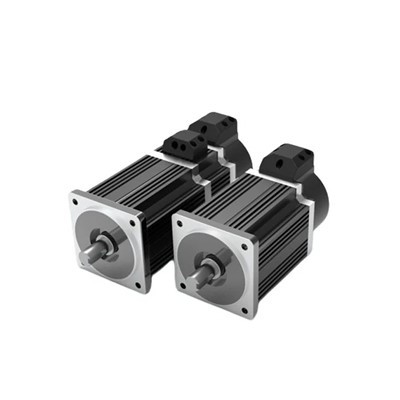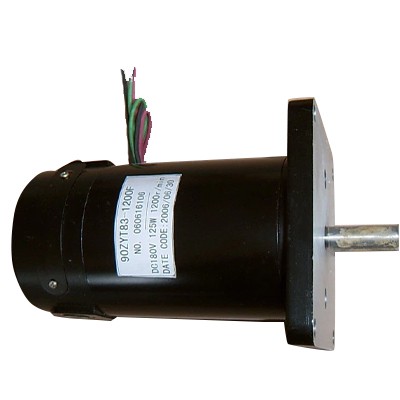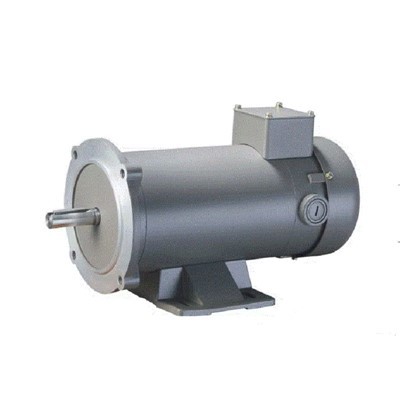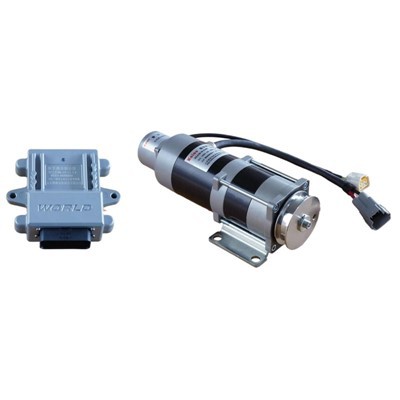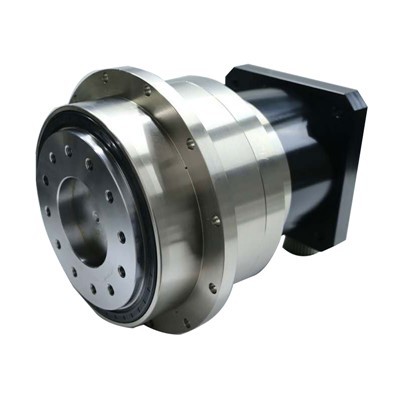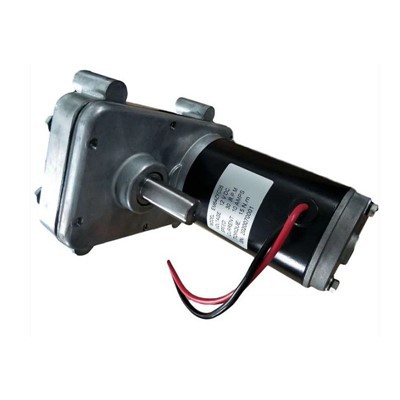
When a machine needs to move a heavy load, accelerate quickly, or maintain controlled motion under demanding working conditions, a standard motor may not provide enough torque or dynamic response.
A High Torque Industrial Servo Motor is designed for exactly these situations.
It combines high torque output with closed-loop control, allowing the motor to respond to changes in position, speed, and load while maintaining controlled motion. This makes it suitable for industrial automation, robotics, CNC equipment, packaging machinery, material handling systems, rotary tables, and other demanding applications.
But if you are buying a high torque servo motor, the motor specification is only part of the decision.
You also need to consider the manufacturer, factory capability, customization, technical support, delivery, and actual High Torque Industrial Servo Motor price.
This guide explains what industrial buyers and OEM manufacturers should know before purchasing.
What Is a High Torque Industrial Servo Motor?
A High Torque Industrial Servo Motor is a servo motor developed for applications where the machine requires substantial rotational torque together with precise motion control.
Unlike a basic motor that mainly provides continuous rotation, a servo motor works with a servo drive and feedback device such as an encoder.
The basic system is:
Controller → Servo Drive → Servo Motor → Mechanical Load → Encoder Feedback
The controller sends the motion command.
The servo drive supplies the required electrical power.
The motor generates torque and movement.
The encoder sends position and speed information back to the control system.
This closed-loop operation allows the system to continuously compare the commanded movement with the actual movement.
For heavy industrial applications, this combination of torque + feedback + control is often more important than motor power alone.
Why Choose a High Torque Servo Motor?
There are several situations where high torque becomes particularly important.
Heavy Loads
A heavy machine component requires more torque to start, accelerate, and maintain movement.
High-Inertia Loads
Large rollers, rotary tables, reels, gears, and robotic arms can have considerable inertia.
Rapid Acceleration
If the machine needs to reach operating speed quickly, the motor requires additional acceleration torque.
Frequent Start and Stop
Packaging, indexing, material handling, and automated machinery can repeatedly accelerate and decelerate.
Vertical Movement
Vertical axes need torque to overcome gravity and control the load.
Heavy-Duty Automation
Industrial machines that operate continuously under demanding conditions need a motor with suitable thermal and overload capability.
High Torque Does Not Always Mean High Power
This is one of the most important points when selecting a servo motor.
Torque and power are related to speed, but they are not the same specification.
A machine may require:
High torque at low speed
Moderate torque at high speed
High torque and high speed simultaneously
These applications require different motor configurations.
For example, a motor producing high torque at 500 RPM may not provide the same torque at 3,000 RPM.
Therefore, buyers should always ask the manufacturer for the torque-speed curve, rather than evaluating the motor based only on its rated torque.
Continuous Torque and Peak Torque
A high torque servo motor normally needs to be evaluated based on both continuous and peak torque.
Continuous Torque
Continuous torque is the torque required during normal operation.
It is important for applications where the motor remains under load for long periods.
Examples include:
Conveyor systems
Winding equipment
Continuous material handling
Heavy rotary equipment
The motor should be capable of delivering the required continuous torque without excessive thermal stress.
Peak Torque
Peak torque is required for short periods.
It becomes important during:
Starting
Rapid acceleration
Rapid deceleration
Direction changes
Indexing
Sudden load changes
A motor can have enough continuous torque but still be unsuitable if it cannot provide sufficient peak torque.
This is why servo motor sizing should consider the complete motion cycle.
How to Calculate High Torque Servo Motor Requirements
A practical torque calculation should consider more than the weight of the load.
Depending on the application, the required motor torque may include:
- Load torque
- Acceleration torque
- Friction torque
- Gravity torque
- Transmission losses
The acceleration requirement is especially important for servo systems.
A heavy rotary table may require relatively little torque once it is rotating at constant speed, but considerably more torque to accelerate from zero to the target speed.
This is why load inertia should be included in the calculation.
Load Inertia: A Critical Factor
Load inertia describes how difficult it is to change the rotational speed of an object.
It depends not only on mass but also on how that mass is distributed around the axis.
For example, a large-diameter roller can have significant inertia even when its weight does not seem particularly high.
High inertia can cause:
Slow acceleration
Overshoot
Vibration
Long settling time
Servo alarms
Positioning problems
When purchasing a high torque servo motor, provide the manufacturer with the approximate load inertia whenever possible.
This allows the manufacturer to make a more meaningful recommendation.
High Torque Servo Motor Applications
High torque servo motors can be used across many industrial sectors.
Industrial Robots
Robot joints often require high torque because the motor needs to control both the robot arm and the payload.
CNC Machines
Servo motors can drive machine axes that require controlled acceleration, positioning, and repeatability.
Packaging Machines
High torque can be useful for film feeding, indexing, cutting, sealing, and other rapid motion applications.
Material Handling
Heavy conveyors, lifting mechanisms, and automated handling systems can require substantial starting and acceleration torque.
Rotary Tables
Rotary tables may have significant inertia and require precise positioning.
Winding Machines
The motor needs to maintain controlled movement as material diameter and load conditions change.
Automated Production Lines
Multiple servo motors may be synchronized to coordinate different machine movements.
How to Choose the Right High Torque Industrial Servo Motor
Before purchasing, evaluate the following parameters.
Required Torque
Determine both:
Continuous torque
Peak torque
Do not use only the average torque value.
Operating Speed
Identify:
Normal speed
Maximum speed
Minimum speed
Then check the motor's torque at those speeds.
Acceleration
Determine how quickly the load needs to reach the required speed.
Shorter acceleration times generally require higher acceleration torque.
Load Inertia
Calculate or estimate the inertia of the complete rotating system.
Gear Ratio
If a gearbox is used, include the gear ratio and transmission efficiency.
Encoder
Check:
Encoder type
Resolution
Feedback compatibility
Absolute or incremental operation
Voltage
Common configurations may include:
24V
48V
90V
220V
Other industrial voltage configurations
The motor must match the servo drive and machine power architecture.
Mechanical Dimensions
Check:
Mounting flange
Shaft diameter
Shaft length
Keyway
Motor body dimensions
Cable outlet
This is particularly important for OEM equipment.
Why Motor Size Alone Does Not Determine Performance
A larger motor can provide more torque, but that does not automatically mean better machine performance.
An oversized servo motor can increase:
- Purchase cost
- Drive cost
- Motor inertia
- Machine size
- Energy requirements
It may also make servo tuning more complicated.
On the other hand, an undersized motor may cause:
Overload
- Excessive heating
- Poor acceleration
- Positioning errors
- Reduced service life
- The objective is to find the correct balance.
The best high torque servo motor is not the biggest motor. It is the motor correctly matched to the application.
What Makes a Good High Torque Industrial Servo Motor Factory?
If you are purchasing directly for an OEM project, it is important to understand the difference between a factory and a trading company.
A professional High Torque Industrial Servo Motor factory should have control over key manufacturing and testing processes.
Important capabilities can include:
- Motor design
- Stator manufacturing
- Rotor assembly
- Coil winding
- Magnet assembly
- Shaft machining
- Bearing installation
- Encoder integration
- Motor assembly
- Electrical testing
- Performance testing
- Quality inspection
For OEM customers, manufacturing capability becomes even more important because the motor may need to be modified to fit a specific machine.
Why Buy Directly From a High Torque Industrial Servo Motor Manufacturer?
For standard replacement motors, a distributor may be enough.
For OEM machinery, however, working directly with a High Torque Industrial Servo Motor manufacturer can provide several advantages.
Direct Technical Communication
You can communicate your load, torque, speed, and mechanical requirements directly to the engineering team.
OEM Customization
Depending on the manufacturer's capabilities, customization may include:
- Shaft dimensions
- Mounting dimensions
- Encoder
- Brake
- Cable
- Connector
- Voltage
- Motor length
- Other mechanical configurations
Better Production Coordination
For repeat orders, direct communication can simplify production planning and delivery.
Application Support
A manufacturer with engineering capabilities can help determine whether a standard motor is suitable or whether a different configuration is required.
What Should You Ask a Servo Motor Manufacturer?
Before choosing a supplier, ask several practical questions.
About the Product
What torque range is available?
What is the rated speed?
What is the maximum speed?
What is the peak torque?
What encoder options are available?
Is a brake available?
About Manufacturing
Is the motor manufactured in-house?
Which processes are performed in the factory?
Can OEM modifications be made?
Can samples be supplied?
Can the factory support batch production?
About Quality
What tests are performed before shipment?
Is load testing available?
How is encoder performance checked?
How are finished motors inspected?
About Service
Is technical support available?
Can the motor be matched with the customer's servo drive?
Can replacement parts be supplied?
What is the expected lead time?
These questions can help you distinguish a genuine manufacturer from a company that simply resells motors.

High Torque Industrial Servo Motor Price: What Should You Expect?
The High Torque Industrial Servo Motor price can vary significantly between different models and manufacturers.
There is no meaningful single price for "a high torque servo motor" without knowing the specification.
The final price can be affected by:
Motor Power and Torque
Higher torque requirements generally mean a larger and more substantial motor design.
Speed
High-speed configurations may require different rotor, bearing, winding, and cooling considerations.
Encoder
Encoder type and resolution can influence the final configuration and price.
Brake
A built-in electromagnetic brake adds components and cost.
Voltage
Different voltage requirements may require different motor winding designs.
Customization
Non-standard shafts, flanges, cables, connectors, and other modifications can affect engineering and production costs.
Quantity
The unit price for one sample can be very different from the price for a long-term OEM production order.
Testing Requirements
Special performance or application testing may also affect the quotation.
Why You Should Not Compare Servo Motor Prices by Specification Alone
Two motors may both be advertised as:
2 kW High Torque Servo Motor
but their actual specifications may be different.
One may have:
Higher peak torque
Better encoder
Higher maximum speed
Lower rotor inertia
Better cooling
Different bearing configuration
Another may simply offer a lower initial price.
For industrial buyers, the better comparison is:
Price + Performance + Reliability + Compatibility + Service
rather than price alone.
How to Get an Accurate High Torque Industrial Servo Motor Price
If you want a factory quotation, provide the technical information first.
A useful RFQ might include:
Application: CNC rotary axis
Required Continuous Torque: 12 N·m
Peak Torque: 30 N·m
Rated Speed: 1,500 RPM
Maximum Speed: 3,000 RPM
Voltage: 220V
Encoder: Absolute encoder
Brake: Required
Mounting: Flange mounting
Shaft: Custom dimensions
Quantity: 50 units
This allows the manufacturer to quote a specific configuration instead of giving you a vague price range.
High Torque Servo Motor Factory Price vs Market Price
Factory-direct purchasing can be attractive for OEM customers because there are fewer layers between the manufacturer and end user.
However, "factory price" does not always mean the lowest possible price.
A serious manufacturer invests in:
Engineering
Production equipment
Quality control
Testing
Raw materials
Technical support
After-sales service
A very low quotation may indicate that some of these areas are being reduced.
For industrial equipment, the better objective is to find a supplier offering a reasonable balance between price and long-term performance.
When Do You Need a Customized Servo Motor?
A standard motor is usually the most economical choice when its specifications fit your machine.
Customization becomes worthwhile when the standard motor does not fit requirements such as:
Limited installation space
Special shaft dimensions
Unusual mounting
Special encoder
Built-in brake
Specific cable direction
Special voltage
Specific torque-speed requirements
For OEM manufacturers, a customized motor can eliminate the need to redesign the machine around an unsuitable standard motor.
High Torque Servo Motor With Gearbox or Direct Drive?
Both configurations have advantages.
Servo Motor With Gearbox
Suitable when you need:
Higher output torque
Lower output speed
Load matching
Compact transmission
Potential disadvantages include:
Backlash
Transmission losses
Additional cost
Additional maintenance
Direct Drive Servo Motor
A direct-drive system connects the motor directly to the load.
Potential benefits include:
Fewer mechanical components
No gearbox backlash
Lower transmission complexity
Direct motion
The correct solution depends on the actual speed, torque, inertia, and accuracy requirements.
High Torque Industrial Servo Motor for OEM Projects
OEM customers often need more than a standard catalog motor.
For a new machine, the servo motor may need to match:
Existing mechanical dimensions
Control architecture
Servo drive
PLC
Encoder interface
Machine cycle
Available voltage
Installation space
This is where manufacturer support becomes important.
A good OEM supplier should be able to discuss the application before recommending a model.
How Auric Supports High Torque Servo Motor Applications
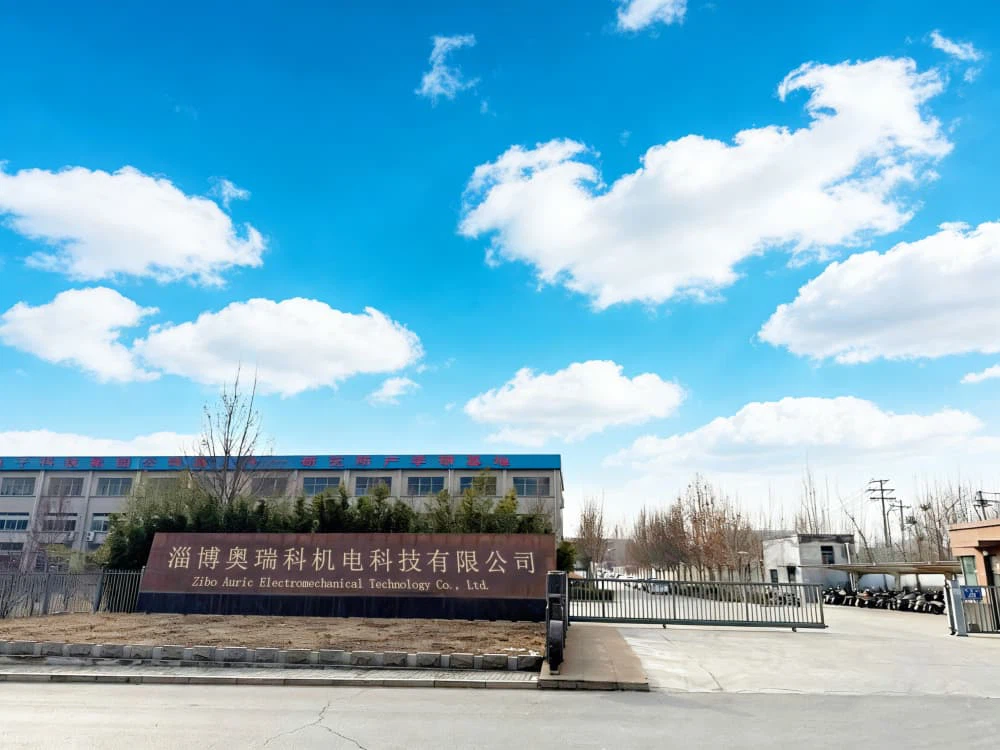
Auric provides servo motor solutions for industrial automation and OEM equipment manufacturers.
For high torque applications, Auric can evaluate requirements including:
Continuous torque
Peak torque
Rated speed
Maximum speed
Acceleration
Load inertia
Duty cycle
Encoder configuration
Voltage
Shaft dimensions
Mounting dimensions
Brake requirements
Servo drive compatibility
For customers developing packaging machines, robotics, CNC equipment, material handling systems, and other industrial machinery, the motor can be evaluated according to the actual application rather than selected only by rated power.
OEM requirements can also be discussed when a standard catalog configuration does not directly fit the machine.
High Torque Industrial Servo Motor Buying Checklist
Before placing an order, confirm the following.
Motor Performance
Rated torque
Peak torque
Rated speed
Maximum speed
Torque-speed curve
Acceleration capability
Rotor inertia
Mechanical
Shaft diameter
Shaft length
Mounting flange
Motor dimensions
Gearbox
Brake
Feedback
Encoder type
Encoder resolution
Drive compatibility
Communication interface
Electrical
Rated voltage
Rated current
Peak current
Connector
Cable configuration
Supplier
Factory manufacturing capability
Engineering support
OEM customization
Quality testing
Production capacity
Lead time
Warranty
After-sales support
Price
Sample price
Unit price
MOQ
Bulk order price
Customization cost
Packaging
Shipping
Frequently Asked Questions
What is a High Torque Industrial Servo Motor?
It is a servo motor designed for industrial applications requiring substantial torque together with controlled speed, position, and dynamic response.
How do I choose a High Torque Industrial Servo Motor?
Start with the required continuous torque, peak torque, operating speed, acceleration, load inertia, duty cycle, voltage, encoder, and mechanical dimensions. Then compare these requirements with the motor's actual performance curve.
How much does a High Torque Industrial Servo Motor cost?
The price depends on torque, power, speed, encoder, brake, voltage, customization, quantity, and testing requirements. An accurate quotation requires specific application information.
Can a High Torque Industrial Servo Motor be customized?
Yes, depending on the manufacturer. Common customization options may include shaft dimensions, mounting configuration, encoder, brake, cable arrangement, voltage, and other mechanical or electrical specifications.
Is a high torque servo motor suitable for robotics?
Yes. High torque servo motors can be used for robot joints, heavy-duty robotic systems, automated handling equipment, and other applications requiring controlled high-torque motion.
Is buying directly from a High Torque Industrial Servo Motor factory cheaper?
Factory-direct purchasing can provide a more direct supply chain and may be advantageous for OEM and bulk orders. However, the total value should be evaluated based on product performance, customization, quality, service, and long-term supply-not only the initial unit price.


Final Thoughts
Selecting a High Torque Industrial Servo Motor is not simply about finding the motor with the highest torque rating.
The motor must provide the required torque at the required speed, handle the acceleration profile, control the load inertia, work with the servo drive, and fit the machine mechanically and electrically.
For buyers comparing a High Torque Industrial Servo Motor factory, High Torque Industrial Servo Motor manufacturer, and High Torque Industrial Servo Motor price, the supplier's manufacturing and engineering capabilities are just as important as the product specification.
Before purchasing, make sure you understand:
Torque → Speed → Acceleration → Inertia → Feedback → Drive → Mechanical Fit → Price
For OEM applications, providing complete technical information to the manufacturer is the best way to obtain an accurate motor recommendation and quotation.
Auric supports industrial and OEM customers looking for high torque servo motor solutions. Send your application requirements, torque, speed, voltage, load, mounting dimensions, and quantity to discuss the appropriate motor configuration and factory quotation.