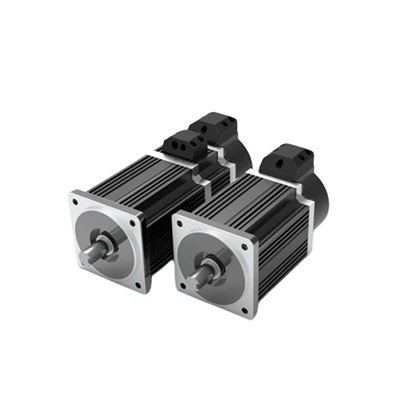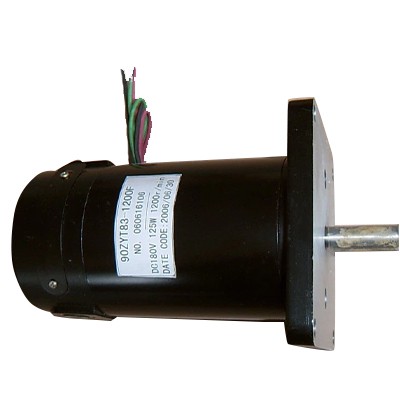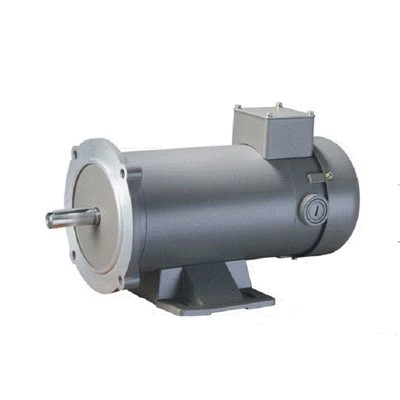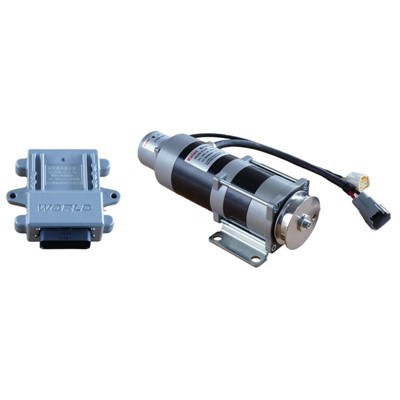
Selecting a servo motor for an industrial machine is not simply a matter of choosing the highest power or torque available.
A servo motor is part of a complete motion control system. Its performance depends on how well the motor matches the load, speed, acceleration, inertia, control requirements, and working environment of the machine.
Choose a motor that is too small, and you may face overheating, overload alarms, poor acceleration, or positioning errors.
Choose one that is unnecessarily large, and you may pay more for the motor and drive while adding unnecessary inertia and installation space.
The right servo motor is the one that matches the actual motion requirements of your machine.
This guide explains the key factors engineers, OEM manufacturers, and industrial buyers should consider when selecting a servo motor.


What Is a Servo Motor?
A servo motor is a motor designed to provide precise control of position, speed, and torque.
Unlike a conventional motor that may operate simply by receiving a voltage or frequency command, a servo motor normally works as part of a closed-loop control system.
A typical servo system includes:
- Servo motor
- Servo drive
- Encoder
- Motion controller
- Power supply
- Mechanical transmission
The encoder continuously monitors the motor's actual movement.
The controller compares the actual position or speed with the target value and the servo drive adjusts the motor accordingly.
This feedback loop allows the system to correct motion errors while the machine is running.
That is why servo motors are widely used when an application requires repeatable, accurate, and dynamic movement.
Why Is Servo Motor Selection So Important?
The motor is one of the key components determining how a machine behaves.
A correctly selected servo motor can provide:
- Stable positioning
- Fast acceleration
- Accurate speed control
- Reliable torque output
- Lower energy consumption
- Longer equipment life
An incorrectly selected motor can create problems that are difficult to solve after installation.
For example, if the motor does not have enough peak torque, the machine may work normally at steady speed but fail whenever it needs to accelerate quickly.
If the motor inertia is poorly matched to the load, the machine may vibrate or overshoot its target position.
If the motor and drive are not properly matched, the system may generate frequent alarms even though the motor itself is functioning normally.
This is why servo motor selection should start with the machine's motion profile rather than a motor catalog.
Step 1: Determine the Required Torque
Torque is one of the first specifications you should calculate.
The required motor torque generally comes from several sources:
- Load torque
- Friction
- Gravity
- Acceleration
- Mechanical transmission losses
The important point is that continuous torque and peak torque are not the same thing.
Continuous Torque
Continuous torque is the torque the motor can provide during normal operation without exceeding its thermal limits.
This is important for applications such as:
- Conveyors
- Pumps
- Continuous processing machinery
- Rotary equipment
The motor's continuous torque should be sufficient for the normal operating load.
Peak Torque
Peak torque is required for short periods during demanding motion.
Typical examples include:
- Rapid acceleration
- Rapid deceleration
- Startup under load
- Sudden load changes
- Frequent reversing
A machine may require relatively modest continuous torque but significantly higher peak torque.
Therefore, selecting a servo motor based only on the average load can result in poor dynamic performance.
Step 2: Determine the Required Speed
After calculating torque, determine how fast the motor needs to operate.
Consider three values:
- Minimum operating speed
- Normal operating speed
- Maximum operating speed
Do not assume that a motor with a high maximum RPM will automatically be suitable.
The more important question is:
How much torque can the motor provide at the speed your machine actually needs?
A servo motor's torque-speed characteristics should always be reviewed before purchase.
For applications requiring both high speed and high torque, the motor and drive need to be selected as a matched system.
Step 3: Calculate Load Inertia
Load inertia is often overlooked during servo motor selection.
Inertia represents the resistance of an object to changes in rotational motion.
A machine with a large rotating mass may require significant torque just to accelerate, even when the final operating speed is relatively low.
Examples of high-inertia loads include:
- Large rollers
- Rotary tables
- Flywheels
- Large gears
- Spindles
- Heavy robotic arms
If the load inertia is poorly matched to the motor, you may experience:
Slow acceleration
- Overshoot
- Vibration
- Positioning errors
- Servo instability
For high-performance motion control, inertia matching can be just as important as rated motor power.
Step 4: Understand Your Motion Profile
A servo motor should be selected based on the complete motion cycle.
For example, imagine a machine that:
- Accelerates from zero to 2,000 RPM.
- Runs at constant speed.
- Decelerates rapidly.
- Stops at a precise position.
- Reverses direction.
- Repeats the cycle every few seconds.
This application places very different demands on the motor compared with a machine that simply runs continuously at 2,000 RPM.
When selecting a servo motor, consider:
- Acceleration time
- Deceleration time
- Cycle time
- Operating speed
- Stopping frequency
- Reversing frequency
- Load variation
The complete motion profile gives a much more accurate picture of the required motor capacity.
Step 5: Choose the Appropriate Motor Voltage
Servo motors are available in different voltage classes.
Common options include:
- 12V
- 24V
- 48V
- 60V
- 90V
- 220V
- 380V
The correct voltage depends on the machine's electrical architecture.
Low-Voltage Servo Motors
24V and 48V servo motors are common in:
- AGVs
- AMRs
- Mobile robots
- Battery-powered equipment
- Compact automation systems
Their main advantage is compatibility with low-voltage DC power systems.
Higher-Voltage Servo Motors
220V and 380V servo systems are more common in industrial machinery requiring higher power.
They can reduce current requirements for a given power output and are suitable for larger automation systems.
The important point is not to select voltage based on motor preference alone.
The motor voltage should match the available power supply and the complete servo drive system.
Step 6: Select the Right Encoder
The encoder provides feedback to the servo system.
Different applications require different feedback resolutions.
Common encoder options include:
Incremental Encoder
Provides relative position information.
It is suitable for many general industrial applications where cost and simplicity are important.
Absolute Encoder
Provides the motor's absolute position.
This is useful when the machine needs to know its position immediately after startup or power recovery.
High-Resolution Encoder
Used when extremely accurate positioning or smooth low-speed operation is required.
For applications such as precision machinery, robotics, and CNC equipment, encoder resolution should be carefully evaluated rather than treated as a minor specification.
Step 7: Decide Whether You Need a Brake
A brake is not required for every servo motor.
However, it becomes important when the motor must hold a load safely after power is removed.
Typical applications include:
- Vertical lifting systems
- Hoists
- Robotic arms
- Elevators
- Z-axis machinery
For example, if a servo motor is controlling a vertical load, gravity may cause the load to move downward when the motor is powered off.
A holding brake can help prevent unwanted movement.
However, a motor brake should not automatically be treated as the primary safety device. Safety requirements should be evaluated according to the complete machine design and applicable regulations.
Step 8: Consider Whether a Gearbox Is Necessary
A gearbox can be useful when the application requires high output torque at relatively low speed.
For example:
- Motor speed: high
- Required output speed: low
- Required output torque: high
A gearbox can convert the motor's speed into higher output torque.
Gearboxes are commonly used in:
- Robotics
- Rotary tables
- Heavy-duty positioning systems
- Material handling equipment
- Industrial automation
However, adding a gearbox also introduces:
- Mechanical losses
- Backlash
- Additional cost
- Additional maintenance
For precision applications, gearbox backlash should be carefully considered.
Step 9: Check the Operating Environment
A servo motor installed in a clean factory does not face the same conditions as one installed near dust, moisture, oil, or vibration.
Before choosing a motor, evaluate:
Ambient temperature
- Humidity
- Dust
- Water exposure
- Oil or chemical exposure
- Vibration
- Installation orientation
The motor's protection level, cooling design, and housing should be appropriate for the actual environment.
For demanding applications, environmental conditions should be provided to the supplier before the motor is selected.
Step 10: Consider Duty Cycle and Thermal Performance
A servo motor may be capable of producing high peak torque, but peak torque cannot normally be maintained indefinitely.
The motor's thermal performance depends on:
- Continuous torque
- RMS torque
- Operating speed
- Acceleration frequency
- Ambient temperature
- Cooling method
- Cycle time
A machine that accelerates and stops hundreds of times per hour may generate considerably more heat than a machine running at a constant speed.
This is why duty cycle should be part of the motor selection process.


How Much Safety Margin Should You Leave?
Adding some margin is sensible, but simply choosing a motor several times larger than the calculated load is not necessarily a good engineering decision.
Too little margin can cause:
- Overload
- Excessive temperature
- Poor acceleration
- Reduced service life
Too much margin can cause:
- Higher purchase cost
- Larger motor size
- Larger servo drive
- Increased inertia
- Lower system efficiency
A practical approach is to calculate the real operating requirements first and then select a motor with sufficient continuous and peak capacity for the application's worst expected conditions.
The exact margin depends on the load characteristics and duty cycle.
Servo Motor Sizing: A Simple Example
Suppose a conveyor system requires:
- Continuous torque: 4 N·m
- Peak acceleration torque: 8 N·m
- Operating speed: 1,500 RPM
- Maximum speed: 2,500 RPM
Choosing a motor based only on the 4 N·m continuous requirement could be risky.
The motor must also provide enough peak torque to handle the 8 N·m acceleration requirement.
You would then check:
- Continuous torque rating
- Peak torque rating
- Torque available at 1,500 RPM
- Torque available at 2,500 RPM
- Load inertia
- Acceleration time
- Duty cycle
- Servo drive capacity
Only after these factors are confirmed should the motor model be finalized.
This is why a simple "required horsepower" calculation is often insufficient for servo applications.
Common Servo Motor Selection Mistakes
Mistake 1: Selecting by Power Alone
Two motors with the same power rating can have different torque and speed characteristics.
Always evaluate the complete torque-speed curve.
Mistake 2: Ignoring Peak Torque
A machine may run perfectly at constant speed but fail during acceleration.
Peak torque must be included in the selection process.
Mistake 3: Ignoring Load Inertia
High-inertia loads can create serious control problems even when the motor has enough rated power.
Mistake 4: Choosing the Encoder Too Late
The encoder affects both control performance and system compatibility.
It should be considered during the initial design stage.
Mistake 5: Treating the Motor and Drive as Separate Products
The servo motor, drive, encoder, and controller need to work together.
A technically excellent motor can still perform poorly with an incorrectly matched drive.
Mistake 6: Buying Only on Price
The cheapest motor may not provide the lowest total cost.
Consider:
- Service life
- Energy consumption
- Maintenance
- Replacement parts
- Technical support
- Integration time
A slightly higher initial investment can sometimes reduce the total cost of ownership significantly.
Servo Motor Selection by Application
Different applications have different priorities.
| Application | Important Servo Motor Characteristics |
|---|---|
| Robotics | High torque, low inertia, high encoder resolution |
| CNC Machinery | High positioning accuracy, stable speed |
| Packaging | Fast acceleration, precise positioning |
| Conveyor Systems | Continuous torque, speed control |
| AGV / AMR | Low voltage, compact size, high efficiency |
| Printing Machinery | Stable speed, accurate synchronization |
| Material Handling | High starting torque, overload capability |
| Vertical Lifting | High torque, brake option, reliable control |
| Rotary Table | High torque, low-speed stability, positioning accuracy |
There is no universal "best" servo motor.
The best motor is the one that fits the application's actual motion requirements.
How to Choose a Servo Motor Supplier
The supplier you choose can be just as important as the motor itself.
Before placing an order, evaluate whether the supplier can provide:
- Motor selection support
- Torque-speed data
- Encoder options
- Servo drive matching
- OEM customization
- Technical documentation
- Replacement parts
- After-sales support
For OEM equipment manufacturers, technical support during the design stage can prevent expensive changes after production has already started.
A supplier should be able to discuss your machine rather than simply send you a catalog.
Why Choose Auric for Industrial Servo Motor Solutions?
Auric provides servo motor solutions for industrial automation, OEM equipment, robotics, material handling, and other motion control applications.
Instead of selecting a motor based only on voltage or rated power, Auric can evaluate the application from multiple angles, including:
- Required torque
- Peak torque
- Operating speed
- Acceleration
- Load inertia
- Duty cycle
- Encoder requirements
- Installation dimensions
- Brake requirements
- Servo drive compatibility
This application-based approach is particularly useful for OEM customers who need a servo motor to fit an existing machine rather than simply purchasing a standard motor.
For customized projects, motor specifications such as shaft configuration, mounting dimensions, encoder selection, voltage, speed, torque, and other interfaces can be evaluated according to the equipment requirements.
Servo Motor Selection Checklist
Before requesting a quotation, prepare the following information:
Motor Requirements
- Required continuous torque
- Required peak torque
- Rated speed
- Maximum speed
- Rated voltage
- Required power
Mechanical Requirements
- Load type
- Load inertia
- Shaft size
- Mounting dimensions
- Gearbox requirements
Control Requirements
- Position accuracy
- Encoder type
- Control mode
- Communication protocol
- Brake requirements
Operating Conditions
- Duty cycle
- Ambient temperature
- Dust
- Humidity
- Vibration
Continuous or intermittent operation
Providing this information allows the supplier to recommend a much more accurate servo motor solution.
Frequently Asked Questions
How do I know what size servo motor I need?
Start with the actual load rather than the motor size. Calculate continuous torque, peak torque, operating speed, acceleration, load inertia, and duty cycle. Then match these requirements with the motor's torque-speed characteristics.
Is a higher horsepower servo motor always better?
No. An oversized motor can increase cost, physical size, inertia, and drive requirements. The goal is to find the smallest motor that reliably satisfies the complete motion profile with an appropriate engineering margin.
What is more important, torque or speed?
Neither can be considered independently. The motor needs to provide sufficient torque at the required operating speed. For servo applications, the complete torque-speed curve is more useful than looking at either specification alone.
Do all servo motors need encoders?
A conventional servo system normally requires feedback, commonly from an encoder. However, the exact feedback technology depends on the motor and control architecture.
Should I choose a 24V, 48V, or 220V servo motor?
The answer depends on the power architecture and application. 24V and 48V systems are common in battery-powered and compact automation equipment, while higher-voltage servo systems are widely used for larger industrial machinery.
When do I need a brake?
A brake is particularly useful when the motor needs to hold a vertical or gravity-loaded axis after power is removed. The complete machine safety design should determine whether a brake is required.
Final Thoughts: Select the Motor Based on the Machine, Not the Catalog
Choosing the right servo motor is ultimately a system engineering decision.
The motor needs to work together with the load, transmission, encoder, servo drive, controller, and mechanical structure.
The most important specifications to evaluate are not simply horsepower or rated torque, but:
- Continuous torque
- Peak torque
- Torque at operating speed
- Maximum speed
- Load inertia
- Acceleration requirements
- Duty cycle
- Encoder resolution
- Environmental conditions
- Drive compatibility

If you understand these requirements before contacting a supplier, you can avoid one of the most common problems in industrial automation: buying a motor that looks right on paper but does not perform as expected once installed.
For OEM manufacturers and industrial equipment builders, the best approach is to provide the supplier with the actual machine requirements and let the motor be selected around the application.
A properly matched servo motor can deliver better positioning, faster response, lower maintenance, and more reliable machine performance over the long term.