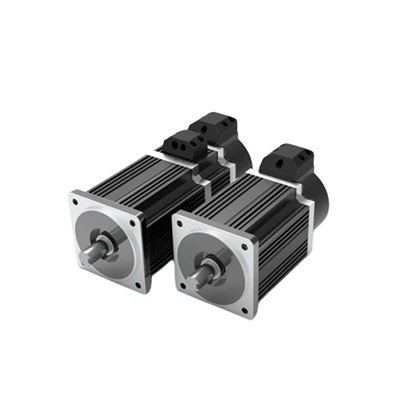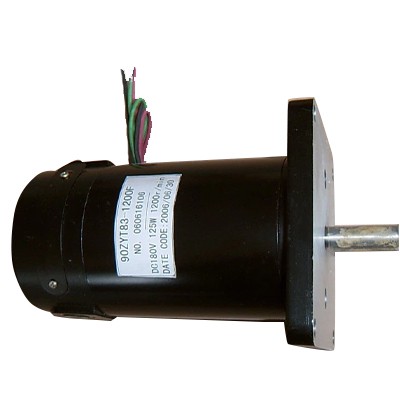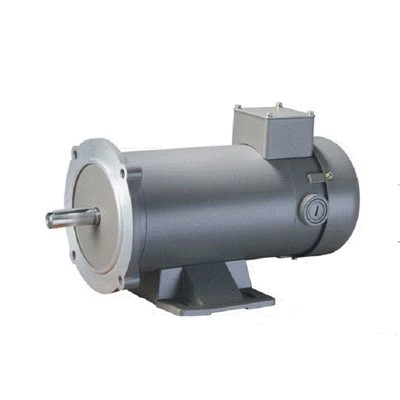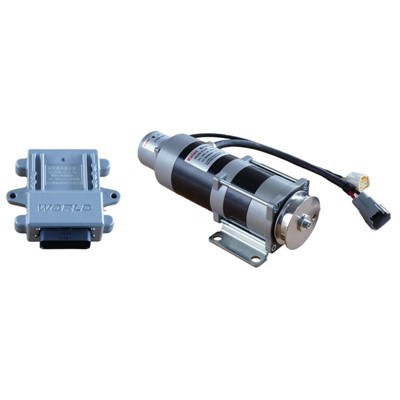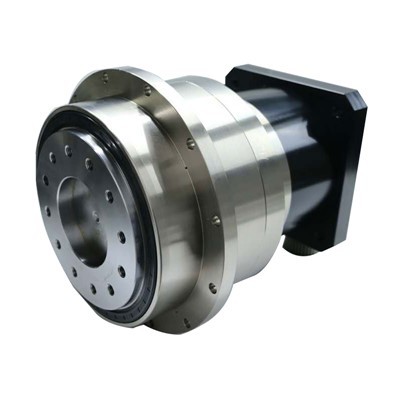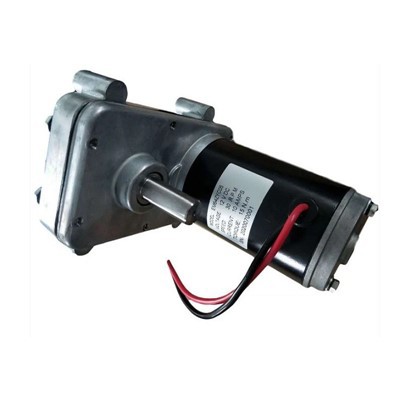
A 48V DC Servo Motor is increasingly used in AGVs, AMRs, mobile robots, automated handling equipment, conveyors, lifting systems, and other low-voltage industrial machines.
But choosing the right 48V servo motor is not simply a matter of selecting a motor labeled "48V."
The actual performance of the motor depends on torque, speed, acceleration, load inertia, encoder, servo drive, duty cycle, and mechanical configuration.
For OEM buyers, there is another important question: Which 48V DC Servo Motor manufacturer or factory can provide the right configuration at a reasonable price and support the project long term?
This guide explains how to evaluate the motor, compare suppliers, understand pricing, and avoid common purchasing mistakes.


What Is a 48V DC Servo Motor?
A 48V DC Servo Motor is a servo motor designed to operate from a 48V DC power system while providing controlled speed, torque, and position.
Unlike a conventional DC motor, a servo motor normally works together with an encoder and servo drive to form a closed-loop motion-control system.
The basic working relationship is:
Controller → Servo Drive → 48V Servo Motor → Load → Encoder Feedback
The controller sends a motion command. The servo drive controls the motor, while the encoder provides feedback about the actual motor movement.
This allows the system to correct motion errors and maintain more consistent performance.
Why Choose a 48V DC Servo Motor?
48V DC systems are particularly useful when equipment requires more power than a typical 24V system but still needs a relatively low-voltage DC architecture.
Common applications include:
- AGV
- AMR
- Mobile robots
- Automated guided equipment
- Battery-powered machinery
- Material handling equipment
- Electric lifting systems
- Industrial conveyors
- Compact automation equipment
- Robotic drive systems
One practical advantage is the lower current requirement compared with a 24V system at the same power.
For example, under ideal conditions:
1,000W ÷ 24V ≈ 41.7A
while:
1,000W ÷ 48V ≈ 20.8A
Actual operating current will depend on motor efficiency, drive losses, load conditions, and peak requirements.
For higher-power DC equipment, this difference can help reduce electrical system demands.
48V DC Servo Motor vs 24V Servo Motor
Both 24V and 48V servo motors can be useful in industrial equipment.
The correct choice depends on the complete electrical system.
| Factor | 24V Servo Motor | 48V DC Servo Motor |
|---|---|---|
| System Voltage | 24V DC | 48V DC |
| Current at Same Power | Higher | Lower |
| Battery System | Suitable | Suitable |
| Compact Equipment | Suitable | Suitable |
| Higher-Power DC Systems | May require higher current | Often more practical |
| Cable Current Requirement | Higher | Lower |
| Typical Application | Small automation | Higher-power DC equipment |
If your equipment already uses a 48V battery or DC bus, a 48V servo system can simplify system integration.
Do Not Choose a 48V Servo Motor by Voltage Alone
This is one of the most common mistakes in servo motor purchasing.
Suppose your equipment requires a 48V motor.
That only tells the manufacturer the supply voltage.
It does not tell them:
- How much torque you need
- How fast the motor must rotate
- How quickly it must accelerate
- How frequently it starts and stops
- How much inertia the load has
- What encoder is required
- Whether a brake is needed
Two 48V servo motors can have completely different performance characteristics.
Therefore, voltage should be treated as the starting point of the selection process.
How Much Torque Does Your 48V DC Servo Motor Need?
Torque is one of the most important parameters.
The actual torque requirement may include:
- Load torque
- Acceleration torque
- Friction
- Gravity
- Transmission losses
For a simple horizontal application, the main requirements may come from load resistance and acceleration.
For a vertical lifting application, gravity can become a major part of the torque calculation.
For a high-inertia rotary system, acceleration torque can be much higher than the torque required during steady-state operation.
This is why the motor should be selected according to the complete motion profile.
Continuous Torque vs Peak Torque
Do not compare servo motors only by rated torque.
You should also check peak torque.
Continuous Torque
This is the torque the motor can provide during normal operation.
It is particularly important for applications where the motor remains under load for extended periods.
Peak Torque
This is the short-term torque available during demanding movements.
Peak torque becomes important during:
- Starting
- Rapid acceleration
- Rapid deceleration
- Direction reversal
- Sudden load changes
- High-inertia movement
A motor can have sufficient continuous torque but still fail during acceleration if its peak torque is insufficient.
Speed Is Just as Important as Torque
A common purchasing mistake is to say:
"I need a 48V servo motor with 10 N·m torque."
That information is incomplete.
The supplier also needs to know:
At what speed?
10 N·m at 500 RPM is not the same application as 10 N·m at 3,000 RPM.
When evaluating a 48V DC Servo Motor, check:
- Rated speed
- Maximum speed
- Operating speed range
- Torque at operating speed
- Acceleration time
If both high torque and high speed are required, ask the manufacturer for the motor's torque-speed curve.
Load Inertia Can Change Your Motor Selection
Load inertia is particularly important for equipment using:
- Large rollers
- Rotary tables
- Reels
- Gears
- Robotic arms
- Heavy wheels
- Rotating drums
A large load may not require a lot of torque once it reaches a constant speed.
But accelerating that same load quickly can require substantial torque.
If inertia is underestimated, the machine may experience:
- Slow acceleration
- Overshoot
- Vibration
- Long settling time
- Servo overload
- Positioning errors
For this reason, professional motor selection should consider the load inertia instead of looking only at the load weight.
48V DC Servo Motor for AGV and AMR
AGVs and AMRs are natural applications for 48V DC servo systems.
These machines often use battery power and need to operate under constantly changing load conditions.
The motor may be responsible for:
- Wheel drive
- Steering
- Lifting
- Conveyor movement
- Auxiliary mechanisms
For a drive motor, the important parameters can include:
- Vehicle weight
- Maximum payload
- Wheel diameter
- Required travel speed
- Starting acceleration
- Ramp gradient
- Floor resistance
- Duty cycle
- Gear ratio
A motor that performs well on a flat floor with no load may not be sufficient when the vehicle is fully loaded or climbing a ramp.
48V Servo Motor for Mobile Robots
Mobile robots require frequent changes in speed and direction.
The motor may need to:
Start → Accelerate → Run → Decelerate → Stop → Reverse → Repeat
This creates a demanding dynamic load.
A suitable 48V DC Servo Motor should therefore provide:
- Stable speed control
- Adequate peak torque
- Fast response
- Reliable encoder feedback
- Compatibility with the control system
For battery-powered robots, the relationship between motor performance and battery capacity should also be considered.
48V Servo Motor for Lifting Applications
Lifting systems require special attention because gravity continuously acts on the load.
Applications can include:
Automated lifting platforms
Warehouse equipment
Robot lifting mechanisms
Material handling systems
Vertical positioning equipment
For these applications, you should evaluate:
Load weight
Lifting speed
Acceleration
Gear ratio
Drum or pulley diameter
Holding requirements
Brake requirements
If the load needs to remain in position when power is removed, a suitable braking or mechanical holding solution may be required.
Encoder Selection
The encoder provides feedback to the servo control system.
Depending on the application, you may need to consider:
Encoder type
Resolution
Absolute or incremental feedback
Communication interface
Servo drive compatibility
However, a higher encoder resolution does not automatically mean higher machine accuracy.
Actual system accuracy also depends on:
Mechanical backlash
Coupling rigidity
Gearbox accuracy
Belt elasticity
Shaft stiffness
Machine vibration
The encoder and mechanical system must therefore be considered together.


What Servo Drive Should Be Used With a 48V Servo Motor?
The motor and servo drive should be treated as a matched system.
Before purchasing, check:
Voltage
The drive must support the required 48V DC input.
Current
Continuous current must be sufficient for normal motor operation.
Peak Current
The drive must also provide enough current for peak torque and acceleration.
Encoder
The feedback interface must match the motor encoder.
Communication
For automated equipment, communication compatibility may also be important.
Depending on the machine architecture, this may include different industrial communication protocols.
If you already have a servo drive, provide its exact model to the motor manufacturer.
When Should You Add a Gearbox?
A gearbox can be useful when the motor speed and machine output speed are very different.
For example:
High Motor Speed → Gear Reduction → Lower Output Speed + Higher Output Torque
A gearbox can help with:
- Heavy loads
- Low-speed movement
- Wheel drive
- Lifting
- Rotary positioning
However, a gearbox also introduces:
- Backlash
- Mechanical losses
- Additional components
- Maintenance requirements
For high-precision applications, gearbox backlash should be considered carefully.
48V DC Servo Motor Price: What Determines the Cost?
If you are searching for 48V DC Servo Motor price, be careful when comparing online quotations.
A price without complete specifications is difficult to evaluate.
The final cost can depend on:
Motor Power
Higher-power motors generally require larger electrical and mechanical components.
Torque
Higher torque requirements can affect motor size and construction.
Speed
High-speed designs may require different rotor, bearing, balancing, and thermal considerations.
Encoder
Encoder type and resolution can influence the final price.
Brake
A brake adds mechanical and electrical components.
Gearbox
An integrated gearbox can significantly change the total system price.
Customization
Special shaft dimensions, mounting configurations, cables, connectors, and other modifications can affect cost.
Quantity
Sample orders and OEM production orders normally have different pricing structures.
How to Get an Accurate 48V DC Servo Motor Price
Instead of asking:
"What is your 48V servo motor price?"
send the manufacturer your requirements.
For example:
Voltage: 48V DC
Power: 1,000W
Rated Speed: 2,000 RPM
Maximum Speed: 3,000 RPM
Continuous Torque: Required value
Peak Torque: Required value
Encoder: Required
Brake: Optional
Gearbox: Required
Application: AGV drive system
Quantity: 100 units
With this information, the factory can quote a specific configuration instead of giving you a generic price.
How to Find a Reliable 48V DC Servo Motor Manufacturer?
If you are purchasing for an OEM project, choosing the right 48V DC Servo Motor manufacturer can be just as important as choosing the motor.
Look for evidence of:
- Motor design capability
- Production facilities
- Winding process
- Rotor assembly
- Shaft machining
- Encoder integration
- Motor testing
- Quality control
- OEM customization
- Engineering support
You should also ask whether the manufacturer can provide:
- Technical drawings
- Performance curves
- Samples
- Test reports
- Customized configurations
A manufacturer that can communicate technical details clearly is generally easier to work with during an OEM project.
What Makes a Good 48V DC Servo Motor Factory?
When searching for a 48V DC Servo Motor factory, do not only look at whether the company claims to be a manufacturer.
Check what it actually controls.
A capable factory may have its own processes for:
Design → Winding → Assembly → Encoder Installation → Testing → Inspection → Shipment
For OEM customers, this can make a significant difference.
If a motor needs a different shaft, mounting flange, encoder, brake, cable, or connector, a factory with its own engineering and production capabilities may be able to respond more efficiently.
Standard 48V Servo Motor or Customized Motor?
For standard applications, a catalog motor is normally the simplest solution.
Customization becomes useful when the standard model cannot satisfy requirements such as:
- Limited installation space
- Special shaft diameter
- Special mounting flange
- Custom encoder
- Integrated brake
- Specific cable outlet
- Special connector
- Specific speed
- Specific torque requirements
For OEM equipment, customization can sometimes be more practical than redesigning the machine around an unsuitable standard motor.
Why Choose Auric for 48V DC Servo Motors?
Auric provides servo motor solutions for industrial automation and OEM equipment.
For 48V DC applications, motor selection can be based on the actual requirements of the equipment rather than simply selecting a motor by voltage or rated power.
Auric can evaluate requirements such as:
- Rated power
- Continuous torque
- Peak torque
- Rated speed
- Maximum speed
- Load inertia
- Acceleration
- Encoder
- Brake
- Shaft dimensions
- Mounting dimensions
- Drive compatibility
For AGVs, AMRs, mobile robots, automated handling systems, and other DC-powered equipment, this application-based approach helps customers select a motor that fits the complete motion system.
OEM customization can also be discussed when a standard motor configuration does not meet the machine's requirements.
48V DC Servo Motor Buying Checklist
Before purchasing, confirm the following.
Motor Performance
Rated voltage
Rated power
Continuous torque
Peak torque
Rated speed
Maximum speed
Torque-speed curve
Rotor inertia
Mechanical
Shaft diameter
Shaft length
Mounting flange
Motor dimensions
Gear ratio
Gearbox
Brake
Feedback
Encoder type
Encoder resolution
Absolute or incremental
Drive compatibility
Electrical
Continuous current
Peak current
Connector
Cable configuration
Controller compatibility
Purchasing
Factory capability
Manufacturer experience
OEM customization
Sample availability
MOQ
Lead time
Warranty
Technical support
48V DC Servo Motor price
Frequently Asked Questions
What is a 48V DC Servo Motor used for?
48V DC servo motors are commonly used in AGVs, AMRs, mobile robots, automated handling systems, conveyors, lifting equipment, battery-powered machinery, and other applications requiring controlled motion from a DC power system.
Is a 48V servo motor better than a 24V servo motor?
Neither voltage is universally better. At the same power, a 48V system generally requires less current than a 24V system. The appropriate voltage depends on the machine's power architecture, battery system, motor power, and servo drive.
How do I select a 48V DC Servo Motor?
Start with the application, load, required torque, speed, acceleration, load inertia, duty cycle, encoder, mechanical dimensions, and servo drive. These parameters should be evaluated together.
How much does a 48V DC Servo Motor cost?
The price depends on power, torque, speed, encoder, brake, gearbox, customization, quantity, and testing requirements. A specific quotation requires specific motor and application parameters.
Can a 48V DC Servo Motor be used with a battery?
Yes. 48V DC servo motors can be used in battery-powered equipment, but the battery, BMS, servo drive, wiring, peak current, and motor requirements need to be properly matched.
Can a 48V servo motor be customized?
Depending on the manufacturer, customization can include shaft dimensions, mounting, encoder, brake, cable, connector, voltage, speed, and other mechanical or electrical configurations.
What should I provide when requesting a quotation?
Provide the required voltage, power, torque, speed, acceleration, load, inertia, encoder, brake requirements, mounting dimensions, application, and quantity. This allows the manufacturer to recommend a more suitable configuration and provide a more accurate quotation.

Conclusion
A 48V DC Servo Motor is not simply a 48V motor.
For industrial applications, the real selection involves the complete combination of:
Voltage + Torque + Speed + Acceleration + Inertia + Encoder + Servo Drive + Mechanical Design
For buyers searching for a 48V DC Servo Motor manufacturer, 48V DC Servo Motor factory, or 48V DC Servo Motor price, it is important to evaluate more than the initial quotation.
Look at the manufacturer's production capabilities, engineering support, customization options, testing, delivery capability, and long-term OEM support.
If you are developing an AGV, AMR, mobile robot, automated handling system, or other 48V industrial equipment, provide the manufacturer with your actual load and motion requirements before choosing a motor.
Auric can evaluate your 48V DC servo motor requirements and provide a suitable configuration based on torque, speed, load, encoder, mounting, and application requirements. Contact Auric for technical consultation and a factory quotation.