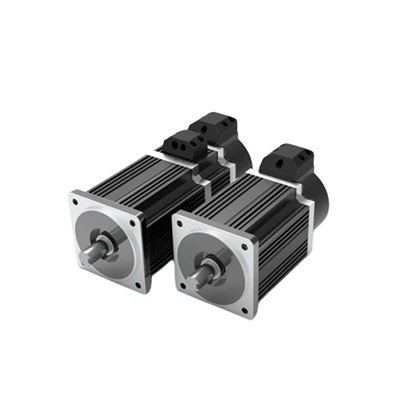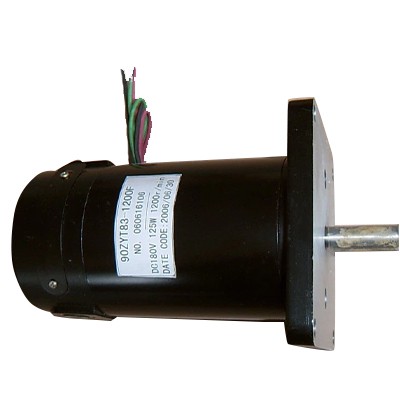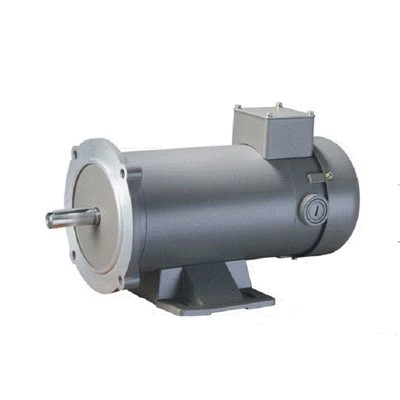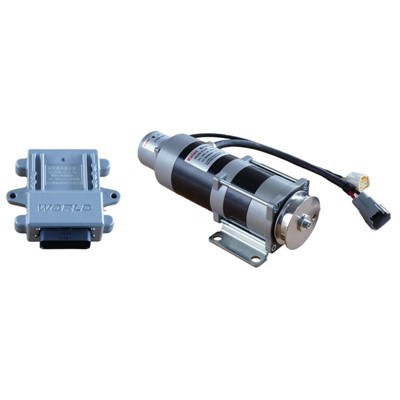
Anatomy of a High-Performance Electric Servo Motor
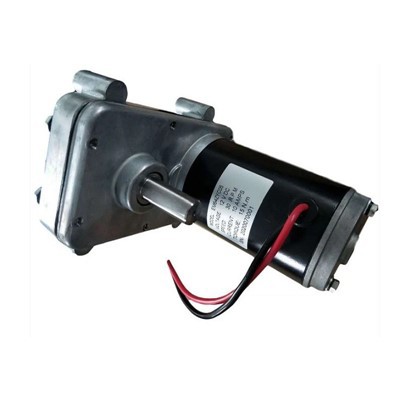
Understanding the core components of an electric servo motor is essential to optimize performance and integration.
Stator Assembly
-
- High-density copper windings: Maximize electromagnetic efficiency and reduce losses.
- Thermal dissipation: Designed with optimized cooling paths to maintain Class B/F insulation standards under continuous load.
- Insulation class: Ensures long-term reliability in industrial environments.
Rotor Assembly
-
- Rare-earth permanent magnets: Use high-energy magnets to eliminate rotor copper loss and boost torque density.
- Balance tolerances: Precision dynamic balancing reduces vibration and noise.
- Minimized rotational inertia: Enables rapid acceleration and deceleration without overshoot.
Feedback Systems
| Type | Use Case | Key Features |
|---|---|---|
| Incremental Encoder | General positioning | High resolution, requires homing |
| Absolute Encoder | Precise position tracking | No homing needed, multi-turn options |
| Resolver | Harsh environments (vibration, EMI) | Robust, temperature tolerant |
Encoder resolution and accuracy directly impact closed-loop control precision, critical for high-performance servo systems.
Dynamic Torque-to-Inertia Ratio
-
- Why it matters: A high torque-to-inertia ratio enables quick, stable acceleration without mechanical resonance or overshoot.
- Calculation tip: Match motor inertia closely with load inertia; aim for a ratio that supports your system's dynamic response needs.
Mechanical Tolerances & Materials
-
- Bearings: High-grade, low-friction bearings extend service life and reduce noise.
- Shaft hardness: Hardened shafts resist wear and maintain alignment under load.
- Surface finishes: Precision finishes reduce friction and improve coupling accuracy.
This precise assembly and material selection define the robust, high-torque-density electric servo motor that meets demanding industrial applications.
System Architectures & Power Configurations for Electric Servo Motors
Electric servo motors come in several power configurations tailored to different industrial needs. Understanding these helps you pick the right motor for your application.
Low-Voltage DC Servos (24V–48V)
-
- Torque range: 0.32 Nm to 1.27 Nm.
- Designed for battery-powered systems like AGVs and mobile robots.
- Focus on energy efficiency and power management to extend battery life.
- Ideal for lightweight, portable applications needing precise control without heavy infrastructure.
Standard AC Servos (220V Single/3-Phase)
-
- Common rating: 750W with about 2.4 Nm torque.
- Suited for CNC machines and general industrial servo systems.
- Require proper cooling and duty-cycle management to maintain performance.
- Widely used in manufacturing lines with moderate power demands.
High-Capacity AC Servos (380V–480V 3-Phase)
-
- Torque up to 45 Nm for heavy-duty tasks.
- Designed for continuous operation with advanced thermal management.
- Preferred in automotive assembly, metal forming, and other high-torque environments.
- Choose high-voltage when you need scalable torque and robust thermal endurance.
| Power Type | Voltage Range | Torque Range | Typical Applications | Cooling & Duty Cycle |
|---|---|---|---|---|
| Low-Voltage DC | 24V – 48V DC | 0.32 – 1.27 Nm | AGVs, mobile robots, medical | Battery-powered, energy efficient |
| Standard AC | 220V AC (1/3-phase) | ~2.4 Nm (750W) | CNC machines, light industry | Requires cooling, moderate duty cycle |
| High-Capacity AC | 380V – 480V AC | Up to 45 Nm | Heavy manufacturing, automotive | Continuous duty, advanced cooling |
Drive Compatibility & Control Interfaces
-
- Compatible with common servo drives supporting fieldbus and real-time Ethernet protocols.
- Support regenerative braking to recover energy during deceleration.
- Control interfaces designed for seamless integration with modern automation systems.
Electrical Protections
-
- Built-in overcurrent protection to prevent damage during stalls or overloads.
- Thermal cutoff safeguards motor winding insulation.
- EMC/EMI shielding ensures compliance with industrial electrical noise standards.
Choosing the right system architecture and power configuration is key to optimizing performance and reliability in your application.
Electric Servo Motor Mechanical Fit
I treat the mechanical side of an Electric Servo Motor as a fit-up job first. If the flange, shaft, and connector layout are wrong, the build gets harder fast. I focus on blueprint-matched machining so the motor drops into the machine cleanly and the coupling stays out of trouble.
Mounting and flange fit
-
- I match the bolt circle diameter, mounting face, and register face to the machine drawing.
- I keep the alignment tight so the coupling does not carry extra strain.
- I use direct machining to reduce rework on legacy frames and replacement jobs.
Shaft options
| Shaft type | Best fit | Practical note |
|---|---|---|
| Smooth shaft | Simple load transfer | Good when the drive side already has the right coupling |
| Keyed shaft | Positive drive connection | Common for retrofit work |
| Splined shaft | Better torque transfer | Useful when the load needs a stronger mechanical lock |
| Hollow shaft | Integration flexibility | Helps when the machine layout needs pass-through space |
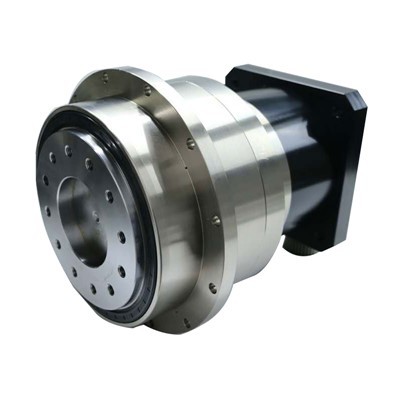
Gearbox pairing
-
- I match the motor to a planetary gearbox when the load needs a different speed and torque balance.
- I keep the motor-to-load inertia ratio under control so the system responds cleanly.
- I watch backlash closely because it affects repeatability and positioning quality.
Connectors and harnesses
-
- I use heavy-duty connectors when the machine environment needs a tougher interface.
- I specify custom wire lengths so the install stays neat and serviceable.
- I build the harness around the actual cabinet and axis layout, not a generic fit.
Retrofit checks
-
- Confirm flange size and register before ordering.
- Verify shaft type, keyway, or spline details against the old machine.
- Check connector orientation and cable exit path.
- Review the gearbox interface early if the machine needs a custom shaft servo configuration.
What I ask for first
-
- Mechanical drawing
- Mounting face and BCD
- Shaft style and load details
- Connector and cable needs
- Any gearbox or actuator interface requirements
I build around those points so the Electric Servo Motor integrates cleanly and stays reliable in real production use.
Electric Servo Motor Feedback
Encoder choice
-
- I choose absolute encoder feedback when I need position data right after power-up, with no homing step.
- I use incremental feedback when the system can re-home and I want a simpler setup.
- For rotation range, singleturn works for one revolution, while multiturn is better when the machine needs to track more than one turn.
- The real tradeoff is resolution vs reliability: finer feedback helps positioning, but I still want clean signal stability in the field.
Resolver or encoder
-
- I lean on a resolver when the environment is less forgiving and I want a rugged feedback path.
- I prefer an encoder when I need tighter position detail and direct closed-loop motion control.
- For an Electric Servo Motor, the best choice depends on the machine, the drive, and how much signal noise I expect on site.
Closed-loop tuning
-
- I tune the system around the load, not just the motor nameplate.
- Good closed-loop control keeps speed, torque, and position aligned without hunting or overshoot.
- PID is the base, and feedforward helps the servo follow fast moves with less lag.
- Auto-tuning is a starting point; I still verify the result on the real machine to avoid resonance.
Fault monitoring
-
- I watch for encoder faults, thermal derating, and vibration drift before they turn into downtime.
- If the servo starts acting unstable, I check feedback wiring, alignment, and drive settings first.
- For a closed-loop servo system, early alerts and first-run data logging are the simplest way to keep performance consistent.
Selecting the Right Electric Servo Motor
Size by load first
I size an Electric Servo Motor around the real load, not the nameplate number.
-
- Continuous torque is the baseline for steady running.
- Peak torque covers acceleration, braking, and short load spikes.
- Duty cycle matters because a motor that looks right on paper can still run hot if the load repeats too often.
- Torque-speed curve tells me where the motor stays stable across the full operating range.
Match the power class
I pick the voltage and torque range to fit the job.
| Power class | Typical range | Best fit |
|---|---|---|
| Low-voltage DC servo | 24V/48V, 0.32-1.27 Nm | AGVs, mobile robots, battery-powered medical devices |
| Standard AC servo | 220V single/3-phase, 750W, 2.4 Nm | CNC and general industrial servo systems |
| High-capacity AC servo | 380V/480V, up to 45 Nm | Heavy-duty lines like automotive assembly |
Manage heat early
Thermal margin is part of motor selection, not an afterthought.
-
- We validate performance with full-load continuous cycling.
- Class B/F thermal limits are the right reference point for long-run stability.
- Good sizing leaves room for ambient temperature swings and sustained duty.
- If the application runs hard all day, I plan for the thermal load before I lock the model.
Build for the environment
The motor has to survive the site, not just the lab.
-
- I match the motor to the actual operating conditions and duty pattern.
- For harsh production lines, I want verified dynamic balancing and low vibration.
- For demanding installs, I look for a design that stays stable without resonance during rapid reversal.
- In practice, the right Electric Servo Motor is the one that holds torque, manages heat, and stays reliable in the real environment.
Industrial Applications & System Pairing for Electric Servo Motors
Electric servo motors excel across diverse industrial sectors by delivering precise control and reliable performance. In CNC and machine tools, stiffness and contouring accuracy are critical. We design servo motors with spindle interface compatibility to ensure smooth, precise machining and rapid response. For robotics and AGVs, the torque-to-weight ratio drives efficiency. Our low-voltage DC servos (24V/48V) optimize battery life while providing responsive motion control essential for mobile robots and autonomous guided vehicles.
In packaging, semiconductor handling, and precision assembly, repeatability and vibration suppression are non-negotiable. Pairing our servo motors with low-backlash planetary gearboxes ensures tight positional accuracy and smooth operation in delicate tasks. For heavy manufacturing like metal forming, injection molding, and automotive assembly lines, high-capacity AC servo motors (380V–480V) provide scalable torque and continuous-duty thermal management to handle demanding workloads without compromise.
This tailored system pairing approach matches motor specs to application needs, maximizing uptime and precision across industrial environments.
When to Choose an Electric Servo Motor vs a Stepper Motor
Stepper motor strengths:
- Simple open-loop control-no feedback needed
- Cost-effective for low-speed, low-torque tasks
- Ideal for basic positioning where precision demands are modest
Electric servo motor advantages:
- Maintains torque at high RPM without losing steps
- Closed-loop system with real-time position correction
- Higher energy efficiency and smoother motion
- Absolute encoder feedback ensures precise position hold
| Factor | Stepper Motor | Electric Servo Motor |
|---|---|---|
| Control Type | Open-loop | Closed-loop |
| Torque at High Speed | Drops off | Consistent |
| Position Accuracy | Limited | High with absolute feedback |
| Energy Efficiency | Lower | Higher |
| Suitable Applications | Simple, low-speed tasks | Dynamic, high-precision systems |
Decision checklist for your application:
- Required speed and torque profile
- Precision and repeatability needs
- Variability of dynamic loads
- Power availability and budget constraints
Choose an electric servo motor when you need reliable torque at speed, precise closed-loop control, and energy efficiency in demanding industrial setups. Stepper motors work when simplicity and cost are priorities for less dynamic tasks.
Electric Servo Motor Quality Checks
I audit an electric servo motor supplier on three things first: control, test data, and RFQ clarity. If those are weak, I treat the quote as high risk.
Manufacturing control
-
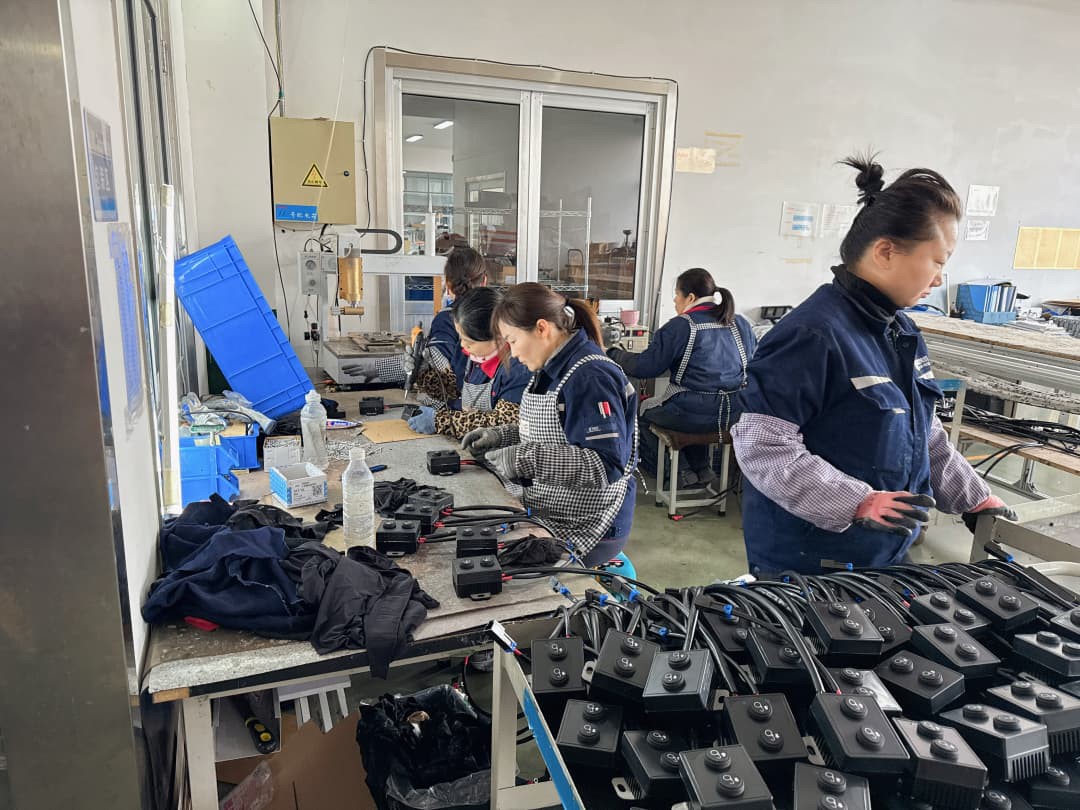
- Vertical integration: I want machining, winding, and assembly under one roof.
- Traceability: I expect material and part traceability from the rotor to the stator.
- Alignment checks: CMM inspection should confirm stator-rotor alignment at a micro level.
| Audit point | What I look for | Why it matters |
|---|---|---|
| Vertical integration | In-house machining, winding, assembly | Better control of fit, tolerance, and lead time |
| Traceability | Material and lot records | Faster issue tracking and cleaner quality control |
| CMM checks | Stator-rotor alignment verification | Reduces runout and installation problems |
Performance testing
-
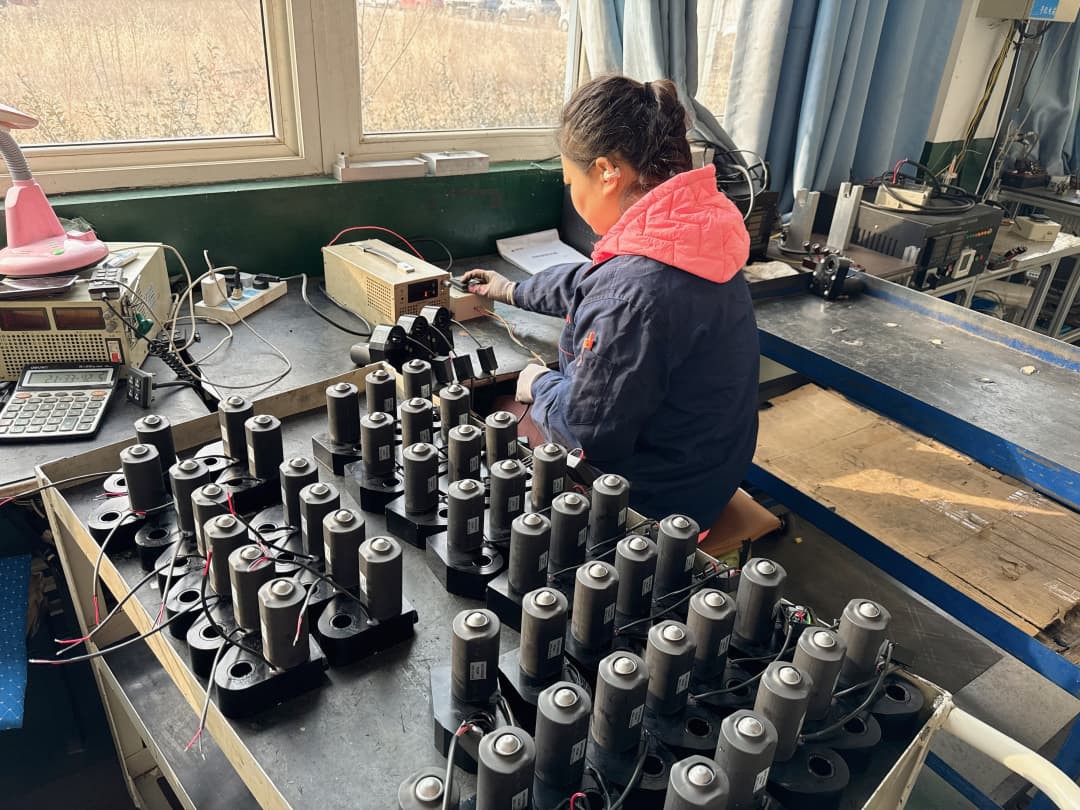
- Dynamic balancing: I want low vibration and stable rotation.
- Thermal endurance: The motor should hold up under heat and load.
- Continuous-duty cycling: Full-load cycling should be part of the test record.
| Test | What to verify |
|---|---|
| Dynamic balancing | Vibration level and smooth rotation |
| Thermal endurance | Stable operation under sustained heat |
| Continuous-duty cycling | Performance under repeated load and runtime |
Standards to request
-
- Ask for the industrial electrical and safety standards that apply to your market.
- Confirm the supplier can document test methods, inspection records, and compliance files.
- For global buyers, I always ask for the exact standard list up front so there are no gaps later.
RFQ for Electric Servo Motor
A clean RFQ saves time and cuts back-and-forth. I keep it simple and complete.
What to include
-
- Electrical profile: voltage, power, and drive compatibility.
- Duty cycle: load pattern, runtime, start-stop frequency, and environment.
- Mechanical interfaces: flange, shaft, connector, and mounting details.
- Volume needs: first order size and expected annual demand.
- Custom notes: gearbox pairing, cable length, and other integration details.
| RFQ item | Include this |
|---|---|
| Electrical profile | 24V/48V DC or 220V/380V/480V AC, plus drive needs |
| Duty cycle | Continuous or intermittent use, load level, environment |
| Mechanical interface | Mounting face, shaft type, connector style |
| Volume | Trial order and projected quantity |
Pricing and lead time
-
- I expect tiered pricing tied to order volume.
- I ask for lead time by batch size, not a single generic estimate.
- If the supplier cannot map price, quantity, and lead time clearly, I pause the order.
My procurement filter
-
- Fast yes: clear drawings, clear electrical specs, clear test records.
- Slow down: missing duty cycle, vague shaft data, no quality documentation.
- Best fit: a B2B servo motor manufacturer that can prove control, test, and customization in writing.
Practical Integration Checklist & Troubleshooting Tips
Pre-installation checklist:
- Verify precise mechanical alignment to avoid shaft strain and premature bearing wear.
- Confirm encoder indexing matches controller settings for accurate position feedback.
- Set drive parameters according to motor specs before powering up to prevent faults.
Commissioning tips:
- Run the auto-tune sequence to optimize PID settings and eliminate resonance.
- Check torque-to-inertia ratio matches the load for smooth acceleration without overshoot.
- Log initial vibration and temperature data to catch early signs of imbalance or thermal issues.
Common faults and fixes:
- Encoder mismatch: recalibrate or replace to restore accurate closed-loop control.
- Motor overheating: verify cooling, reduce duty cycle, or check for electrical faults.
- Resonance: adjust tuning parameters or add mechanical damping to suppress vibration.
Maintenance best practices:
- Schedule regular inspections for bearing condition and lubrication status.
- Backup firmware and drive parameters before updates or servicing.
- Monitor thermal and vibration trends to plan preventive maintenance and avoid downtime.
This practical approach ensures your electric servo motor runs reliably, delivering precision and longevity in demanding industrial environments.
Electric Servo Motor FAQs
Quick Answers
| Question | Practical answer |
|---|---|
| What is an Electric Servo Motor, and how is it different from a stepper motor? | I use a closed-loop servo system for position, speed, and acceleration control. Compared with a stepper motor, it gives feedback correction, better high-speed torque retention, and more stable motion. |
| How do I size a servo motor? | I check continuous torque, peak torque, speed, and torque-to-inertia ratio. For fast moves, I also verify the load inertia and duty cycle so the motor can accelerate cleanly without overshoot. |
| Which feedback device should I choose? | I use an absolute encoder when I want position retained after power-up. I use an incremental encoder for simpler setups. I use a resolver when the environment has more vibration, heat, or EMI. |
| When should I choose low-voltage vs high-voltage servos? | I choose 24V/48V DC servos for AGVs, mobile robots, and battery-powered equipment. I choose 220V, 380V, or 480V AC servos for CNC, industrial machines, and heavy-duty continuous work. |
| What insulation class and protection level do I need? | I match the motor to the duty and environment. The verified performance range includes Class B/F thermal limits. For washdown or harsher sites, I specify the needed enclosure and sealing level in the RFQ. |
| How do I pair a servo with a gearbox? | I match the motor to a low backlash planetary gearbox and keep the inertia ratio controlled. I also check backlash, shaft fit, and alignment so I do not lose positional accuracy. |
| What should I include in an RFQ? | I send the electrical spec (24V/48V DC or 220V/380V/480V AC), mechanical drawings (flange, shaft, gearbox if needed), application duty cycle, and target volume for pricing. |
| How do I troubleshoot overheating, lost position, or vibration? | I check encoder feedback first, then verify load match, alignment, and drive settings. If vibration shows up, I review balancing, resonance, and the torque-to-inertia ratio. |

What I Prioritize
-
- Accuracy: absolute encoder feedback for repeatable positioning
- Fit: flange, shaft, and connector match before installation
- Thermal margin: full-load duty and Class B/F limits
- Motion quality: low resonance, stable torque, and clean balancing
- Procurement clarity: electrical profile, drawings, duty cycle, and order volume