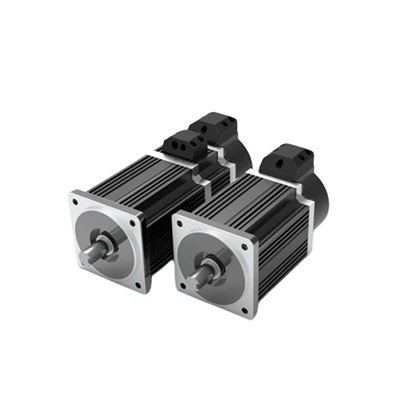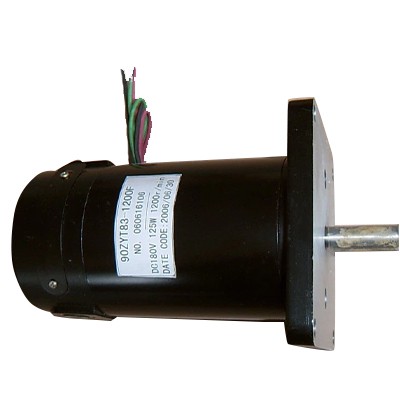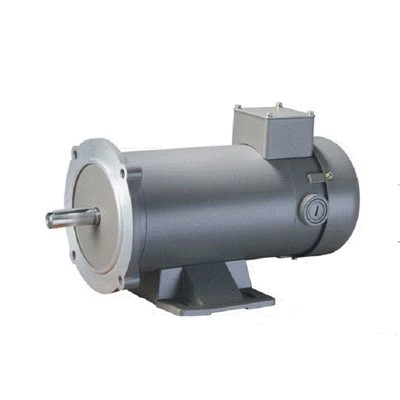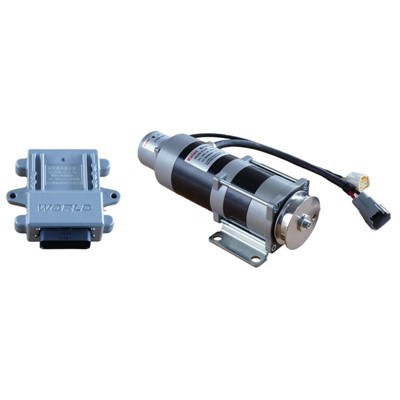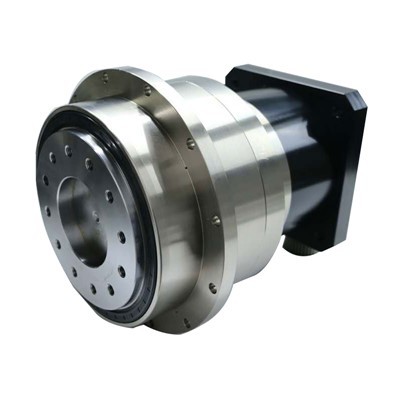
In industrial automation, choosing the right motor is about much more than matching voltage and power ratings. The motor you select directly affects equipment efficiency, production stability, maintenance costs, and overall operating performance.
Among the many DC motor options available today, the 90V Permanent Magnet DC Motor has earned a strong reputation for delivering reliable variable-speed control, high starting torque, and long-term durability. It is widely used in conveyor systems, packaging machinery, printing equipment, fitness machines, material handling systems, and many other industrial applications.
This guide explains everything you need to know about 90V Permanent Magnet DC Motors-from how they work and where they are used to how to choose the right model for your application.

What Is a 90V Permanent Magnet DC Motor?
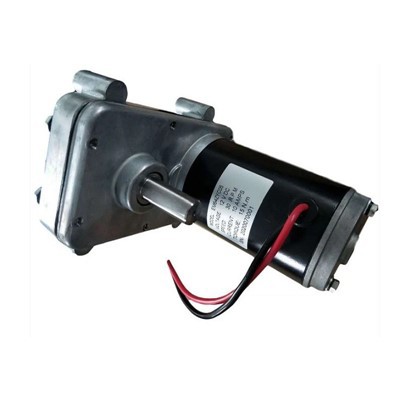
A 90V Permanent Magnet DC Motor (PMDC Motor) is a direct current motor that operates on a nominal 90-volt DC power supply and uses permanent magnets to create the magnetic field inside the motor.
Unlike traditional wound-field DC motors, a permanent magnet motor does not require field windings. Instead, high-strength permanent magnets generate a constant magnetic field, allowing electrical energy to be converted into mechanical motion with fewer losses and higher efficiency.
The "90V" designation refers to the motor's rated operating voltage. This voltage has become a common standard for medium-power industrial equipment, particularly in North America, where many variable-speed DC drive systems are designed around a 90V output.
Because of their compact construction, responsive speed control, and dependable performance, 90V PMDC motors remain a preferred choice for equipment manufacturers looking for a practical and cost-effective motion solution.
How Does a 90V Permanent Magnet DC Motor Work?
The operating principle is based on electromagnetic interaction.
When a 90V DC power supply is applied to the armature winding, electrical current flows through the conductors. At the same time, the permanent magnets inside the motor create a fixed magnetic field.
The interaction between these magnetic fields generates torque, causing the armature to rotate. As the armature turns, mechanical power is delivered through the output shaft to drive the connected equipment.
Because the magnetic field remains constant, motor speed can be adjusted simply by changing the applied armature voltage. This allows smooth, accurate speed control without the complexity associated with many AC motor systems.
Why Choose a 90V Permanent Magnet DC Motor?
Although motors are available in many voltage ratings, 90V has become a popular choice because it offers an excellent balance between power output, efficiency, and controllability.
Compared with lower-voltage motors, a 90V motor requires less current to deliver the same amount of power. Lower current means reduced heat generation, smaller cable sizes, and improved overall system efficiency.
For equipment that operates continuously throughout the day, these advantages can significantly reduce energy consumption and maintenance costs over time.
Key Advantages of 90V Permanent Magnet DC Motors


Excellent Variable Speed Control
Many industrial machines do not operate at a single speed.
Packaging machines, conveyor systems, printing equipment, and textile machinery all require smooth speed adjustments to match changing production demands.
A 90V PMDC motor responds quickly to voltage changes, allowing operators to adjust speed with high accuracy while maintaining stable operation.
High Starting Torque
Industrial equipment often needs strong torque during startup.
Permanent magnet DC motors are well known for producing high starting torque, making them suitable for applications where machines must start under load or accelerate quickly.
This characteristic improves productivity and reduces startup delays.
High Energy Efficiency
Permanent magnets eliminate the electrical losses associated with field windings.
As a result, more electrical energy is converted into useful mechanical output.
Higher efficiency means:
Lower electricity costs
Less heat generation
Reduced cooling requirements
Improved operating economy
Compact Size and High Power Density
Permanent magnet technology allows manufacturers to produce motors that deliver high output from a relatively small housing.
This is particularly valuable where installation space is limited.
Compact motors also simplify machine design and reduce equipment weight.
Low Maintenance Requirements
Because the magnetic field is generated by permanent magnets rather than energized field coils, the motor structure is simpler.
Combined with high-quality bearings and robust construction, this results in long service life and reduced maintenance compared with many traditional motor designs.
Typical Applications of 90V Permanent Magnet DC Motors
One reason for the popularity of 90V PMDC motors is their versatility.
They are used in a wide range of industries where adjustable speed and reliable performance are essential.
Common applications include:
- Conveyor systems
- Packaging machinery
- Printing presses
- Textile equipment
- Food processing machinery
- Material handling systems
- Commercial treadmills
- Industrial fans
- Small production lines
- Automated assembly equipment
Their ability to maintain stable torque across a broad speed range makes them suitable for both continuous-duty and intermittent-duty operations.
90V Permanent Magnet DC Motor vs 180V Permanent Magnet DC Motor
Many buyers wonder whether they should choose a 90V or a 180V motor.
The answer depends on the application.
| Feature | 90V PMDC Motor | 180V PMDC Motor |
|---|---|---|
| Typical Power Range | Low to Medium | Medium to High |
| Current Demand | Higher | Lower |
| Speed Capability | Moderate | Higher |
| Equipment Size | Compact | Larger |
| Common Applications | Packaging, Conveyors, Fitness Equipment | Heavy Industrial Machinery |
| Installation Cost | Lower | Higher |
Generally speaking, 90V motors are ideal for compact industrial equipment, while 180V motors are better suited to larger systems requiring greater power output.
How to Choose the Right 90V Permanent Magnet DC Motor
Selecting the correct motor requires evaluating more than just voltage.
Determine the Required Output Power
Calculate the actual load requirements rather than simply matching the existing motor nameplate.
Oversized motors increase costs, while undersized motors reduce reliability.
Consider Operating Speed
Determine:
- Rated speed
- Maximum speed
- Minimum operating speed
Choosing the correct speed range improves both efficiency and control performance.
Evaluate Torque Requirements
Torque is often more important than horsepower.
Consider both:
- Continuous torque
- Peak starting torque
Applications involving heavy loads or frequent acceleration require higher torque reserves.
Select the Appropriate Mounting Style
Common installation options include:
- Foot-mounted motors
- Flange-mounted motors
- Face-mounted motors
Matching the mechanical interface simplifies installation.
Review Environmental Conditions
Motor protection should match the operating environment.
Consider:
- Dust exposure
- Moisture
- Ambient temperature
- Ventilation
- Continuous or intermittent operation
Harsh industrial environments may require motors with higher protection ratings.
Choose a Compatible Speed Controller
The performance of a 90V PMDC motor depends heavily on the quality of its controller.
A suitable DC drive provides:
- Smooth acceleration
- Stable speed regulation
- Overload protection
- Reverse operation
- Soft starting
Selecting the correct controller ensures optimal motor performance and extends service life.
Common Mistakes When Buying a 90V PMDC Motor
Many buyers focus only on horsepower and voltage.
However, overlooking other factors can lead to poor performance or unnecessary costs.
Common mistakes include:
- Ignoring starting torque requirements
- Choosing an incorrect speed range
- Using an incompatible motor controller
- Selecting inadequate protection levels for harsh environments
- Overlooking mounting compatibility
- Failing to account for continuous-duty operating conditions
A careful evaluation before purchasing helps avoid costly modifications later.
Frequently Asked Questions
Q: Can a 90V Permanent Magnet DC Motor operate continuously?
A: Yes. Industrial-grade 90V PMDC motors are typically designed for continuous-duty operation when used within their rated specifications.
Q: Is a 90V motor more efficient than a standard AC motor?
A: For many variable-speed applications, a 90V PMDC motor offers excellent efficiency and simpler speed control. However, the best choice depends on the application's power requirements, operating cycle, and control strategy.
Q: Can motor speed be adjusted?
A: Yes. One of the main advantages of a 90V Permanent Magnet DC Motor is its ability to provide smooth, accurate speed control through a compatible DC motor controller.
Q: Are these motors suitable for OEM equipment?
A: Absolutely. They are widely used in OEM machinery because they offer flexible mounting options, compact dimensions, and reliable performance across a variety of industrial applications.
A 90V Permanent Magnet DC Motor remains one of the most practical solutions for industrial equipment requiring reliable variable-speed operation, strong starting torque, and high energy efficiency.
Its combination of compact size, responsive control, and long service life makes it an excellent choice for applications ranging from packaging machinery and conveyor systems to printing equipment and fitness machines.
When selecting a motor, consider not only the voltage rating but also the required power, torque, speed range, operating environment, and controller compatibility. Taking these factors into account will help you choose a solution that delivers dependable performance, lower operating costs, and long-term value for your equipment.