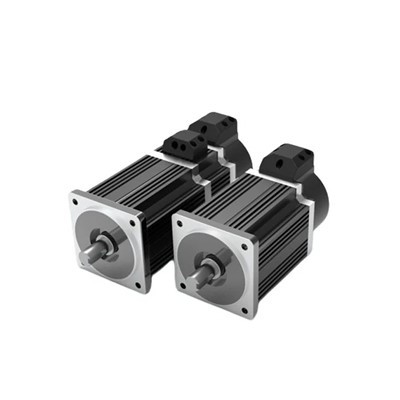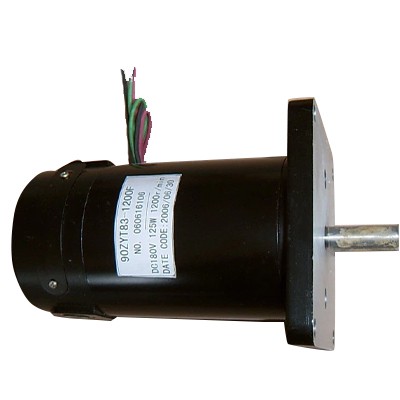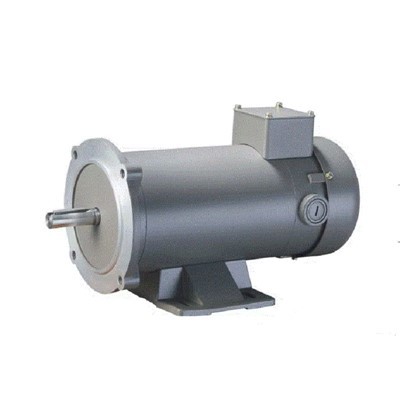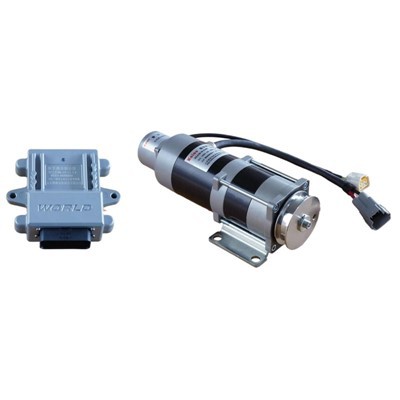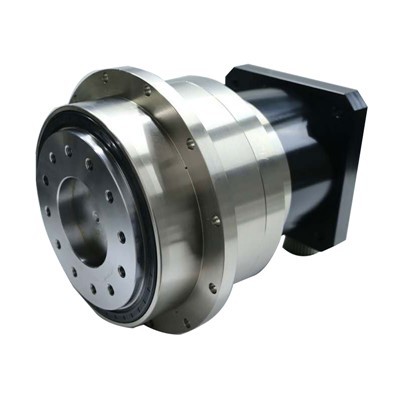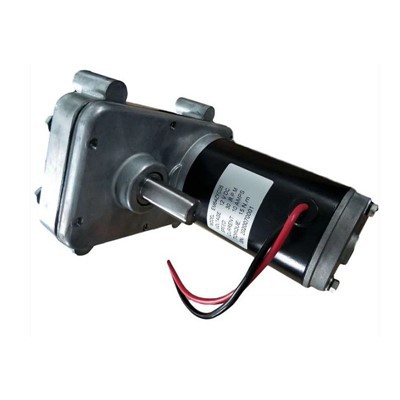
Choosing between a brushed DC motor and a brushless DC motor can significantly affect equipment performance, maintenance requirements, and long-term operating costs. While brushed motors are often preferred for their simpler control and lower initial system cost, brushless motors offer advantages in efficiency, maintenance, and electronic speed control.
For industrial equipment manufacturers, OEM buyers, and procurement teams, the best choice depends on the application rather than the motor technology alone.
In this guide, Auric compares brushed and brushless DC motors in terms of performance, cost, service life, maintenance, and industrial applications. You'll also learn how to select the right motor configuration and what to consider when sourcing from a DC motor manufacturer.
What Is the Difference Between Brushed and Brushless DC Motors?
Both brushed and brushless DC motors convert electrical energy into mechanical rotation, but they use different methods to control the magnetic field and produce continuous motion.
Brushed DC Motor
A brushed DC motor uses carbon brushes and a mechanical commutator to transfer current to the rotating armature. This design allows the motor to operate with a relatively simple electrical supply and control arrangement.
Permanent magnet brushed DC motors are commonly considered for applications where straightforward operation, cost control, and adjustable speed are important.
Key advantages:
Relatively simple motor control
Often lower initial system cost
Straightforward speed adjustment with a suitable controller
Available in different voltage, speed, and torque configurations
Practical for many industrial and OEM applications
The main limitation is brush and commutator wear, which creates maintenance requirements over time.
Brushless DC Motor
A brushless DC motor, also called a BLDC motor, uses electronic commutation instead of mechanical brushes. A compatible controller switches current through the motor windings to produce rotation.
Because there are no brushes rubbing against a commutator, brushless motors avoid brush-related wear and can offer longer maintenance intervals.
Key advantages:
No carbon brush replacement
Potentially higher operating efficiency
Reduced mechanical wear associated with commutation
Suitable for electronically controlled speed and torque
Attractive for equipment operating frequently or continuously
However, brushless motors require compatible electronic control, which can increase initial system complexity and cost.
Brushed vs Brushless DC Motor: Key Differences at a Glance
|
Feature |
Brushed DC Motor |
Brushless DC Motor |
|---|---|---|
|
Commutation |
Mechanical brushes and commutator |
Electronic controller |
|
Initial System Cost |
Often lower |
Often higher |
|
Efficiency |
Depends on design and load |
Often higher in comparable designs |
|
Maintenance |
Brush inspection and replacement |
No brush replacement |
|
Service Life |
Influenced by brush and commutator wear |
Influenced by bearings, insulation, electronics, and operating conditions |
|
Speed Control |
Relatively simple with suitable electronics |
Requires compatible electronic drive |
|
Noise |
May generate brush-related electrical and mechanical noise |
No brush commutation noise; controller and bearings may still generate noise |
|
High-Speed Capability |
Limited by mechanical commutation and design |
Can be advantageous, depending on design |
|
Controller Requirement |
May operate with simpler controls |
Electronic commutation is required |
|
Typical Applications |
Industrial equipment, actuators, machinery |
Automation, AGVs, robotics, continuous-duty equipment |
Important: These are general technology differences. Actual efficiency, torque, speed, noise, and service life depend on the specific motor model, controller, operating load, and environmental conditions.
Which Motor Offers Better Efficiency and Energy Savings?
Efficiency is an important consideration for industrial equipment, especially when motors operate for long periods or rely on battery power.
Brushless DC motors often achieve higher efficiency than comparable brushed designs because they eliminate mechanical brush contact and associated electrical losses.
However, the actual difference depends on motor construction, winding design, controller performance, and operating speed.
Example: Comparing Energy Consumption
Consider two motor systems delivering the same 500W of mechanical output.
For illustration, assume:
Brushed DC motor system efficiency: 75%
Brushless DC motor system efficiency: 85%
Operating time: 8 hours per day
Working days: 250 per year
|
Parameter |
Brushed DC System |
Brushless DC System |
|---|---|---|
|
Mechanical Output |
500W |
500W |
|
Assumed System Efficiency |
75% |
85% |
|
Electrical Input |
667W |
588W |
|
Annual Operating Hours |
2,000 |
2,000 |
|
Annual Electricity Use |
1,333 kWh |
1,176 kWh |
|
Annual Energy Difference |
- |
Approximately 157 kWh less |
Under these assumptions, the brushless system uses approximately 157 kWh less electricity annually.
At an illustrative electricity price of $0.15/kWh, this represents approximately $24 in annual energy savings per motor.
These are hypothetical values, not verified Auric product efficiency ratings. Actual savings should be calculated using measured efficiency at the application's operating points, including controller losses.
When Does Higher Efficiency Matter Most?
Efficiency becomes especially important when:
Motors operate for extended periods.
Equipment uses battery power.
Multiple motors operate simultaneously.
Heat dissipation is limited.
Electricity consumption is a significant operating cost.
For equipment operating only occasionally, the energy savings may be too small to justify a higher initial purchase cost.
Therefore, buyers should compare total operating costs rather than selecting a brushless motor solely because it may offer higher efficiency.
Which Motor Has a Longer Service Life?
Brushless DC motors generally have an advantage in applications requiring extended operating hours because they do not contain mechanical brushes or commutators.
However, it is important to distinguish between brush life and total motor service life.
For brushed DC motors, brush wear depends on operating speed, current, starting frequency, temperature, and environmental conditions. For brushless motors, bearings, insulation, electronics, and operating temperatures become important factors.
As a general industry reference, some manufacturers report typical brushed motor brush-life ranges of approximately 2,000–5,000 operating hours, while certain brushless motor designs may exceed 10,000 hours. These figures are not universal guarantees and should not be treated as specifications for every motor.
haydonkerkpittman.com
How Does Operating Time Affect Maintenance?
Consider a machine operating 16 hours per day, 300 days per year.
Annual operating time:
16 × 300 = 4,800 hours.
At this duty cycle, a brushed motor may require periodic brush inspection or replacement, depending on its actual rated brush life and operating conditions.
A brushless motor eliminates that particular maintenance task, potentially reducing scheduled downtime.
For equipment running only 30 minutes per day, however, the economic advantage of eliminating brush maintenance may be much smaller.
Buying recommendation: Ask the DC motor manufacturer for model-specific service-life information under conditions similar to your actual application.
Which Motor Provides Better Torque and Speed Performance?
Both brushed and brushless DC motors can produce high starting torque and operate across a range of speeds.
The difference is not simply that one motor produces more torque than the other. Actual performance depends on winding design, motor size, available current, cooling, and the controller.
Starting Torque
Brushed permanent magnet DC motors can produce substantial starting torque when supplied with sufficient current.
However, excessive starting current may damage the motor or shorten its service life.
Brushless DC motors can also provide strong starting torque, provided the controller supports the necessary current and commutation strategy.
Speed Control
A brushed DC motor can often use a relatively simple PWM controller for speed adjustment.
A brushless DC motor requires electronic commutation and may support advanced speed regulation, current limiting, and feedback control.
For applications requiring stable speed under changing loads, compare the complete motor and controller system.
How to Calculate Motor Torque
Motor torque can be estimated from mechanical power and rotational speed:
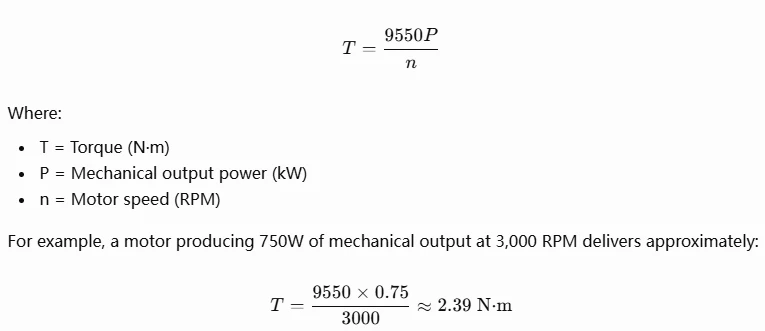
This calculation applies to either brushed or brushless motors.
It does not establish the motor's starting torque, peak torque, or continuous thermal capability.
When comparing motor suppliers, request torque-speed curves and verify the performance at the intended operating point.
Brushed vs Brushless DC Motor: Which Is More Cost-Effective?
The lowest motor purchase price does not necessarily result in the lowest total equipment cost.
For industrial buyers, the total cost should include the motor, controller, installation, electricity, maintenance, and possible downtime.
|
Cost Factor |
Brushed DC Motor |
Brushless DC Motor |
|---|---|---|
|
Initial Motor Price |
Often lower |
Often higher |
|
Controller Cost |
May be lower |
Electronic commutation required |
|
Installation |
Depends on the system |
May require additional configuration |
|
Energy Consumption |
Depends on actual efficiency |
Often lower for comparable output |
|
Routine Maintenance |
Brush inspection or replacement |
No brush replacement |
|
Downtime Risk |
Brush-related maintenance may contribute |
Brush-related downtime eliminated |
|
Long-Term Cost |
Attractive for intermittent applications |
Often attractive for extended-duty applications |
Example: Five-Year Purchasing Decision
Suppose an OEM manufacturer is comparing two motor solutions.
|
Cost Item |
Brushed System |
Brushless System |
|---|---|---|
|
Initial Motor and Controller |
$120 |
$190 |
|
Estimated Maintenance Over 5 Years |
$100 |
$30 |
|
Estimated Electricity Over 5 Years |
$200 |
$175 |
|
Total Estimated Cost |
$420 |
$395 |
Hypothetical cost example for explaining total cost of ownership. These are not Auric quotations or market price estimates.
In this scenario, the brushless solution costs $70 more initially but has a $25 lower estimated five-year total cost.
For equipment that operates infrequently, the result may be reversed.
The correct purchasing decision depends on the actual motor prices, operating hours, maintenance accessibility, electricity rates, and replacement requirements.
Which Motor Is Better for Different Industrial Applications?
Motor selection becomes easier when you evaluate the operating conditions of the equipment.
|
Industrial Application |
Motor Type to Evaluate |
Main Selection Consideration |
|---|---|---|
|
AGV and AMR Drive Systems |
Brushless DC Motor |
Efficiency, electronic control, and operating hours |
|
Packaging Machinery |
Brushed or Brushless |
Speed regulation, duty cycle, and maintenance |
|
Industrial Conveyors |
Brushed or Brushless |
Continuous torque, gearbox ratio, and operating time |
|
Agricultural Equipment |
Brushed or Brushless |
Environment, load variation, and service access |
|
Battery-Powered Equipment |
Brushless DC Motor |
Battery efficiency and control requirements |
|
Intermittent Actuators |
Brushed DC Motor |
Simple control and initial cost |
|
Industrial Robots |
Brushless Servo System |
Positioning accuracy and dynamic response |
|
OEM Machinery |
Application-Dependent |
Cost, dimensions, electrical compatibility, and reliability |
AGV and Mobile Robot Applications
For battery-powered AGVs, brushless DC motors are often worth evaluating because energy efficiency, controllable acceleration, and maintenance requirements directly affect equipment operation.
However, the final motor must be sized according to vehicle mass, payload, wheel diameter, speed, and acceleration.
Packaging and Conveyor Equipment
For packaging machinery and conveyor systems, the choice depends on how often the equipment operates, how frequently it starts and stops, and whether precise speed control is necessary.
A brushed DC motor may be appropriate for a simple intermittent mechanism, while a brushless system may offer advantages for continuous operation.
Agricultural and Outdoor Equipment
Outdoor machinery introduces additional requirements, including moisture, dust, vibration, and temperature changes.
Neither motor type should be selected solely on the assumption that it is suitable for harsh environments. Protection ratings, sealing, cooling, and controller installation must be evaluated separately.
How to Choose Between Brushed and Brushless DC Motors in 5 Steps
Step 1: Define the Actual Operating Load
Start by identifying:
Required output torque
Normal operating speed
Starting and peak torque
Acceleration and deceleration
Continuous or intermittent duty
Gearbox or transmission requirements
Without this information, comparing motor prices is unlikely to produce a reliable result.
Step 2: Confirm the Power Supply
Determine the available voltage and operating voltage range.
Common DC motor applications use different voltage architectures, including 12V, 24V, 48V, 72V, and 90V.
The correct choice depends on the actual motor configuration and equipment power system.
Do not assume that every motor type is available at every voltage.
Step 3: Evaluate Operating Hours and Maintenance
If equipment operates continuously and maintenance access is difficult, the reduced brush-related maintenance of a BLDC motor may justify its higher initial cost.
If equipment operates intermittently and service access is straightforward, a brushed motor may be more economical.
Step 4: Check Controller Compatibility
For brushed DC motors, confirm whether the existing controller supports the required voltage, current, direction control, and speed regulation.
For brushless DC motors, verify commutation method, Hall sensor or encoder requirements, controller current capacity, and communication interfaces.
Step 5: Compare Total System Cost
Request quotations for complete configurations rather than comparing motor prices alone.
Include the controller, cables, connectors, gearbox, customization, and any required testing.
The best motor is the one that meets the equipment's operating requirements at an acceptable total cost.
Can You Replace a Brushed DC Motor With a Brushless Motor?
Yes, in some applications, but a brushless motor is not necessarily a direct replacement.
Even if the rated voltage and power are similar, the electrical and mechanical interfaces may differ.
Before replacing an existing brushed motor, check:
Mounting dimensions: Confirm the motor diameter, overall length, mounting holes, and flange.
Shaft compatibility: Check shaft diameter, shaft length, keyway, and coupling requirements.
Torque and speed: Verify that the replacement can deliver the required torque throughout the operating speed range.
Controller requirements: A brushless motor requires compatible electronic commutation. The existing brushed motor controller generally cannot be reused without appropriate changes.
Thermal performance: Confirm the motor's continuous operating capability under the actual load.
Installation space: Include the dimensions and placement requirements of the controller and associated wiring.
For OEM equipment manufacturers, a replacement project should begin with the original motor's datasheet or dimensional drawing.
This can reduce the risk of unnecessary changes to the machine structure.
What Customization Options Should OEM Buyers Consider?
Standard motors do not always match the mechanical and electrical requirements of industrial equipment.
Depending on the motor design and manufacturing capabilities, customization may involve:
|
Customization Item |
Possible Requirement |
|---|---|
|
Rated Voltage |
Match the equipment's DC supply |
|
Rated Power |
Match continuous output requirements |
|
Rated Speed |
Adapt the operating speed |
|
Shaft Design |
Diameter, length, keyway, or special interface |
|
Mounting |
Flange, mounting holes, or housing dimensions |
|
Gearbox |
Required reduction ratio and output torque |
|
Feedback |
Encoder or Hall sensor configuration |
|
Wiring |
Cable length, connector, and termination |
|
Protection |
Application-specific environmental requirements |
|
Packaging |
OEM identification and shipment requirements |
Before ordering customized motors, request confirmation of the final technical specifications, drawing approval process, sample testing requirements, and production lead time.
How to Choose a Reliable DC Motor Manufacturer
Finding a suitable DC motor manufacturer involves more than comparing prices.
For overseas buyers, technical communication, product consistency, and after-sales support can be just as important as the initial quotation.
Evaluate Technical Capabilities
A supplier should be able to explain how its motor specifications relate to your application.
Request information about:
Continuous and peak torque
Rated speed and power
Efficiency at relevant operating points
Temperature rise and cooling requirements
Motor dimensions
Controller compatibility
Check Quality Documentation
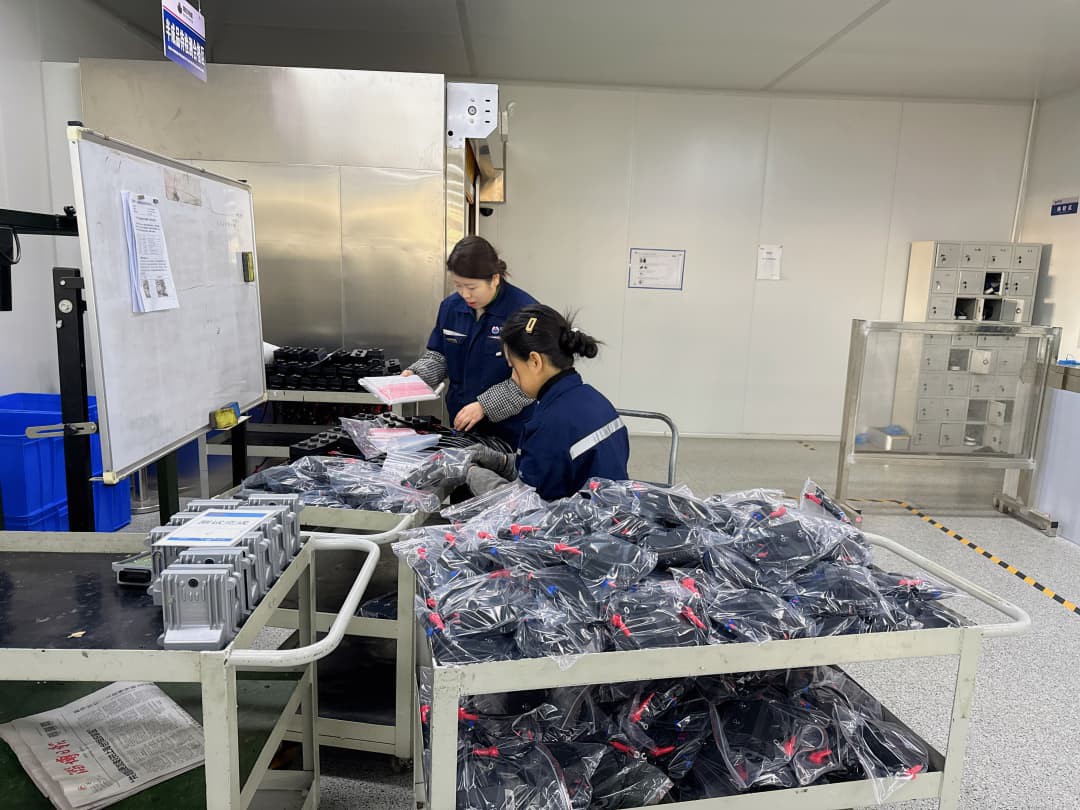
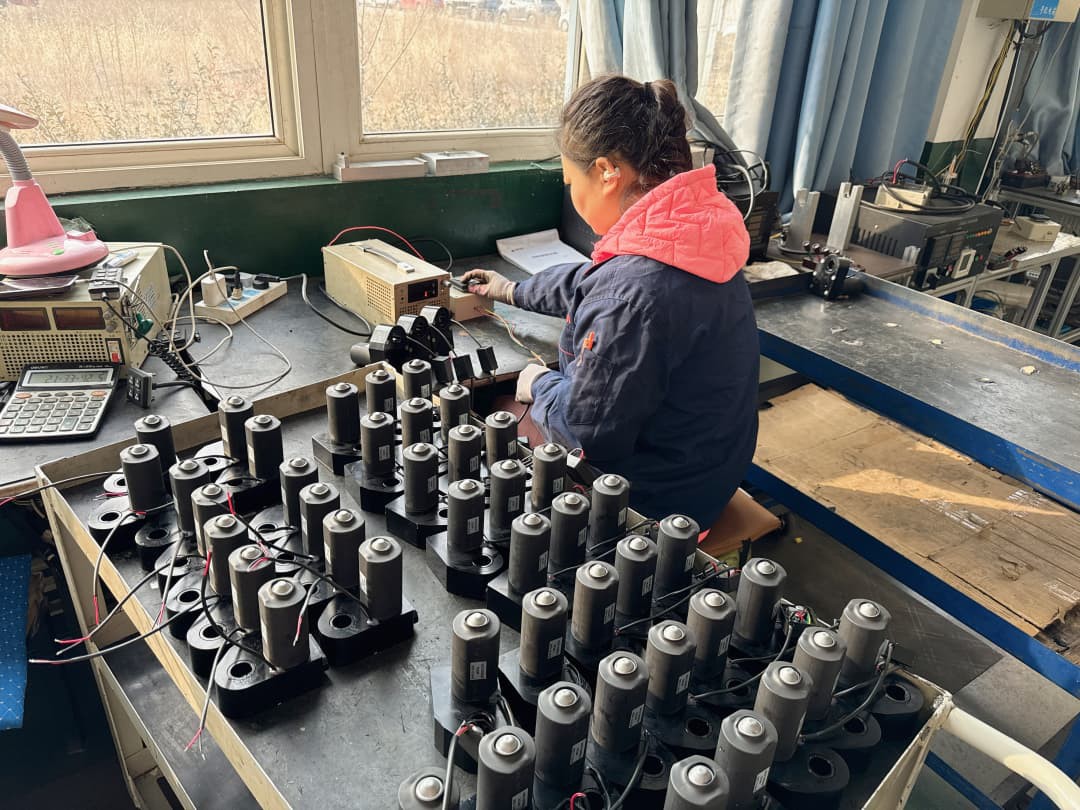
Ask what inspection procedures, performance testing, and quality records are available.
For critical equipment, establish acceptance criteria before production.
Confirm OEM Customization
If your application requires a special shaft, mounting interface, voltage, or connector, confirm technical feasibility before placing an order.
Review Delivery and Support
Clarify sample availability, minimum order quantity, production lead time, warranty terms, and technical support responsibilities.
Why Consider Auric for Your DC Motor Project?
Auric provides DC motor solutions for industrial equipment applications, including permanent magnet brushed motors and brushless motor configurations.
For OEM equipment manufacturers, the selection process should begin with the required performance and installation conditions.
By sharing your voltage, torque, speed, mounting dimensions, and operating requirements, you can discuss suitable motor options with Auric and request a quotation based on your project specifications.
What Information Should You Provide When Requesting a DC Motor Price?
An accurate quotation requires more than a motor name or power rating.
|
Required Information |
Example or Description |
|---|---|
|
Motor Type |
Brushed DC / Brushless DC |
|
Application |
Conveyor / AGV / Packaging Machine |
|
Rated Voltage |
24V / 48V / 90V or required voltage |
|
Rated Power |
Required output in W or kW |
|
Rated Speed |
Required RPM |
|
Continuous Torque |
Required torque in N·m |
|
Peak Torque |
Maximum short-duration requirement |
|
Operating Duty |
Hours per day and starts per hour |
|
Mounting |
Shaft and flange dimensions |
|
Controller |
Existing controller or new drive requirement |
|
Quantity |
Sample / Trial Order / Bulk Order |
|
Delivery Destination |
Country or region |
For motor replacement projects, provide the existing motor model, nameplate, or dimensional drawing.
For new equipment development, provide the machine's operating conditions and performance targets.
Frequently Asked Questions
Is a brushless DC motor always better than a brushed motor?
No. Brushless motors often offer advantages in efficiency and maintenance, but brushed motors may be more economical for applications requiring simple control and limited operating hours. The best choice depends on the complete equipment requirements.
Are brushless DC motors more expensive?
Brushless motor systems often have a higher initial cost because they require electronic commutation. However, reduced maintenance and potential energy savings can make them more economical over extended operating periods.
Which motor is better for continuous operation?
Brushless DC motors are often attractive for continuous-duty applications because they eliminate brush wear. However, continuous operation still requires verification of motor temperature, bearings, controller capacity, and rated torque.
Can brushed DC motors provide high starting torque?
Yes. Brushed DC motors can produce substantial starting torque when supplied with sufficient current. Starting current must remain within the motor and controller's permitted limits.
Do brushless motors require maintenance?
Yes. Although brushless motors do not require brush replacement, bearings, seals, cooling components, electrical connections, and associated electronics may still require inspection or maintenance.
Can I replace a brushed motor with a brushless motor of the same power?
Possibly, but rated power alone is not enough. The replacement must meet the required torque-speed characteristics, installation dimensions, voltage range, and operating duty. A compatible brushless controller is also required.
Which motor is better for AGV applications?
Brushless DC motors are often worth evaluating for AGVs because of their electronic control and reduced brush maintenance. The final choice depends on payload, speed, wheel diameter, battery voltage, duty cycle, and system cost.
How do I find the right DC motor supplier for an OEM project?
Choose a supplier that can review your technical requirements, provide suitable drawings and performance information, confirm customization feasibility, and clearly communicate quality requirements, lead times, and after-sales support.


Both brushed and brushless DC motors remain practical solutions for industrial equipment.
Choose a brushed DC motor when your application prioritizes simple control, lower initial cost, intermittent operation, and accessible maintenance.
Consider a brushless DC motor when your equipment requires extended operating hours, reduced brush-related maintenance, electronic control, and potentially improved energy efficiency.
For OEM buyers, the final decision should be based on torque, speed, operating duty, controller compatibility, installation requirements, and total cost of ownership.
The most economical motor is not always the cheapest one to purchase. It is the motor that reliably meets your equipment requirements throughout its intended operating life.
Auric offers DC motor solutions for industrial equipment and OEM applications.
Whether you need a permanent magnet brushed DC motor, a brushless DC motor, or a customized motor configuration, contact Auric with your application details, required voltage, power, torque, speed, and purchasing quantity.
We can discuss suitable configurations and quotation requirements based on your equipment specifications.
Contact Auric for DC Motor Selection and Pricing.