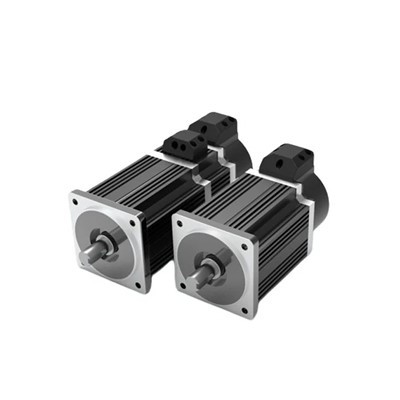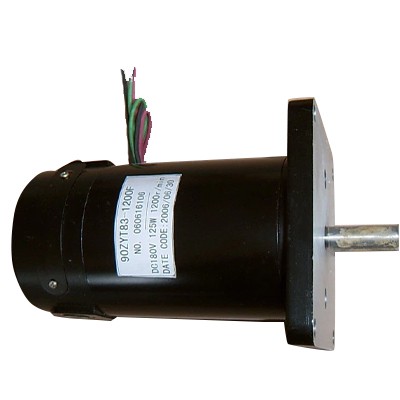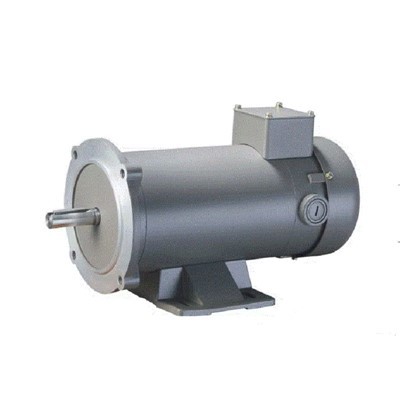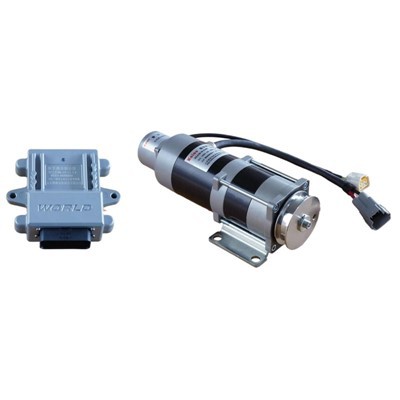
Replacing an existing DC motor does not always require redesigning your equipment. If the replacement motor matches the original electrical specifications, mounting dimensions, shaft configuration, and operating requirements, it may be possible to install a new motor with minimal modifications.
For industrial equipment manufacturers, OEM buyers, and maintenance teams, finding a compatible DC motor replacement can help reduce equipment downtime, avoid unnecessary engineering costs, and maintain production continuity.
However, selecting a replacement based only on voltage and power can lead to insufficient torque, overheating, installation problems, or controller incompatibility.
This guide explains how to replace an existing DC motor, which specifications must match, when customization is necessary, and how to work with a DC motor manufacturer such as Auric to find a suitable replacement solution.


1. When Can You Replace a DC Motor Without Redesigning Your Equipment?
A direct DC motor replacement is possible when the new motor meets the electrical, mechanical, and performance requirements of the original installation.
For example, if an industrial conveyor uses a 24V permanent magnet DC motor, a replacement with the same voltage, similar torque-speed characteristics, compatible shaft dimensions, and matching mounting holes may be suitable.
However, two motors with identical rated power and voltage are not necessarily interchangeable.
Before purchasing, verify the following:
|
Replacement Requirement |
What Must Be Checked |
Why It Matters |
|---|---|---|
|
Rated Voltage |
Nominal voltage and allowable operating range |
Prevents electrical incompatibility |
|
Rated Power |
Continuous mechanical output |
Helps maintain equipment performance |
|
Rated Speed |
RPM at the required operating load |
Maintains machine operating speed |
|
Rated Torque |
Continuous torque under actual conditions |
Prevents insufficient driving force |
|
Starting Torque |
Required starting and acceleration capability |
Ensures reliable startup |
|
Mounting Dimensions |
Flange, bolt pattern, and motor length |
Avoids structural modifications |
|
Shaft Dimensions |
Diameter, length, keyway, and tolerance |
Ensures coupling compatibility |
|
Motor Type |
Brushed or brushless construction |
Determines controller compatibility |
|
Duty Cycle |
Continuous or intermittent operation |
Prevents thermal overload |
|
Protection Requirements |
Environmental sealing and cooling |
Supports reliable operation |
Practical recommendation: When replacing a motor from another manufacturer, compare the complete datasheets and dimensional drawings rather than relying on model numbers alone.
2. How Do You Match the Electrical Specifications of a Replacement DC Motor?
Electrical compatibility is the first step in choosing a replacement motor.
Rated Voltage
The replacement motor must be compatible with the equipment's power supply.
Common industrial DC motor voltage classes include 12V, 24V, 48V, 72V, and 90V, although availability depends on the motor design.
A motor with a higher voltage rating is not automatically a suitable replacement for a lower-voltage model.
For battery-powered equipment, confirm the actual voltage range during charging and discharging, not just the nominal battery voltage.
Rated Power
Rated power indicates the mechanical output a motor can provide under specified conditions.
For example, replacing a 500W motor with another 500W motor may appear straightforward. However, the replacement must also deliver the required torque at the machine's operating speed.
Two 500W motors can have different speed and torque characteristics.
Rated Current and Starting Current
Current requirements are especially important when the existing controller or power supply will be reused.
The replacement motor must operate within the controller's continuous and peak current capabilities.
A motor that draws excessive starting current may cause protection trips, voltage drops, or overheating.
Rated Speed
The replacement motor should provide the speed required by the driven equipment.
For applications with gearboxes, check both motor RPM and gearbox output RPM.
A significant speed difference can affect conveyor throughput, machine cycle time, or equipment operation.
3. How Do You Check Whether the Replacement Motor Has Enough Torque?
Torque is one of the most important specifications when replacing an industrial DC motor.
A motor may have the same rated power as the original but still fail to deliver sufficient torque at the required speed.
For example, consider two motors with the same rated mechanical output power of 750W.
|
Specification |
Motor A |
Motor B |
|---|---|---|
|
Rated Power |
750W |
750W |
|
Rated Speed |
3,000 RPM |
1,500 RPM |
|
Calculated Rated Torque |
2.39 N·m |
4.78 N·m |
Although both motors are rated at 750W, Motor B produces twice the torque at half the speed.
This example demonstrates why matching rated power alone is not sufficient for DC motor replacement.
Continuous Torque vs. Peak Torque
Continuous torque is the torque a motor can sustain under specified thermal conditions.
Peak torque is available only for a limited duration and depends on the motor and controller limits.
For equipment with frequent starts and stops, verify both continuous and peak torque requirements.
If the replacement motor has insufficient continuous torque, it may overheat even if it can start the equipment successfully.
4. Which Mechanical Dimensions Must Match?
Mechanical compatibility determines whether the replacement motor can fit into the existing machine without structural modifications.
For OEM equipment manufacturers, maintaining the original installation dimensions can reduce redesign work and simplify assembly.
Motor Mounting Dimensions
Check the following:
Mounting flange diameter
Mounting hole diameter and spacing
Pilot or locating diameter
Overall motor length
Housing diameter
Mounting orientation
Shaft Dimensions
The motor shaft must be compatible with the existing coupling, pulley, sprocket, or gearbox.
Important parameters include:
Shaft diameter
Shaft extension length
Keyway width and depth
Shaft tolerance
Threaded holes or other connection features
Shaft loading requirements
Example: Mechanical Replacement Checklist
|
Dimension |
Existing Motor |
Replacement Motor |
Requirement |
|---|---|---|---|
|
Housing Diameter |
110 mm |
To Be Confirmed |
Must fit installation space |
|
Shaft Diameter |
14 mm |
To Be Confirmed |
Must match coupling |
|
Shaft Extension |
35 mm |
To Be Confirmed |
Must meet assembly requirements |
|
Mounting Hole Pattern |
Existing Drawing |
To Be Confirmed |
Must align |
|
Overall Length |
180 mm |
To Be Confirmed |
Must fit available space |
|
Keyway |
Existing Specification |
To Be Confirmed |
Must match transmission |
The dimensions above are illustrative examples, not specifications for a particular Auric motor.
If the replacement motor has different mounting dimensions, customization or an adapter may be necessary.
However, an adapter should only be used after verifying alignment, structural strength, vibration, and shaft loading.
5. Can You Replace a Brushed DC Motor With a Brushless DC Motor?
In some applications, a brushed DC motor can be replaced with a brushless DC motor, but this is usually not a direct electrical replacement.
Brushed DC motors use mechanical commutation, while brushless DC motors require electronic commutation.
Therefore, switching motor types may require a different controller, feedback arrangement, and wiring configuration.
|
Comparison |
Brushed DC Motor |
Brushless DC Motor |
|---|---|---|
|
Commutation |
Mechanical |
Electronic |
|
Controller |
May use a simpler DC controller |
Requires compatible brushless drive |
|
Maintenance |
Brush replacement may be necessary |
No brush replacement |
|
Efficiency |
Depends on motor design |
Often higher in comparable designs |
|
Installation |
Depends on dimensions |
Depends on dimensions |
|
Replacement Complexity |
Often simpler when replacing like-for-like |
May require controller and wiring changes |
When Should You Keep a Brushed DC Motor?
A brushed motor may be the more practical replacement when:
The existing controller must remain unchanged.
The equipment operates intermittently.
The original motor configuration is readily available.
Initial replacement cost is a major consideration.
Minimal electrical modification is required.
When Should You Consider a Brushless Upgrade?
A brushless motor may be worth evaluating when:
Equipment operates for extended periods.
Brush maintenance causes production interruptions.
Energy efficiency is important.
Electronic speed or torque control is required.
The equipment is undergoing a broader drive-system upgrade.
The final decision should be based on total system compatibility and operating cost, not motor technology alone.
6. How Do You Replace a DC Gear Motor?
Replacing a DC gear motor requires checking both the motor and gearbox.
Even if the motor specifications match, differences in gearbox ratio or output shaft dimensions can change equipment performance.
Other Gearbox Specifications
Confirm output shaft dimensions, mounting arrangement, backlash, permissible radial and axial loads, lubrication, and duty cycle.
For existing machinery, matching the complete gear motor assembly may be more economical than replacing the motor and gearbox separately.
7. What Are the Most Common DC Motor Replacement Mistakes?
Mistake 1: Choosing a Motor Based Only on Voltage
Two 24V motors may have very different torque, speed, current, and thermal characteristics.
Solution: Compare the complete operating specifications.
Mistake 2: Ignoring Shaft and Mounting Dimensions
A motor with suitable electrical performance may not fit the existing equipment.
Solution: Request a dimensional drawing before purchasing.
Mistake 3: Overlooking Starting Torque
Some machines require substantially more torque during startup than during normal operation.
Solution: Verify starting and acceleration requirements.
Mistake 4: Reusing an Incompatible Controller
A replacement motor may require a different current limit, feedback interface, or commutation method.
Solution: Confirm motor-controller compatibility before installation.
Mistake 5: Ignoring Continuous Operating Conditions
A motor may perform adequately during a short test but overheat during extended operation.
Solution: Check duty cycle, temperature rise, cooling, and continuous torque.
Mistake 6: Selecting the Cheapest Replacement
A lower purchase price may lead to higher costs if the motor requires modifications or fails prematurely.
Solution: Compare the total cost of replacement, including installation, downtime, and maintenance.
8. When Is a Customized DC Motor Replacement Necessary?
A standard motor may not always match the electrical and mechanical specifications of discontinued or imported equipment.
For OEM buyers, a customized replacement can be useful when the existing motor has unusual mounting dimensions, shaft geometry, voltage, or operating characteristics.
Depending on technical feasibility, customization may involve:
|
Customization Item |
Possible Requirement |
|---|---|
|
Rated Voltage |
Match existing power supply |
|
Rated Speed |
Match required operating RPM |
|
Torque |
Match continuous and peak load |
|
Shaft Diameter |
Fit existing coupling |
|
Shaft Length |
Match available installation space |
|
Mounting Flange |
Match original bolt pattern |
|
Gearbox |
Match reduction ratio and output requirements |
|
Connector |
Match existing electrical connection |
|
Cable Length |
Suit machine wiring layout |
|
Feedback |
Match controller requirements |
How Can OEM Customization Reduce Replacement Costs?
When a replacement motor maintains the original installation interface, equipment manufacturers may avoid modifications to mounting brackets, couplings, wiring, and surrounding components.
However, customization also introduces engineering and production considerations.
Before approving a customized motor, confirm the final drawing, technical specifications, sample testing procedure, order quantity, and production lead time.
For repeat OEM orders, these details should be documented to maintain consistency between production batches.
9. How Much Does a Replacement DC Motor Cost?
The price of a replacement DC motor depends on its design, performance, dimensions, and purchasing requirements.
The main cost factors include:
Motor specifications: Rated power, voltage, torque, speed, and thermal requirements.
Mechanical configuration: Standard or customized shaft, mounting flange, and housing dimensions.
Motor technology: Brushed or brushless design and controller requirements.
Gearbox requirements: Reduction ratio, torque capacity, precision, and output configuration.
Order quantity: Sample orders and bulk purchases may have different pricing structures.
Testing and documentation: Additional inspections or project-specific testing may affect cost.
Delivery requirements: Lead time, packaging, shipping destination, and transportation arrangements.
Standard vs. Customized Replacement
|
Cost Consideration |
Standard Motor |
Customized Motor |
|---|---|---|
|
Initial Engineering |
Usually lower |
May require design review |
|
Mechanical Compatibility |
Depends on existing design |
Can target original dimensions |
|
Sample Validation |
Recommended |
Particularly important |
|
Production Lead Time |
Depends on stock and production |
May include customization time |
|
Unit Price |
Depends on specification and quantity |
Depends on customization and volume |
|
OEM Repeat Orders |
Possible |
Can be planned around approved specifications |
For industrial procurement, compare the complete replacement cost rather than the motor unit price alone.
A customized motor may justify its cost if it reduces equipment redesign and installation work, but the benefit should be evaluated against actual engineering and production expenses.
10. How Do You Choose a Reliable DC Motor Replacement Manufacturer?
When replacing an existing motor from another brand, selecting a manufacturer with suitable technical support is particularly important.
A reliable supplier should be able to evaluate the existing motor and confirm whether a compatible configuration is available.
Technical Evaluation
Provide the original motor's datasheet, nameplate, and dimensional drawing.
Ask the supplier to compare voltage, power, torque, speed, and installation requirements.
Mechanical Compatibility
Confirm whether the manufacturer can match the original shaft, flange, mounting holes, and overall dimensions.
Performance Testing
Ask which electrical and mechanical performance tests can be provided for the proposed replacement.
Quality Consistency
For bulk OEM orders, establish agreed specifications, inspection criteria, and documentation requirements.
Delivery and After-Sales Support
Confirm sample availability, minimum order quantity, production lead time, warranty conditions, and technical support arrangements.
Why Consider Auric for DC Motor Replacement Projects?
Auric provides DC motor solutions for industrial equipment and OEM applications, including permanent magnet DC motors and other motor configurations.
For customers replacing an existing motor, the first step is to identify the original electrical and mechanical requirements.
By providing your current motor specifications, installation drawing, and application details, you can discuss available replacement options and customization requirements with Auric.
The objective is to identify a motor that meets the machine's operating needs while minimizing unnecessary modifications.
11. What Information Should You Send When Requesting a DC Motor Replacement Quote?
A complete request for quotation helps the supplier evaluate compatibility and provide a more accurate proposal.
|
Required Information |
What to Provide |
|---|---|
|
Original Motor Brand |
Existing manufacturer |
|
Original Model Number |
Model shown on nameplate |
|
Motor Type |
Brushed DC / Brushless DC |
|
Rated Voltage |
Original voltage |
|
Rated Power |
W or kW |
|
Rated Speed |
RPM |
|
Rated Torque |
N·m, if available |
|
Mounting Dimensions |
Flange and mounting hole drawing |
|
Shaft Dimensions |
Diameter, length, and keyway |
|
Gearbox |
Ratio and output dimensions, if applicable |
|
Controller |
Existing controller model and specifications |
|
Operating Conditions |
Load, duty cycle, temperature, and environment |
|
Required Quantity |
Sample or bulk order |
|
Delivery Destination |
Country or region |
If the original motor datasheet is unavailable, photographs of the nameplate and clear dimensional measurements can help begin the evaluation.
For critical applications, the supplier may still need additional performance information or a sample for testing.
12. Frequently Asked Questions About DC Motor Replacement
Can I replace a DC motor with another brand?
Yes, provided the replacement meets the required electrical, mechanical, and performance specifications. Brand names do not have to match, but compatibility must be verified before installation.
Can I replace a 24V DC motor with a 48V motor?
Not as a direct replacement in most cases. The power supply, controller, wiring, and motor characteristics must support the new voltage. Changing voltage may require modifications to the electrical system.
Can I replace a 500W motor with a 750W motor?
Possibly, but higher rated power does not automatically guarantee compatibility. Check rated speed, torque, current, mounting dimensions, and controller capacity. An oversized motor may also introduce unnecessary cost.
What if my original DC motor has been discontinued?
You can look for a compatible alternative based on the original specifications. If a standard motor does not match, a customized replacement may be possible depending on manufacturing feasibility.
Can I replace only the motor and keep the original gearbox?
Sometimes. The new motor must match the gearbox's mounting interface, input shaft connection, operating speed, and torque requirements. Mechanical alignment and load limits must also be verified.
Do I need to replace the controller when changing DC motors?
Not always. A controller may be reused if it is compatible with the replacement motor's voltage, current, commutation method, and control requirements. Switching from brushed to brushless generally requires a compatible brushless controller.
How do I know whether a replacement motor will overheat?
Check the continuous torque requirement, duty cycle, ambient temperature, cooling arrangement, and motor thermal rating. For demanding applications, validate temperature rise under representative operating conditions.
Can Auric help with customized DC motor replacement?
Customers can submit their original motor specifications, drawings, and application requirements to Auric for evaluation of suitable configurations and possible customization options.
Replacing an industrial DC motor does not always require redesigning the machine.
The key is to verify electrical compatibility, torque-speed performance, mounting dimensions, shaft configuration, controller requirements, and operating duty.
For standard equipment, a compatible motor may provide a straightforward replacement. For discontinued or specialized motors, customization may help maintain the original mechanical interface and reduce engineering changes.
For OEM manufacturers and industrial buyers, choosing a suitable replacement motor can help reduce downtime, control maintenance costs, and support long-term equipment operation.