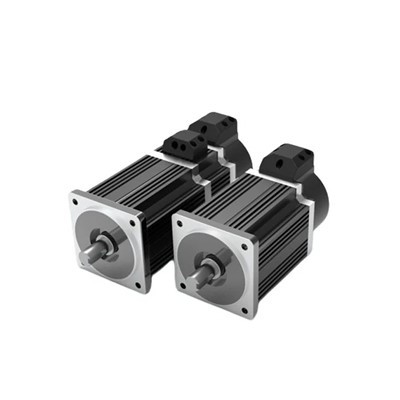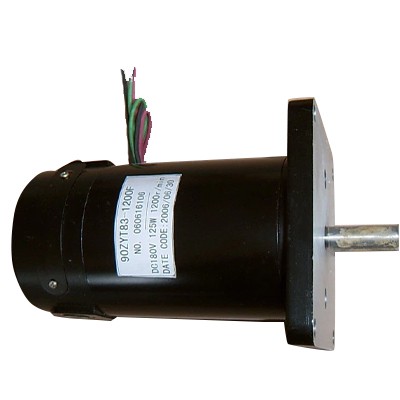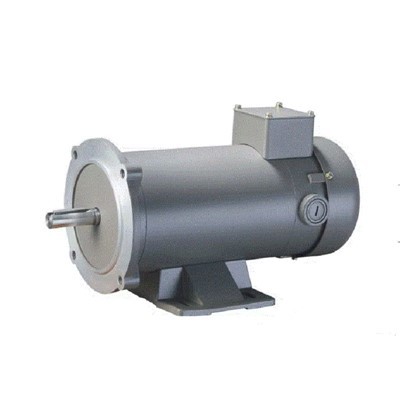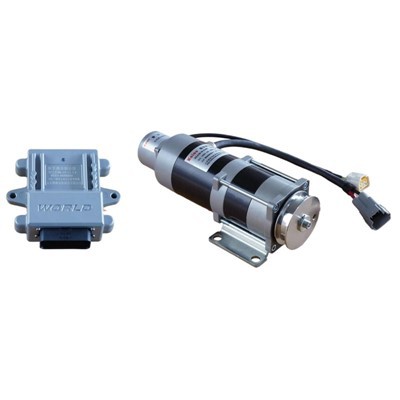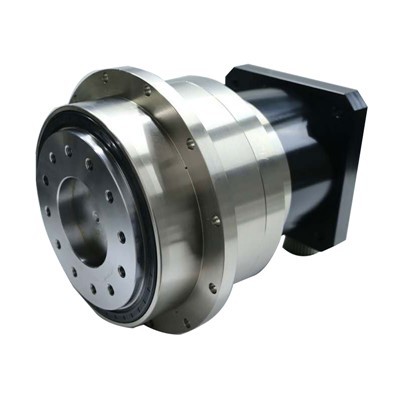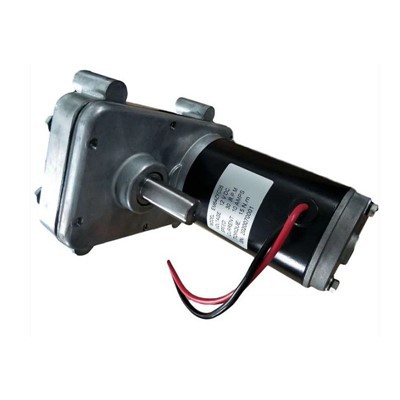
A 48V servo motor can be a practical choice for battery-powered equipment, mobile robots, AGVs, and compact industrial automation systems. However, selecting the right model requires more than matching the voltage. Torque, speed, acceleration, controller compatibility, feedback accuracy, and heat dissipation all affect the performance of the complete drive system.
For equipment manufacturers, OEM buyers, and industrial procurement teams, the goal is to find a 48V servo motor that meets the machine's operating requirements, integrates with the existing control system, and delivers reliable performance over its intended service life.
This guide explains how to evaluate specifications, avoid common purchasing mistakes, and choose a suitable 48V servo motor manufacturer or supplier. It also outlines the information you should prepare before requesting a quotation from Auric.
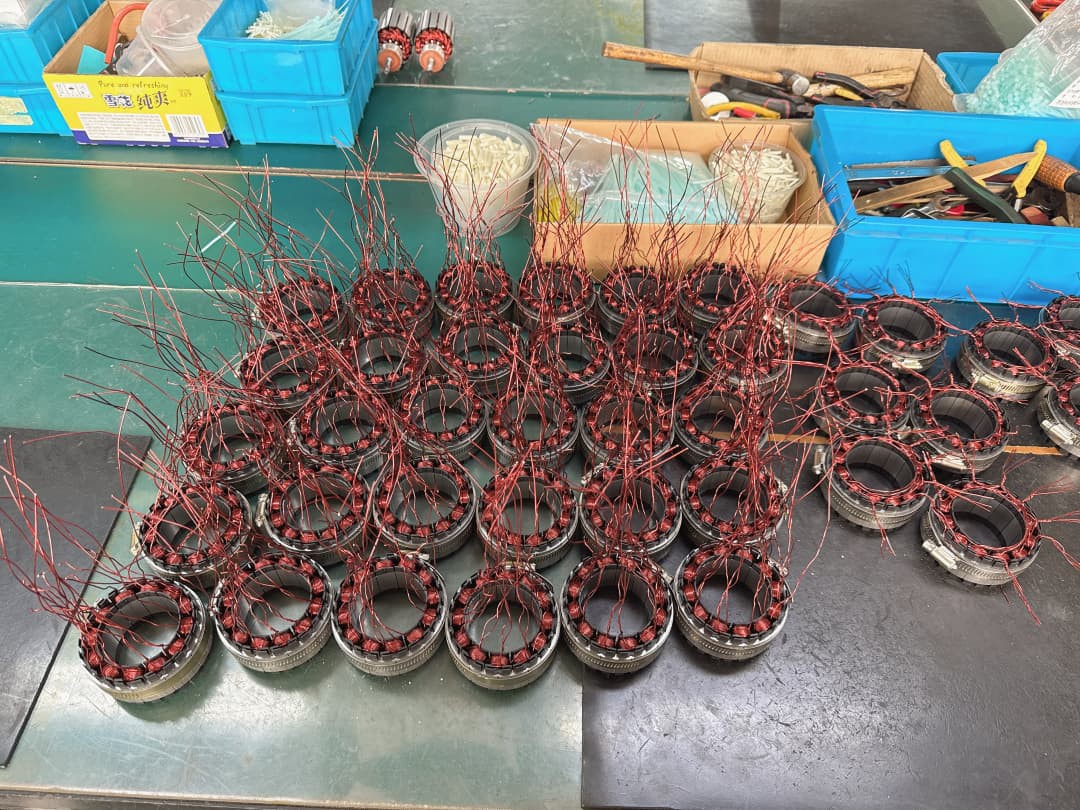

What Is a 48V Servo Motor?
A 48V servo motor is a servo motor designed to operate within a specified 48V-class electrical system. It typically works with a compatible servo drive and feedback device, such as an encoder, to control position, speed, or torque.
The motor, drive, and controller perform different functions:
Servo motor: Converts electrical energy into controlled mechanical motion.
Servo drive: Regulates motor current and manages the motor's response to control commands.
Encoder or feedback device: Reports the motor's position or speed to support closed-loop control.
Motion controller: Generates the commands required by the application, depending on the system architecture.
Not every product marketed as a 48V servo motor includes an integrated drive or encoder. Confirm which components are included in the quotation and which must be purchased separately.
Why Choose a 48V Servo Motor Instead of a 24V Model?
The main reason to consider 48V is the balance between electrical power, current demand, and system design. For the same electrical power, a higher supply voltage generally requires less current.
For example, under an idealized calculation, delivering 480W at 24V requires 20A, while delivering the same electrical power at 48V requires 10A. Actual system current depends on efficiency, operating conditions, and whether the motor is being accelerated or supplying peak torque.
|
Comparison |
24V Servo Motor |
48V Servo Motor |
|---|---|---|
|
Typical system fit |
Equipment built around a 24V power architecture |
Equipment designed around a 48V-class power architecture |
|
Current for the same power |
Generally higher |
Generally lower |
|
Wiring and electrical losses |
May require more attention to current and cable resistance |
Lower current can reduce resistive losses for the same power and conductor resistance |
|
Motor speed capability |
Depends on winding, drive, and load |
Depends on winding, drive, and available voltage under load |
|
Best selection basis |
Existing supply, load, and control requirements |
Existing supply, load, and control requirements |
Important: A 48V servo motor does not automatically produce more torque, run faster, or consume less energy than a 24V model. Those outcomes depend on motor design, winding characteristics, current limits, drive configuration, and the actual load. Choose the voltage that fits the complete electrical system rather than assuming that higher voltage always means better performance.
Which Specifications Matter Most When Buying a 48V Servo Motor?
Before comparing models or asking for a 48V servo motor price, establish the operating requirements of your equipment. The following specifications have the greatest influence on motor selection.
|
Specification |
What to Check |
Why It Matters |
|---|---|---|
|
Rated voltage |
Whether the motor and drive support your actual DC bus voltage range |
Prevents power-system incompatibility |
|
Rated power |
Continuous mechanical output required by the application |
Helps determine the appropriate motor capacity |
|
Rated torque |
Torque the motor can sustain under specified conditions |
Determines continuous load capability |
|
Peak torque |
Maximum permitted torque and duration |
Helps accommodate acceleration and short-term load changes |
|
Rated speed |
Speed available under the stated operating conditions |
Ensures the motor can meet the required cycle time |
|
Encoder resolution |
Feedback resolution and compatibility with the drive |
Influences position measurement and control |
|
Rated and peak current |
Continuous current and short-duration current demand |
Helps size the servo drive, wiring, and power supply |
|
Mounting dimensions |
Flange, shaft, overall length, and connection layout |
Ensures mechanical compatibility |
|
Duty cycle |
Operating time, acceleration frequency, and rest periods |
Helps prevent overheating |
|
Protection rating |
Required protection against dust, moisture, or other environmental factors |
Supports reliable operation in the installation environment |
A supplier's datasheet should identify the conditions under which the rated and peak values apply. For final selection, review the torque-speed curve rather than relying on a single maximum torque or speed figure. Motor sizing depends on the relationship between torque, speed, and the machine's motion cycle. 【turn236310search0】
How Do You Calculate the Required Torque and Power?
Motor sizing should start with the driven load, not with a preferred motor model.
First, determine the torque required during normal operation. Then calculate the additional torque needed for acceleration, deceleration, friction, and any external forces. For loads connected through a gearbox or transmission, account for the gear ratio and mechanical efficiency.
For a rotating motor, mechanical power can be estimated using:

For example, a motor delivering 2 N·m at 3,000 RPM produces approximately 0.63 kW of mechanical power under those operating conditions.
However, this calculation alone does not confirm that the motor is suitable. You also need to check whether the motor can maintain the required torque at that speed, whether its continuous rating is sufficient, and whether the drive can supply the required current.
Continuous torque vs. peak torque
Continuous torque is the torque the motor can sustain within its specified thermal limits.
Peak torque is available only within the manufacturer's stated limits for magnitude and duration.
A motor may have enough peak torque to accelerate a load but still overheat if the continuous torque requirement is too high. Conversely, an oversized motor may increase system cost without delivering a meaningful benefit.
For applications with frequent starts and stops, calculate the load over a complete operating cycle and ask the supplier to verify the motor's thermal suitability.
How Do You Match a 48V Servo Motor With the Correct Servo Drive?
Motor and drive compatibility is one of the most important checks before purchasing a servo system. A motor that fits mechanically may still perform poorly or fail to operate correctly if the drive is unsuitable.
Confirm the following before ordering:
Voltage compatibility: Check the drive's permitted DC bus range against the actual power source, including voltage variation during charging, acceleration, and regenerative braking.
Continuous and peak current: The drive must support the motor's required continuous current and peak current for the specified duration. A drive with an adequate continuous rating may still be unsuitable if its peak-current capability is insufficient.
Feedback compatibility: Confirm that the drive supports the motor's encoder or other feedback device, including its electrical interface and signal requirements.
Control mode: Establish whether the application needs position, speed, or torque control. Not every drive supports every mode in the same way.
Communication protocol: If the servo system connects to a PLC, motion controller, or industrial network, verify protocol compatibility. Available interfaces vary by product.
Protection and braking: Check overcurrent and overvoltage protection, fault handling, braking requirements, and the response to power loss where relevant.
Selecting the motor and servo drive as a coordinated system can reduce integration problems and commissioning delays. 【turn236310search1】
Which Applications Are Suitable for a 48V Servo Motor?
A 48V servo motor is worth considering when an application needs controlled motion and the equipment's electrical architecture supports a 48V-class supply.
Common application areas include:
AGVs and AMRs: Drive systems requiring controlled speed, acceleration, and directional movement.
Mobile robotics: Actuation systems where compact packaging and battery-powered operation are important.
Packaging machinery: Feeding, indexing, and positioning mechanisms that require repeatable motion.
Material handling equipment: Conveyor or transfer mechanisms with defined load and speed requirements.
Compact automation equipment: Motion axes where controlled positioning or speed regulation is needed.
Special-purpose OEM machinery: Custom equipment with specific installation dimensions and motion profiles.
Application suitability depends on the complete motor-drive system, load characteristics, environmental conditions, and control requirements. A 48V rating alone does not establish that a motor is suitable for a particular machine.
For vertical axes, heavy loads, or systems that must hold position when power is removed, evaluate the braking and load-retention strategy separately. Do not assume that a servo motor can safely hold a suspended load without an appropriate design.
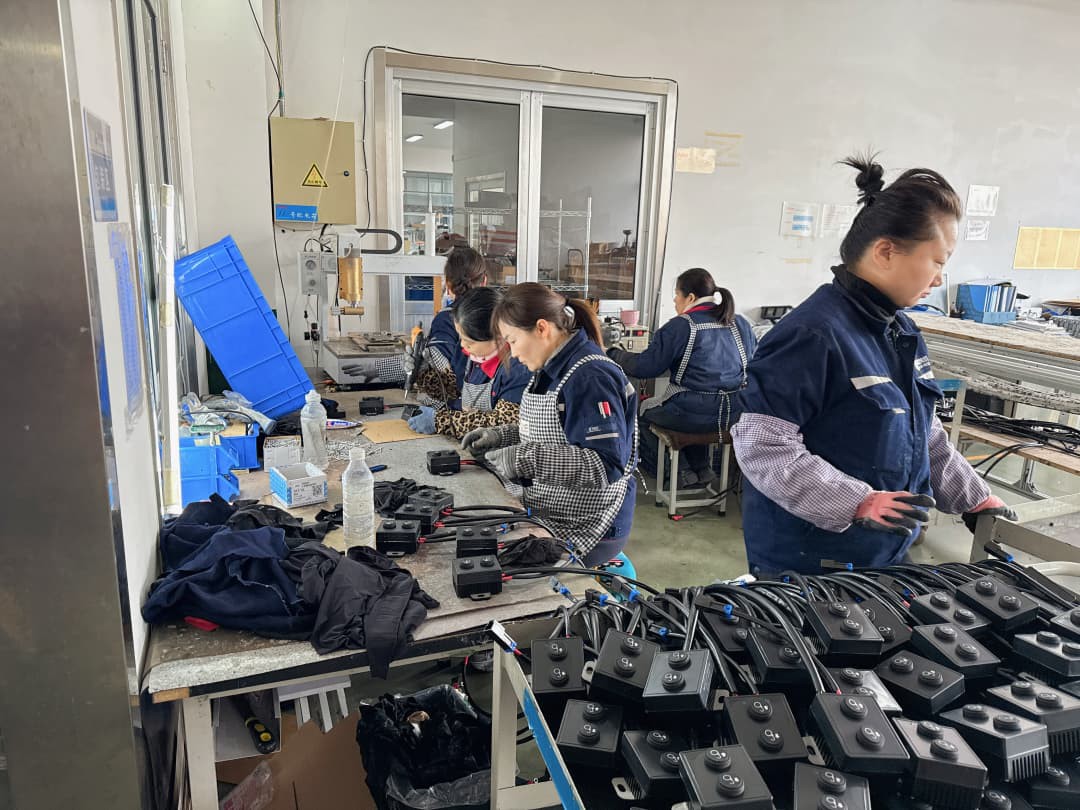
How Do You Choose the Right Encoder and Positioning Accuracy?
The encoder provides feedback that allows the servo system to monitor motor movement. The right choice depends on the positioning requirements, control architecture, and operating environment.
Before selecting a 48V servo motor, consider these questions:
Does the machine require simple speed regulation or accurate position control?
What positioning repeatability does the application actually need?
Is an incremental encoder sufficient, or does the machine benefit from absolute position feedback?
Does the selected servo drive support the encoder interface and resolution?
Will vibration, dust, temperature, or electrical noise affect feedback reliability?
Higher encoder resolution can improve position measurement, but it does not guarantee equivalent mechanical positioning accuracy. Gear backlash, coupling flexibility, structural deflection, controller tuning, and load conditions also influence the final result.
For OEM equipment, specify the required positioning performance at the machine output where possible, rather than choosing an encoder solely by its resolution number.
What Causes a 48V Servo Motor to Overheat or Lose Performance?
Overheating, unstable speed, and insufficient torque are common problems when the motor is not correctly matched to its load or drive.
|
Problem |
Possible Cause |
What to Check |
|---|---|---|
|
Motor overheats |
Excessive continuous load, frequent acceleration, inadequate cooling |
Load cycle, RMS torque, installation, and temperature limits |
|
Insufficient torque |
Motor undersized or drive current limited |
Required torque, current settings, and torque-speed curve |
|
Speed falls under load |
Available voltage or torque is insufficient at the required speed |
Loaded voltage, winding characteristics, and drive limits |
|
Positioning is unstable |
Incorrect tuning, feedback mismatch, or mechanical vibration |
Encoder signals, control settings, coupling, and load inertia |
|
Drive trips during acceleration |
Peak current demand exceeds the permitted limit |
Acceleration time, peak current, inertia, and drive capacity |
|
Excessive electrical noise |
Poor grounding, cable routing, or electromagnetic interference |
Shielding, grounding, cable separation, and installation practices |
A 48V system requires particular attention to current demand. At a given power level, lower supply voltage generally means higher current, and voltage drops in the battery, cables, and connectors can reduce the voltage available to the drive.
When diagnosing a problem, check the complete system rather than replacing the motor immediately. The power supply, controller, drive, wiring, transmission, and mechanical load can all affect performance.
What Determines the Price of a 48V Servo Motor?
The price of a 48V servo motor depends on its performance, configuration, customization requirements, and order quantity. Comparing suppliers only by rated power or voltage can lead to an inaccurate assessment of value.
The main cost factors include:
Power and torque capacity: Higher performance requirements may require a different motor design.
Encoder configuration: Feedback type and interface affect the available configuration.
Servo drive requirements: An integrated solution differs from a motor-only purchase.
Mechanical customization: Special shafts, mounting dimensions, connectors, and cables can affect cost.
Control and communication features: Specific operating modes or network interfaces may require particular configurations.
Testing and documentation: Additional inspection, performance testing, or project documentation may affect the quotation.
Order quantity and delivery: Sample orders, production batches, packaging, and shipping terms influence the total purchasing cost.
For a meaningful comparison, request quotations based on the same technical requirements. Compare the complete system cost, including the drive, cables, feedback components, installation work, and commissioning support where applicable.
How Do You Evaluate a 48V Servo Motor Manufacturer or Supplier?
For industrial buyers, a suitable manufacturer should be able to confirm technical compatibility, provide the necessary documentation, and support the motor's integration into the target equipment.
Use the following checklist when evaluating a 48V servo motor manufacturer such as Auric.
Technical documentation
Request the datasheet, dimensional drawing, wiring information, and torque-speed curve. Confirm the conditions associated with rated and peak performance.
Customization capability
If your equipment has special mounting, shaft, voltage, feedback, or connector requirements, confirm whether the manufacturer can support the configuration.
Quality control
Ask about inspection procedures, performance testing, traceability, and the documentation available for your order. Verify that the acceptance criteria match your project requirements.
Drive and controller compatibility
Confirm the supported servo drive, control modes, encoder interface, and communication protocols before placing the order.
OEM project support
For equipment manufacturers, evaluate whether the supplier can assist with sample testing, technical clarification, configuration confirmation, and repeat orders.
Delivery and after-sales service
Clarify lead time, minimum order quantity, packaging, shipping arrangements, warranty terms, and technical support responsibilities.
A low purchase price is useful only if the motor meets the actual application requirements. A well-defined specification and confirmed configuration can help reduce integration costs, commissioning delays, and avoidable replacement expenses.
What Information Should You Include in a 48V Servo Motor RFQ?
A clear request for quotation helps the supplier recommend a suitable model and reduces unnecessary communication.
|
Information |
What to Provide |
|---|---|
|
Application |
AGV, packaging machine, conveyor, robot, or other equipment |
|
Power supply |
Nominal 48V system and actual operating voltage range |
|
Rated power |
Required continuous mechanical output |
|
Rated speed |
Required RPM under load |
|
Continuous torque |
Torque required during normal operation |
|
Peak torque |
Maximum torque and duration, if known |
|
Motion profile |
Acceleration time, deceleration, starts and stops, operating cycle |
|
Feedback |
Required encoder type and positioning performance |
|
Control system |
Servo drive, controller, and communication requirements |
|
Mechanical interface |
Shaft, mounting, overall dimensions, and available installation space |
|
Operating environment |
Ambient temperature, dust, moisture, vibration, and cooling conditions |
|
Order details |
Quantity, sample requirements, destination, and target delivery date |
If you do not know all the technical values, provide an existing motor datasheet, equipment drawing, load information, or a description of the required movement. These details can help the supplier identify missing parameters before final model selection.
Frequently Asked Questions About 48V Servo Motors
Is a 48V servo motor suitable for battery-powered equipment?
Yes, provided the battery voltage range, servo drive, motor specifications, and load requirements are compatible. The design should account for voltage variation during charging, discharging, and high-current operation.
Can a 48V servo motor run at different speeds?
Many servo systems support adjustable speed control, but the usable speed range depends on the motor winding, drive, available voltage, load, and operating limits. Confirm the torque available at the required speed before purchasing.
Does every 48V servo motor require a separate controller?
A servo system requires appropriate drive and motion-control functions, but the physical arrangement varies. Some products integrate the motor and drive, while others use separate components. Confirm what is included in the quoted configuration.
Can a 48V servo motor replace a 24V motor?
Not necessarily. The replacement must be compatible with the power supply and controller, and its mounting dimensions, torque, speed, current requirements, and feedback interfaces must suit the application. A voltage change may require modifications to the electrical system.
Is a brushless motor the same as a servo motor?
No. Brushless describes a motor construction and commutation method, while servo describes a controlled-motion system using feedback. A brushless motor can be used in a servo system when paired with suitable feedback, drive electronics, and control.
How do I select the correct servo motor power rating?
Start with the load's continuous torque, peak torque, required speed, acceleration, and duty cycle. Then verify the motor's performance curve and thermal limits, along with the servo drive's current capability. Do not size the motor using power alone.
Can Auric supply a customized 48V servo motor?
Configuration availability depends on the required specifications and the manufacturer's capabilities. Send your application details, electrical requirements, and mechanical drawing to Auric so the available options can be evaluated before quotation.
Looking for a 48V servo motor manufacturer for your next project? Contact Auric with your required voltage range, power, torque, speed, mounting dimensions, and application details. This information will help establish the appropriate configuration, customization options, and quotation for your equipment.