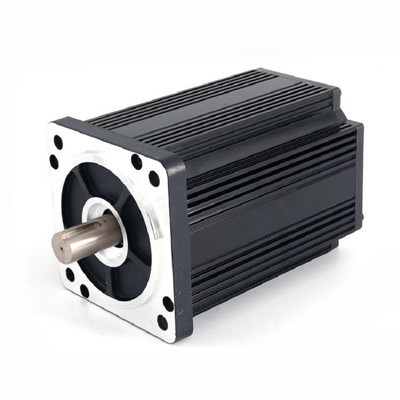

As a supplier of Bldc Permanent Magnet Motors, I understand the critical importance of over - voltage protection for these motors. In this blog, I will delve into the over - voltage protection methods for Bldc Permanent Magnet Motors, exploring various techniques and their applications.
Understanding Over - Voltage in Bldc Permanent Magnet Motors
Bldc Permanent Magnet Motors are widely used in various applications due to their high efficiency, compact size, and excellent controllability. However, they are vulnerable to over - voltage conditions, which can cause significant damage to the motor and its associated components. Over - voltage can occur due to several reasons, such as power grid fluctuations, sudden load changes, or faults in the power supply system.
When an over - voltage condition occurs, the excess voltage can lead to increased current flow in the motor windings. This can cause overheating, insulation breakdown, and ultimately, motor failure. Additionally, over - voltage can also damage the motor controller, which is responsible for regulating the motor's speed and torque.
Over - Voltage Protection Methods
1. Voltage Clamping
One of the most common over - voltage protection methods is voltage clamping. This involves using a voltage - clamping device, such as a Zener diode or a transient voltage suppressor (TVS), to limit the voltage across the motor terminals. When the voltage exceeds a certain threshold, the clamping device conducts, diverting the excess current away from the motor and protecting it from damage.
Zener diodes are semiconductor devices that have a well - defined breakdown voltage. When the voltage across the Zener diode exceeds its breakdown voltage, it starts to conduct, maintaining a relatively constant voltage across its terminals. TVS diodes, on the other hand, are designed to handle high - energy transient events. They can quickly respond to over - voltage spikes and divert the excess current to ground.
For example, in a Bldc Permanent Magnet Motor system, a TVS diode can be connected across the motor terminals. If a sudden over - voltage spike occurs, the TVS diode will conduct, limiting the voltage across the motor to a safe level.
2. Voltage Monitoring and Control
Another effective over - voltage protection method is voltage monitoring and control. This involves using a voltage sensor to continuously monitor the voltage across the motor terminals. If the voltage exceeds a pre - set threshold, the motor controller can take appropriate action, such as reducing the motor speed or shutting down the motor.
The voltage sensor can be a simple resistive divider circuit or a more sophisticated integrated circuit. The motor controller can use the voltage measurement to adjust the motor's operation in real - time, ensuring that the motor operates within a safe voltage range.
For instance, in an intelligent motor control system, the Intelligent Brushless Motor Controller can be programmed to monitor the motor voltage. If the voltage exceeds the safe limit, the controller can reduce the power supply to the motor or stop it completely to prevent damage.
3. Soft - Start and Soft - Stop
Soft - start and soft - stop techniques can also help protect Bldc Permanent Magnet Motors from over - voltage. When a motor is started or stopped suddenly, it can cause voltage spikes due to the inrush current. Soft - start gradually increases the voltage and current supplied to the motor, reducing the inrush current and minimizing the risk of over - voltage.
Similarly, soft - stop gradually reduces the voltage and current, allowing the motor to come to a smooth stop without generating large voltage spikes. These techniques not only protect the motor from over - voltage but also improve the overall reliability and lifespan of the motor.
4. Use of Surge Protectors
Surge protectors are devices that are designed to protect electrical equipment from voltage surges. They can be installed in the power supply line of the Bldc Permanent Magnet Motor to absorb and divert the excess energy caused by voltage spikes.
Surge protectors typically consist of a metal - oxide varistor (MOV) or a gas - discharge tube. When a voltage surge occurs, the MOV or gas - discharge tube conducts, shunting the excess current to ground. This helps to protect the motor and its associated components from damage.
Application - Specific Considerations
The choice of over - voltage protection method depends on the specific application of the Bldc Permanent Magnet Motor. For example, in a high - precision industrial application, voltage monitoring and control may be the most appropriate method, as it allows for real - time adjustment of the motor's operation.


In a consumer electronics application, such as a 36v Brushless Motor used in a small appliance, voltage clamping and surge protectors may be sufficient to protect the motor from over - voltage.
Conclusion
Over - voltage protection is crucial for the reliable operation of Bldc Permanent Magnet Motors. By using a combination of voltage clamping, voltage monitoring and control, soft - start and soft - stop techniques, and surge protectors, we can effectively protect these motors from the damaging effects of over - voltage.
As a supplier of Bldc Permanent Magnet Motors, we are committed to providing high - quality products with reliable over - voltage protection. If you are interested in purchasing our motors or have any questions about over - voltage protection, please feel free to contact us for a detailed discussion and procurement negotiation.
References
- "Electric Motors and Drives: Fundamentals, Types, and Applications" by Austin Hughes and Bill Drury.
- "Power Electronics: Converters, Applications, and Design" by Ned Mohan, Tore M. Undeland, and William P. Robbins.