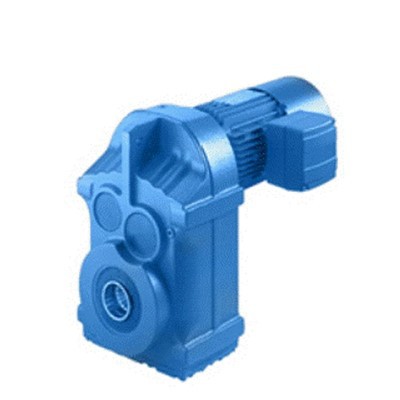

Hey there! As a supplier of Electric Reluctance Motors, I'm super stoked to take you on a journey into how a switched reluctance motor works. Let's dive right in!
The Basics of a Switched Reluctance Motor
A switched reluctance motor (SRM) is a unique type of electric motor that operates on the principle of reluctance torque. Unlike traditional motors that rely on magnetic fields created by permanent magnets or current - carrying coils, SRMs use the tendency of ferromagnetic materials to move to a position of minimum magnetic reluctance.

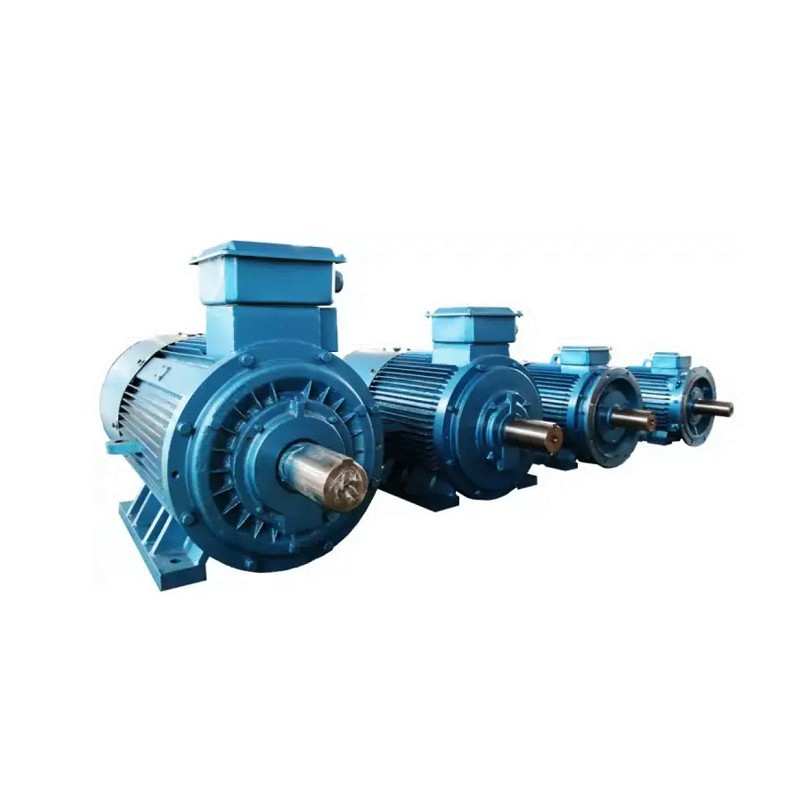
The SRM consists of two main parts: the stator and the rotor. The stator is the stationary part of the motor, and it has a series of windings. These windings are grouped into phases. The rotor, on the other hand, is the rotating part and is made of a ferromagnetic material. It doesn't have any windings or permanent magnets.
How the Magic Happens: The Working Principle
The operation of a switched reluctance motor is based on the fact that the magnetic flux always tries to take the path of least reluctance. When current is applied to a particular phase winding on the stator, a magnetic field is created. The rotor, being made of ferromagnetic material, will then align itself with this magnetic field to minimize the reluctance of the magnetic circuit.
Let's break it down step - by - step.
Step 1: Initial State
In the beginning, the rotor is in a certain position. Suppose we have a simple 4 - phase SRM. Each phase winding on the stator can be energized independently.
Step 2: Energizing a Phase
When we apply current to a specific phase winding, say Phase A, a magnetic field is generated around that winding. The rotor, which has a natural tendency to align with the magnetic field to reduce the magnetic reluctance, will start to move towards the position where it is fully aligned with the magnetic field created by Phase A.
Step 3: Switching Phases
Once the rotor is almost aligned with Phase A, we switch off the current to Phase A and turn on the current to the next phase, say Phase B. Now, the rotor will start moving towards the position where it aligns with the magnetic field of Phase B. This process of switching the current between different phases in a sequential manner keeps the rotor rotating continuously.
The switching of phases is controlled by an electronic controller. This controller determines when to energize and de - energize each phase based on the position of the rotor. To know the position of the rotor, sensors such as Hall - effect sensors or optical encoders are often used.
Advantages of Switched Reluctance Motors
One of the biggest advantages of SRMs is their simplicity. Since the rotor doesn't have any windings or permanent magnets, it is very robust and reliable. There are no brushes or commutators, which means less maintenance and a longer lifespan.
SRMs also have a high power - to - weight ratio. They can produce a large amount of torque even at low speeds, making them suitable for applications where high starting torque is required, such as in electric vehicles and industrial machinery.
Another great thing about SRMs is their efficiency. They can operate at high efficiency over a wide range of speeds and loads. This is because the power is only consumed when the phase windings are energized, and there are no losses associated with permanent magnets or brushes.
Applications of Switched Reluctance Motors
Switched reluctance motors are used in a wide variety of applications. In the automotive industry, they are used in electric and hybrid vehicles for power steering, water pumps, and cooling fans. Their high torque at low speeds and efficiency make them a great choice for these applications.
In industrial settings, SRMs are used in conveyor systems, machine tools, and pumps. They can handle heavy loads and provide precise control, which is essential in these applications.
Our Offerings as an Electric Reluctance Motor Supplier
As a supplier of Electric Reluctance Motor, we offer a wide range of high - quality SRMs. Our motors are designed with the latest technology to ensure maximum efficiency and reliability.
We also provide Srm Drives that are specifically tailored to work with our motors. These drives are easy to install and operate, and they offer precise control over the motor's speed and torque.
In addition to our standard products, we also offer custom - made solutions. If you have specific requirements for your application, our team of experts can work with you to design and manufacture a motor that meets your needs.
We also have Axial Flux Reluctance Motor in our product line. Axial flux motors have a unique design that offers several advantages over traditional radial flux motors, such as higher power density and better thermal performance.
Why Choose Us?
When you choose us as your Electric Reluctance Motor supplier, you're getting more than just a product. You're getting a partner who is committed to your success. Our team of experienced engineers and technicians is always available to provide technical support and advice.
We also offer competitive pricing without compromising on quality. We understand that cost is an important factor in your decision - making process, and we strive to offer the best value for your money.
Let's Connect
If you're interested in learning more about our Electric Reluctance Motors or have any questions about how they can be used in your application, we'd love to hear from you. Whether you're looking for a standard product or a custom - made solution, we're here to help.
Contact us today to start a conversation about your motor needs. We're excited to work with you and help you find the perfect motor for your project.
References
- Miller, T. J. E. (1993). Switched Reluctance Motors and Their Control. Magna Physics Publishing and Clarendon Press.
- Krishnan, R. (2001). Switched Reluctance Motor Drives: Modeling, Simulation, Analysis, Design, and Applications. CRC Press.