| Motion Feature | Technical Capability | Operational Benefit |
|---|---|---|
| Digital Feedback | High-resolution magnetic or optical encoders | Real-time positional, thermal, and load feedback |
| Vibration Suppression | Active micro-vibration damping | Zero jitter during rapid deceleration phases |
| Continuous Torque | High power-density torque output | Uncompromised multi-axis articulation |
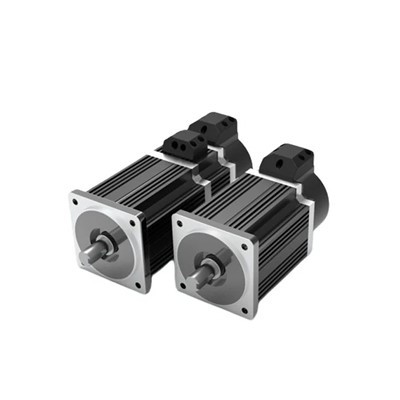
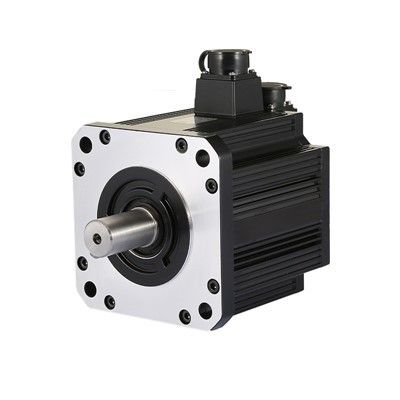
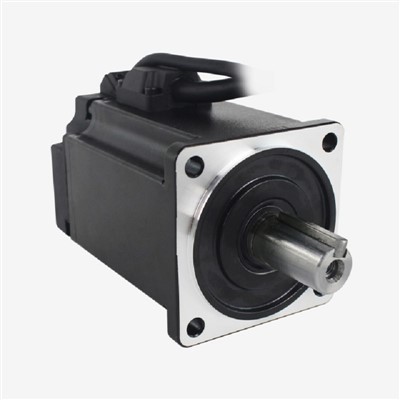
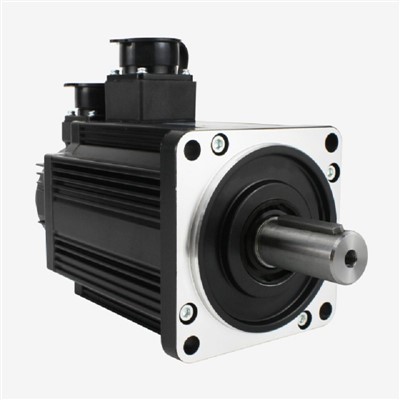
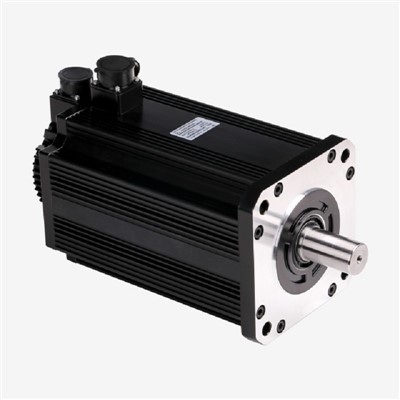
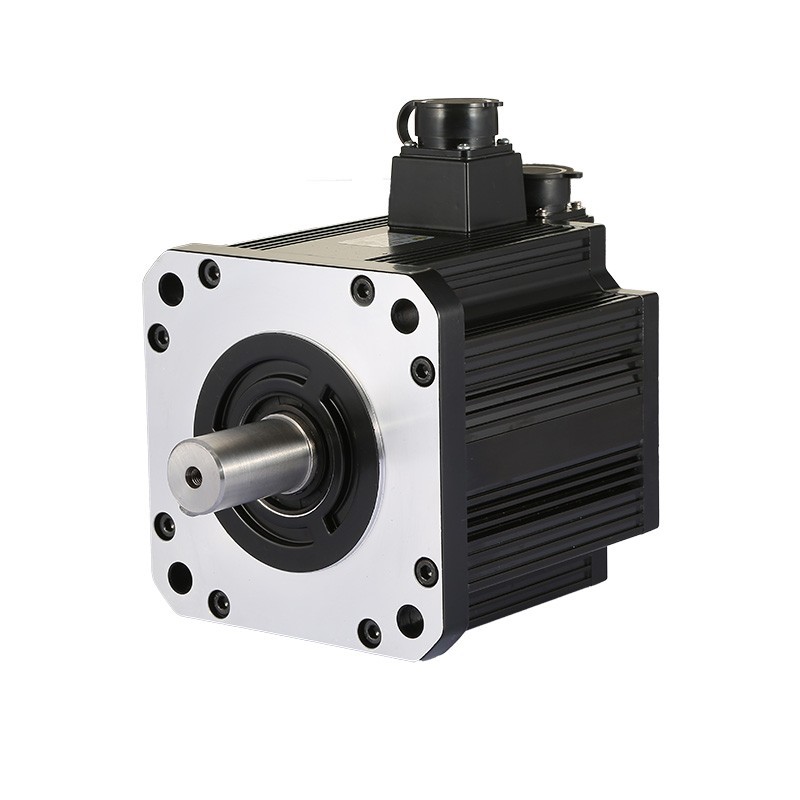
Servo Motor for Robotic Arm Specs & Power Options
Master Specification Matrix
| Parameter | Standard Capability | Performance Benefit |
|---|---|---|
| Power Range | 750W baseline (Custom scalable) | Fits compact joint spaces or heavy-payload arms |
| Torque Capacity | High continuous torque servo output + 300% peak overload | Absorbs sudden acceleration surges and heavy inertia |
| Rated Speeds | Tailored RPM bands | Optimized specifically for high-gear-ratio joint actuators |
| Protection Rating | IP65 / IP67 ingress protection | Blocks fine dust, coolant spray, and harsh factory moisture |
Scalable Voltage Architectures
Low-voltage DC motors (12V, 24V, 48V): Designed for mobile collaborative robots, AGVs, and battery-powered automation equipment.
High-voltage AC variants (380V): Designed for heavy-duty industrial robot arm motor applications requiring constant, high-torque output during continuous manufacturing cycles.
Servo Motor for Robotic Arm Transmission & Control

Compact joints require maximum torque without increasing overall size. Auric offers integrated solutions-featuring precision planetary gearboxes and harmonic drive joint motors-that optimize power transmission within confined spaces.
Direct integration: Planetary gearbox and servo motor units eliminate the need for couplings, thereby reducing the axial length and weight of space-constrained joints.
Balanced inertia matching: Calculated inertia ratios ensure smooth motion and prevent controller tuning instability during rapid deceleration.
Low-backlash performance: Precision gear geometry minimizes rotational backlash, maintaining rigid path accuracy during multi-axis movement.
Industrial Fieldbus Support: Direct compatibility with EtherCAT, CANopen, and RS485 protocols for real-time, low-latency motion control.
Integrated Driver-Motor Units: On-board closed-loop servo drive configurations eliminate external drive cabinets and shrink wiring harnesses inside the robot chassis.
Simplified Wiring: Reduced cable counts minimize flexing wear inside joint housings, extending operational lifespan.

B2B Customization & OEM Support
| Customization Type | Available Options | Core Application Benefit |
|---|---|---|
| Shaft Architecture | Keyway, flat, spline, and hollow shaft | Direct coupling with harmonic and planetary gearboxes |
| Mounting Flanges | Tailored bolt patterns, custom dimensions | Fits existing industrial equipment footprints without adapters |
| Custom Windings | Specialized speed/torque performance | Hits target RPM and torque under restricted input voltages |
Direct Manufacturer Quality Protocols & Testing
In-House Precision Machining: Automated manufacturing maintains tight tolerances for seamless joint integration.
Dynamic Load Testing: Real-world load simulations verify continuous torque and 300% peak overload capacity.
Gear Contact Analysis: Optical checks confirm optimal tooth contact to prevent premature wear and backlash.
Thermal & Noise Inspection: Rigorous multi-stage testing verifies low thermal rise and silent operation before dispatch.
Servo motor applications for robotic arms
High-Speed Assembly & Pick-and-Place Robotics
On high-speed assembly lines, rapid cycle times demand instantaneous start-and-stop responsiveness.
Rapid dynamic response: swift acceleration and quick deceleration without overshoot.
Smooth speed control: protects fragile components during high-speed transfer.
Enduring reliability: suitable as a motor for heavy-duty industrial robot arms, meeting the demands of continuous industrial production.
01
Collaborative Robots (Cobots) & Service Automation
Collaborative robots require motors that are lightweight, energy-efficient, and capable of fitting within compact joint housings.
Compact power density: Features a high-torque, smart servo architecture that minimizes the overall weight of the robotic arm.
Low-voltage compatibility: Operates efficiently on 24V industrial servo systems or 48V DC power supplies, making it suitable for mobile collaborative robots and AGVs.
Low heat generation: Maintains stable joint temperatures during continuous human-robot collaborative operations.
02
CNC Loading, Welding, & Heavy Material Handling
Heavy-duty applications require maximum connection holding power and structural rigidity.
High continuous torque: Capable of handling heavy loads with a peak overload capacity of up to 300%.
Integrated connection: Compatible with planetary gearboxes and servo motors to ensure precise path tracking during arc welding.
IP65/IP67 protection rating: Effectively withstands exposure to cutting fluids, metal dust, and harsh factory environments.
03
Precision Medical & Inspection Equipment
Surgical automation and automated visual inspection require positioning accuracy with zero jitter.
Digital position-feedback servo systems: Ultra-high-resolution encoders ensure sub-millimeter positioning accuracy.
Micro-vibration suppression: Eliminates mechanical chatter during precision optical scanning.
Smooth multi-axis motion: Utilizes harmonic drive joint motor configurations to achieve zero-backlash motion control.
04
FAQs: Servo Motor for Robotic Arm Selection
What Is the Difference Between AC and DC Servo Motors for Robotic Arms?
We supply both high-voltage AC and low-voltage DC options tailored to your installation setup:
| Feature | Industrial AC Servo Motor | Brushless DC Servo Motor |
|---|---|---|
| Input Voltage | 220V / 380V AC | 12V, 24V industrial servo motor, or 48V DC |
| Primary Use | Heavy-duty manufacturing, high-payload arms | Mobile cobots, service robots, AGV arms |
| Power Density | High output for stationery stationary equipment | Ultra-compact footprint for battery powered systems |
| Integration | Standard external cabinet drive wiring | Ideal for integrated, space-saving drive housings |
Why Is Low Backlash Critical in Robotic Arm Servo Actuators?
Low rotational play directly determines how well a multi-axis robot joint motor performs under load:
Positioning Accuracy: Gear rotational play under 3 arcmin ensures sub-millimeter repeatable precision.
Vibration Control: Suppresses micro-vibrations during rapid deceleration to protect delicate payloads.
Tool Tip Stability: Prevents chatter at the arm end-effector during precision welding or assembly.
Which Encoders and Fieldbus Protocols Work Best for Multi-Axis Control?
For modern closed-loop servo drive setups, we utilize high-performance motion feedback and communication:
High-Resolution Encoders: Multi-turn absolute magnetic or optical encoders deliver real-time position, thermal, and load feedback without requiring homing routines upon start-up.
Deterministic Fieldbus Protocols: High-speed communication platforms like EtherCAT, CANopen, and RS485 enable synchronized multi-axis trajectory execution with minimal latency.
How to Choose a Servo Motor for Robotic Arm Joints?
When we help clients select a servo motor for robotic arm applications, we evaluate four key mechanical and electrical factors:
Torque & Payload: Calculate continuous torque requirements and peak load capacities for each articulation joint.
Speed & Gear Ratios: Match the motor output RPM precisely to the joint transmission system.
Space Constraints: Choose compact, high-density designs for weight-sensitive wrist and elbow joints.
Duty Cycle: Ensure thermal dissipation capacity supports long continuous operating hours.
Hot Tags: servo motor for robotic arm, China servo motor for robotic arm manufacturers, suppliers, factory, 1 hp servo motor, 24v servo motor, 750 watt 240v ac servos, ab servo motor, cnc servo controller, nema 34 servo